Introduction
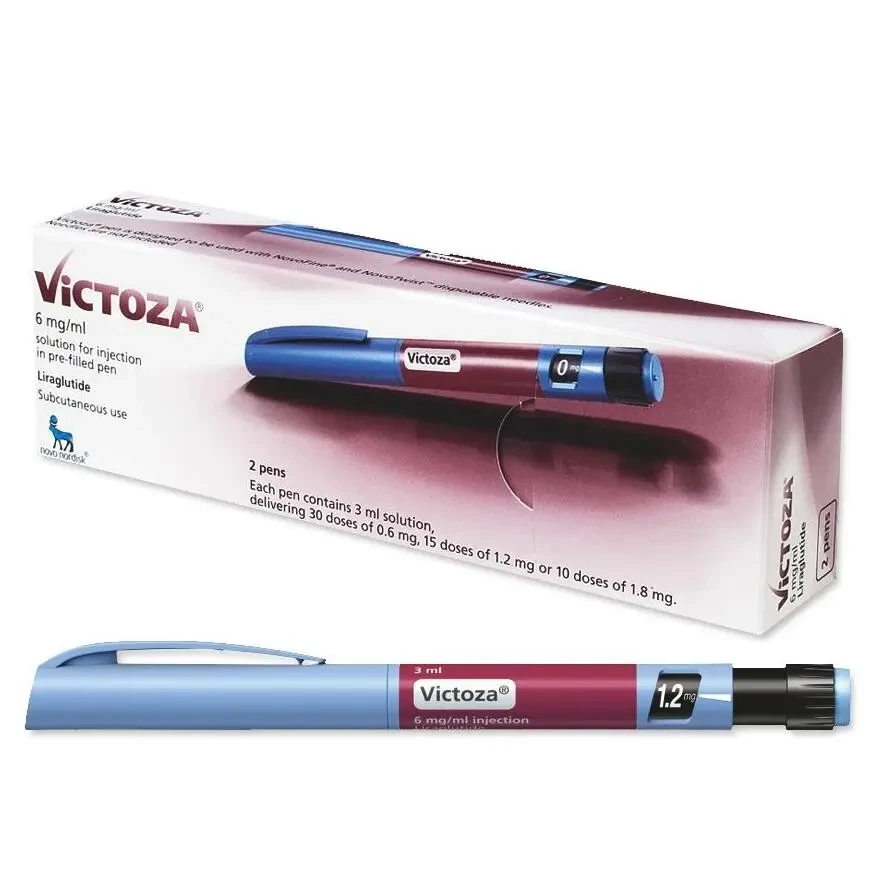
Victoza contains liraglutide, a synthetic analog of human glucagon-like peptide-1(GLP-1) and acts as a GLP-1 receptor agonist. Liraglutide is 97% homologous to native human GLP-1 by substituting arginine for lysine at position 34. Liraglutide is made by attaching a C-16 fatty acid (palmitic acid) with a glutamic acid spacer on the remaining lysine residue at position 26 of the peptide precursor. Liraglutide was granted FDA approval on Januray 25, 2010.
Uses
Liraglutide is a GLP-1 analog used in the management of type 2 diabetes mellitus and prevention of cardiovascular complications associated with diabetes.
Liraglutide is indicated in combination with diet and exercise to improve glycemic control in patients 10 years and older with type 2 diabetes mellitus. It is also indicated to reduce the risk of major adverse cardiovascular events in patients with type 2 diabetes mellitus as well as cardiovascular disease.
Associated Conditions
Pharmacodynamics
Liraglutide is a once-daily GLP-1 derivative for the treatment of type 2 diabetes. The prolonged action of liraglutide is achieved by attaching a fatty acid molecule at position 26 of the GLP-1 molecule, enabling it to bind reversibly to albumin within the subcutaneous tissue and bloodstream and be released slowly over time. Binding with albumin results in slower degradation and reduced elimination of liraglutide from the circulation by the kidneys compared to GLP-1. The effect of liraglutide is the increased secretion of insulin and decreased secretion of glucagon in response to glucose as well as slower gastric emptying. Liraglutide also does not adversely affect glucagon secretion in response to low blood sugar.
Mechanism of Action
Liraglutide is an acylated synthetic glucagon-like peptide-1 analog. Liraglutide is an agonist of the glucagon-like peptide-1 receptor which is coupled to adenylate cyclase. The increase in cyclic AMP stimulates the glucose dependant release of insulin, inhibits the glucose dependant release of glucagon, and slows gastric emptying to increase control of blood sugar.
Absorption
Bioavailability of liraglutide after subcutaneous injection is approximately 55% and maximum concentrations are reached after 11.7 hours.
Volume of Distribution
13L.
Protein Binding
>98%.
Route of Elimination
6% excreted in urine and 5% excreted in feces.
Half Life
Terminal half life of 13 hours.
Clearance
1.2L/h.
Toxicity
There is no clinical significance of race or ethnicity on the safety or efficacy of liraglutide. Geriatric patients do not experience clinically significant differences in pharmacokinetics though patients at an especially advanced age may be more susceptible to adverse effects. Female patients have reduced clearance of liraglutide but no dose adjustment is necessary. The risk and benefit of liraglutide in pregnancy must be weighed before prescribing. In animal studies, liraglutide is associated with an increased risk of embryonic death and fetal abnormalities though an HbA1c > 7 is also associated with a 20-25% risk of birth defects. In animal studies, liraglutide is present in the milk of lactating rats at half the plasma concentration of the mother but these results may not translate to humans. Because it is not known if liraglutide is present in breast milk and the effects on infants are also unknown, the risk and benefit of liraglutide in breastfeeding must be considered before prescribing. Liraglutide was shown to be safe and effective in patients up to 160kg in weight but has not been studied in patients at a higher weight. A patient's weight significantly affects the pharmacokinetics of liraglutide. Liraglutide has not been investigated for use in pediatric patients. No dosage adjustments are necessary in patients with renal impairment but studies have not been performed in patients with end stage renal disease. There are no recommendations on dosage adjustment in patients with hepatic impairment, though caution should still be exercised when prescribing to this population.
Food Interactions
- Take with or without food.
Dosage
Pediatric Use: The safety and effectiveness of Liraglutide as an adjunct to a reduced-calorie diet and increased physical activity for chronic weight management have been established in pediatric patients aged 12 years and older with body weight above 60 kg.