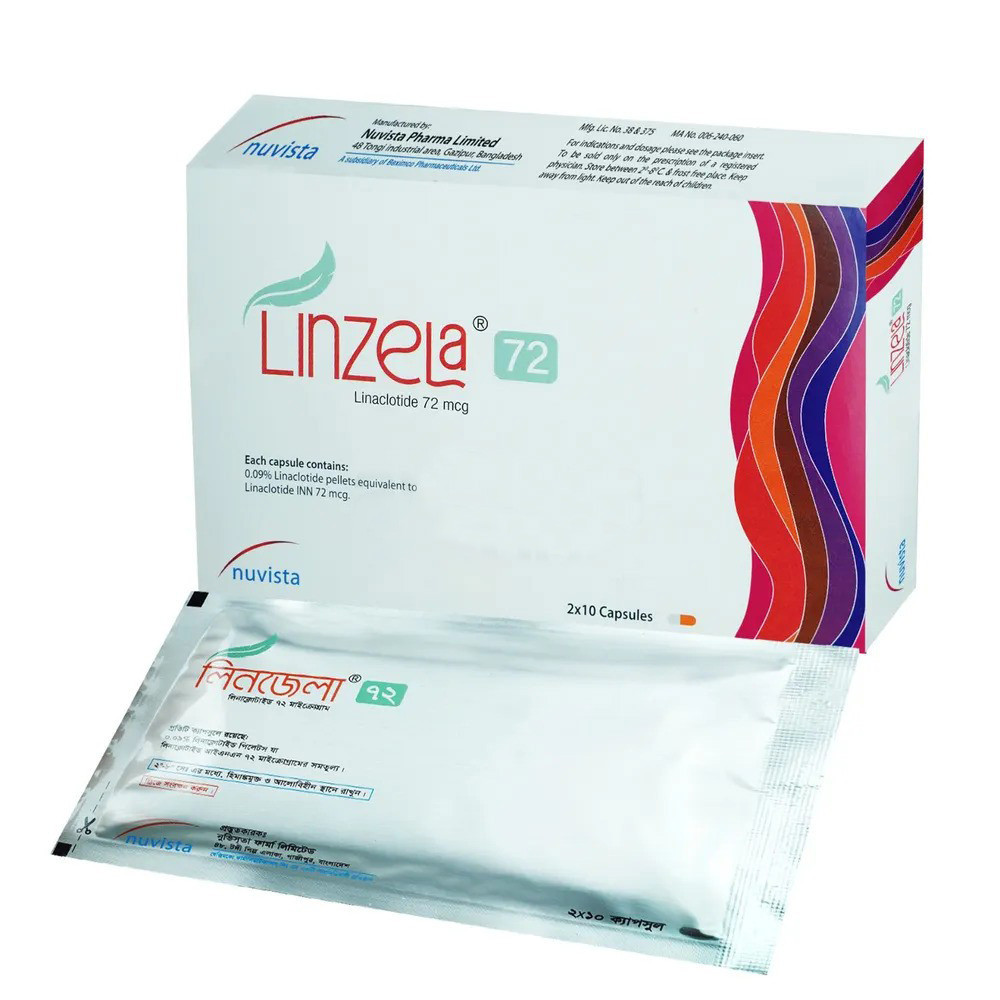
Introduction
Linaclotide is an orally administered, peptide agonist of guanylate cyclase 2C for the treatment of irritable bowel syndrome. Chemically, it is a heterodetic cyclic peptide and consists of fourteen amino acids. The protein sequence is as follows: Cys Cys Glu Tyr Cys Cys Asn Pro Ala Cys Thr Gly Cys Tyr. There are three disulfide bonds which are located between Cys1 and Cys6; between Cys2 and Cys10; and between Cys5 and Cys13. FDA approved on August 30, 2012.
Uses
Linaclotide is a guanylate cyclase-C agonist used to treat constipation associated with irritable bowel syndrome or that is idiopathic in nature.
Treatment of irritable bowel syndrome (IBS) with constipation and chronic idiopathic constipation.
Associated Conditions
Pharmacodynamics
Changes in the appearance and consistency of stools as measured by the Bristol Stool Form Scale (BSFS) have been noted after taking linaclotide.
Mechanism of Action
Linaclotide is an agonist of guanylate cyclase-C (GC-C). Once linaclotide and its active metabolite binds to GC-C, it has local effect on the luminal surface of the intestinal epithelium. Activation of GC-C by linaclotide results in the intra- and extracellular increase of cyclic guanosine monophosphate concentrations (cGMP). This elevation of cGMP levels stimulates the secretion of chloride and bicarbonate into the intestinal lumen via activation of cystic fibrosis transmembrane conductance regulator (CFTR) ion channel. Ultimately, linaclotide helps patients with IBS (especially with constipation) as GI transit is accelerated and the release of intestinal fluid is increased. In animal models, a decrease in visceral pain after administration of linaclotide may be observed. A decrease in the activity of pain-sensing nerves occurs as a result of an increase in extracellular cGMP.
Absorption
When taken orally, linaclotide is not absorbed into the systemic. No detectable levels of linaclotide or its active metabolite were noted after doses of 125 mcg or 290 mcg were administered.
Volume of Distribution
Given that linaclotide plasma concentrations following therapeutic oral doses are not measurable, linaclotide is expected to be minimally distributed to tissues.
Route of Elimination
Linaclotide is eliminated fecally (3 - 5% as active metabolites). However most of the dose undergoes proteolysis (processes include reduction of disulfide bonds) in the intestine before being excreted via feces.
Half Life
Because linaclotide is not systemically absorbed, half life cannot be calculated.
Toxicity
Most common adverse reactions (incidence of at least 2%) reported in IBS-C or CIC patients are diarrhea, abdominal pain, flatulence and abdominal distension.
Food Interactions
- Avoid fatty foods. Co-administration with fatty foods may cause loose stools.
Dosage
Chronic Idiopathic Constipation (CIC): The recommended dosage of Linaclotide is 145 mcg capsules orally once daily. A dosage of 72 mcg capsule once daily may be used based on individual presentation or tolerability.