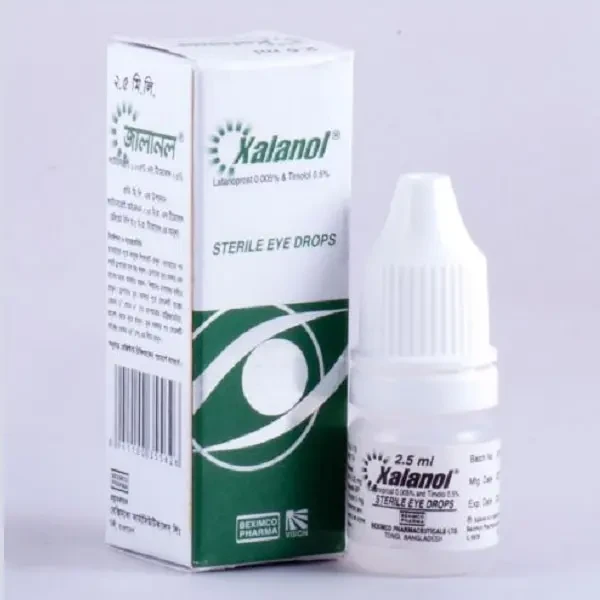
Generic Name Latanoprost + Timolol
Bangla Name লাতানোপ্রস্ট + টিমলোল
Available brands 2
Language

Introduction

Latanoprost + Timolol is a combination ophthalmic medication used in the management of elevated intraocular pressure (IOP) in conditions such as open-angle glaucoma and ocular hypertension. This combination leverages the benefits of both components to provide an effective treatment for controlling IOP and preventing damage to the optic nerve.

Uses

This combination is used to treat:

  • Open-angle glaucoma
  • Ocular hypertension

It is prescribed to reduce elevated IOP in patients where monotherapy alone is insufficient to control IOP.

Mechanism of Action

Latanoprost is a prostaglandin analog that works by increasing the outflow of aqueous humor through the uveoscleral pathway, thereby reducing IOP. Timolol is a non-selective beta-adrenergic antagonist that decreases the production of aqueous humor by blocking beta-adrenergic receptors in the eye. Together, they provide a complementary approach to lowering IOP.

How Long Does It Take to Work?

The onset of IOP reduction with Latanoprost + Timolol can generally be observed within 1 to 2 hours after administration. The maximum effect is usually seen within 4 to 6 hours, with a sustained effect over 24 hours.

Absorption

When administered as eye drops, Latanoprost + Timolol is absorbed locally in the eye. The systemic absorption of both drugs is minimal but may occur.

Route of Elimination

Latanoprost is metabolized in the liver and excreted primarily in the urine. Timolol is also metabolized in the liver and excreted in both urine and feces.

Dosage

Adult or elderly: The recommended adult (including the elderly) dosage of is one drop in the affected eye(s) once daily. If one dose is missed, treatment should continue with the next dose as normal.

Children: Safety and effectiveness in children has not been established. This is therefore is not recommended for use in children.

The typical dosage for Latanoprost + Timolol is:

  • 1 drop in the affected eye(s) once daily in the evening.

The dosage may vary based on individual patient needs and response to treatment.

Administration

Administer the eye drops as directed, typically once daily in the evening. Avoid touching the dropper tip to the eye or any other surface to prevent contamination. Gently close the eye and apply pressure to the inner corner of the eye for about one minute to prevent systemic absorption.

Side Effects

Common side effects include:

  • Eye discomfort or irritation
  • Redness of the eye
  • Dry eyes
  • Blurred vision

Serious side effects may include:

  • Allergic reactions
  • Significant changes in vision
  • Systemic effects such as bradycardia or hypotension

Toxicity

In case of overdose, which may occur if excessive drops are administered, systemic effects such as bradycardia, hypotension, or bronchospasm may be observed. Seek medical attention if overdose is suspected.

Precautions

Precautions include:

  • Monitoring for signs of eye infection or severe irritation.
  • Avoiding use in patients with a history of asthma or chronic obstructive pulmonary disease (COPD) due to the timolol component.
  • Monitoring for potential systemic effects of timolol, particularly in patients with cardiac conditions or diabetes.

Interaction

Drug Interactions

Be cautious with concurrent use of:

  • Other ophthalmic or systemic beta-blockers, as they may enhance the effects of timolol.
  • Drugs that affect the metabolism of Latanoprost or Timolol, such as certain CYP450 inhibitors.

Food Interactions

There are no significant food interactions with Latanoprost + Timolol. However, maintaining a balanced diet and hydration can support overall eye health.

Disease Interaction

Use with caution in patients with:

  • Cardiovascular diseases, such as heart disease or bradycardia.
  • Respiratory conditions like asthma or COPD.
  • Diabetes, due to potential effects on blood glucose levels.

Pregnancy Use

Latanoprost + Timolol is categorized as Pregnancy Category C. It should be used during pregnancy only if the potential benefit justifies the potential risk to the fetus. Consult a healthcare provider for individualized advice.

Lactation Use

It is not known if Latanoprost or Timolol is excreted in breast milk. Caution is advised when using this medication during lactation. Consult a healthcare provider to weigh the risks versus benefits.

Acute Overdose

Acute overdose of Latanoprost + Timolol may result in systemic effects such as bradycardia, hypotension, or severe eye irritation. Immediate medical attention is required if overdose is suspected.

Contraindication

Contraindications include:

  • Known hypersensitivity to Latanoprost, Timolol, or any component of the formulation.
  • Severe respiratory conditions such as asthma.
  • Certain cardiovascular conditions, including severe bradycardia and heart block.

Use Direction

Apply 1 drop in the affected eye(s) once daily in the evening. Follow proper hygiene and application techniques to avoid contamination and maximize effectiveness. Consult a healthcare provider for any modifications to treatment.

Storage Conditions

Store the medication in its original container at room temperature, away from light and moisture. Do not freeze. Keep out of reach of children.

Volume of Distribution

The volume of distribution for the components of this combination is not individually specified, but they are primarily distributed in the ocular tissues.

Half Life

The half-life of Latanoprost is approximately 17 minutes, while Timolol has a half-life of 3 to 4 hours. The combination's clinical effects extend beyond these half-lives due to their ongoing action in the eye.

Clearance

Both Latanoprost and Timolol are primarily cleared through hepatic metabolism and biliary excretion. The clearance rates may be influenced by individual patient factors and liver function.
Frequently Asked Questions About Latanoprost + Timolol

1. What is latanoprost + timolol?

Latanoprost + timolol is a combination eye drop containing latanoprost (0.005%), a prostaglandin analog, and timolol (0.5%), a beta-blocker, used to lower intraocular pressure in the eyes.

2. What is latanoprost + timolol used for?

It is used to:

  • Reduce elevated intraocular pressure (IOP) in open-angle glaucoma
  • Treat ocular hypertension (high eye pressure)
  • 3. How does latanoprost + timolol work?

    Latanoprost increases fluid outflow via the uveoscleral pathway, while timolol reduces aqueous humor production, together lowering IOP more effectively than either alone.

    4. Is latanoprost + timolol a prescription drug?

    Yes, it requires a prescription from a healthcare provider.

    5. Who can use latanoprost + timolol?

    It’s suitable for adults with glaucoma or ocular hypertension, but not for those with asthma, severe heart conditions, or certain eye issues unless advised by a doctor.

    6. How is latanoprost + timolol administered?

    It is applied as one drop in the affected eye(s) once daily, typically in the morning or evening.

    7. What is the typical dosage of latanoprost + timolol?

    The standard dose is one drop of the 0.005%/0.5% solution in the affected eye(s) once daily.

    8. How long does latanoprost + timolol take to work?

    It begins lowering IOP within 3-4 hours, with maximum effect in 6-8 hours.

    9. Can latanoprost + timolol be used long-term?

    Yes, it’s often used long-term to manage chronic eye pressure conditions, under medical supervision.

    10. Does latanoprost + timolol cure glaucoma?

    No, it controls eye pressure to prevent vision loss but doesn’t cure glaucoma.

    11. What are the common side effects of latanoprost + timolol?

    Common side effects include:

  • Eye irritation or stinging
  • Eye redness
  • Increased iris pigmentation
  • Eyelash growth
  • 12. Can latanoprost + timolol change eye color?

    Yes, latanoprost may permanently increase brown pigmentation in the iris, especially in mixed-color eyes.

    13. Does latanoprost + timolol affect vision?

    It may cause temporary blurred vision after application; long-term vision damage is rare if used correctly.

    14. Can latanoprost + timolol be used with contact lenses?

    Remove lenses before use and wait 15 minutes before reinserting, as the preservative (benzalkonium chloride) may affect lenses.

    15. What happens if I miss a dose of latanoprost + timolol?

    Apply it as soon as you remember unless it’s nearly time for the next dose; then skip it. Don’t double up.

    16. Can I overdose on latanoprost + timolol?

    Overdose is unlikely with eye drops, but excessive use may increase side effects like irritation or systemic effects (e.g., slow heart rate). Rinse eyes if too much is applied.

    17. Is latanoprost + timolol safe during pregnancy?

    It’s Category C; use only if benefits outweigh risks—consult a doctor due to timolol’s potential systemic effects.

    18. Can breastfeeding mothers use latanoprost + timolol?

    Timolol may pass into breast milk; use cautiously and consult a doctor.

    19. Does latanoprost + timolol interact with other medications?

    It may interact with:

  • Oral beta-blockers (increased systemic effects like low heart rate)
  • Other eye drops (space applications 5 minutes apart)
  • 20. Can I drink alcohol while using latanoprost + timolol?

    Yes, alcohol doesn’t significantly affect its efficacy or safety.

    21. Is latanoprost + timolol safe for people with kidney disease?

    Yes, its topical use has minimal systemic impact, but monitor if severe due to timolol.

    22. Can latanoprost + timolol be used in liver disease?

    Yes, minimal systemic absorption makes it generally safe, but timolol metabolism may be affected in severe cases.

    23. How should latanoprost + timolol be stored?

    Unopened bottles should be refrigerated (2-8°C/36-46°F); opened bottles can be kept at room temperature (up to 25°C/77°F) for 4 weeks.

    24. Does latanoprost + timolol expire?

    Yes, check the expiration date; discard opened bottles after 4 weeks or by the expiration date if refrigerated.

    25. Can latanoprost + timolol cause eyelash growth?

    Yes, latanoprost may increase eyelash length, thickness, and number.

    26. How is latanoprost + timolol different from latanoprost alone?

    The combination adds timolol, reducing IOP by both increasing outflow and decreasing fluid production.

    27. Can latanoprost + timolol treat eye infections?

    No, it’s for eye pressure, not infections.

    28. Does latanoprost + timolol cause eye redness?

    Yes, conjunctival hyperemia (redness) is a common side effect.

    29. Can latanoprost + timolol help with dry eyes?

    No, it doesn’t treat dry eyes and may worsen irritation.

    30. Is latanoprost + timolol gluten-free?

    Yes, as an eye drop, it doesn’t contain gluten.

    31. Can latanoprost + timolol be used in both eyes?

    Yes, if both eyes are affected, as prescribed.

    32. What if I’m allergic to latanoprost + timolol?

    Allergic reactions (e.g., severe redness, swelling) are rare but serious. Stop use and seek help.

    33. Can latanoprost + timolol affect breathing?

    Yes, timolol may cause breathing difficulties in people with asthma or COPD due to systemic absorption.

    34. Does latanoprost + timolol affect blood pressure?

    Timolol may lower blood pressure or heart rate in some due to systemic effects.

    35. Can latanoprost + timolol treat cataracts?

    No, it’s for eye pressure, not cataracts.

    36. Is latanoprost + timolol safe for children?

    It’s not typically approved for children; use requires a doctor’s supervision.

    37. Can latanoprost + timolol cause headaches?

    Yes, headaches may occur, possibly from timolol’s systemic effects or eye irritation.

    38. Does latanoprost + timolol need refrigeration?

    Unopened bottles require refrigeration; opened ones can be stored at room temperature for 4 weeks.

    39. Can latanoprost + timolol be used for ear conditions?

    No, it’s for eyes only.

    40. What’s the difference between latanoprost + timolol and bimatoprost?

    Latanoprost + timolol combines a prostaglandin and beta-blocker; bimatoprost is a single prostaglandin analog.

    41. Can latanoprost + timolol cause blurred vision?

    Yes, temporary blurring is common after application.

    42. Is latanoprost + timolol available as a generic?

    Yes, generic versions exist alongside brands like Xalacom.

    43. Can latanoprost + timolol be used in the evening?

    Yes, it’s often used at night, but morning use is also common—follow your doctor’s advice.

    44. Does latanoprost + timolol affect the retina?

    No direct retinal effects are noted; it targets eye pressure.

    45. Can latanoprost + timolol be used after eye surgery?

    Possibly, to manage pressure, but only if prescribed by a doctor.

    46. What should I do if it gets in my mouth?

    Rinse your mouth with water; small amounts aren’t harmful but avoid swallowing.

    47. Can latanoprost + timolol cause dizziness?

    Yes, timolol’s systemic effects may cause dizziness in some.

    48. Does latanoprost + timolol interact with oral medications?

    Timolol may enhance effects of oral beta-blockers or calcium channel blockers; monitor systemic effects.

    49. Can latanoprost + timolol be stopped abruptly?

    Don’t stop without a doctor’s advice; eye pressure may rise, risking vision loss.

    Medical review

    Last reviewed: 30 Aug 2024

    Medically reviewed by:

    This is general information, not personal medical advice. Consult a doctor before taking any medicine.

    Taking medicines without doctor's advice can cause long-term problems.
    Brand medicines containing Latanoprost + Timolol