Introduction
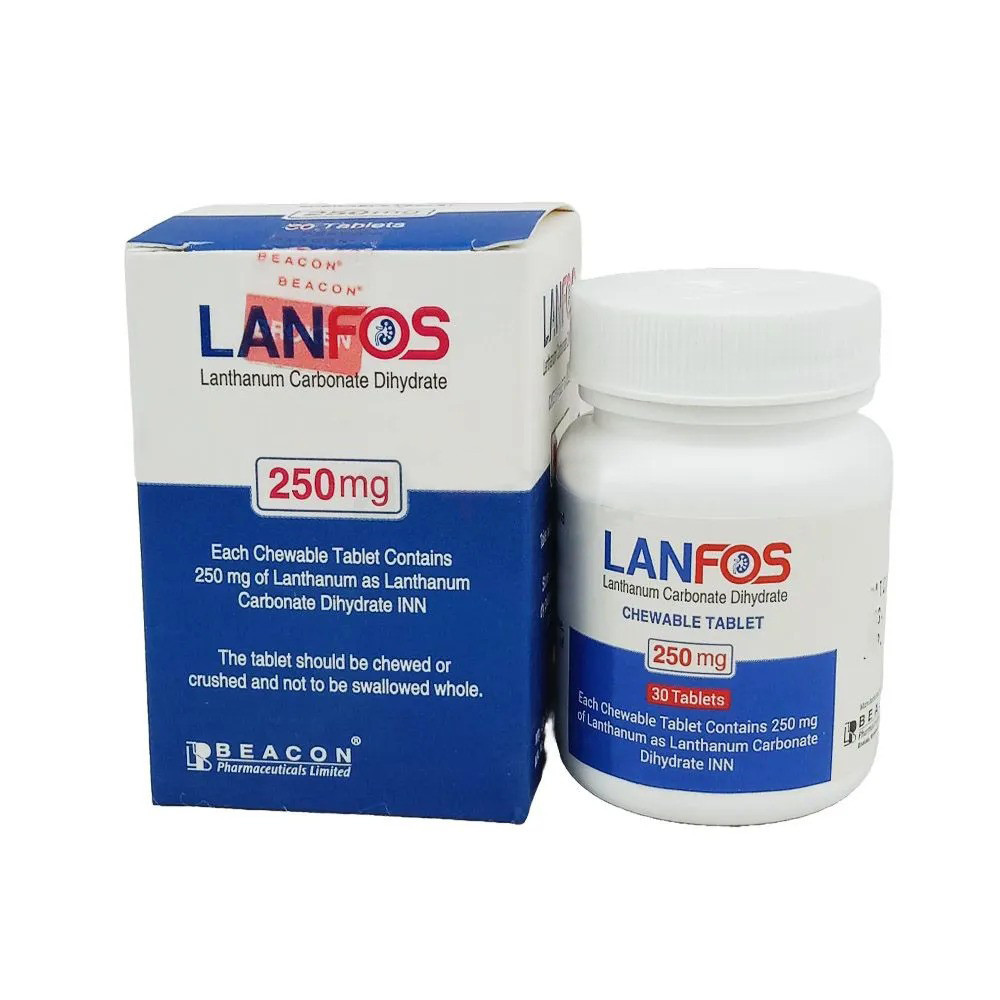
Lanthanum carbonate is an oral phosphate binder used to treat hyperphosphatemia, particularly in patients with chronic kidney disease. When taken with meals, it binds dietary phosphate in the gastrointestinal tract, reducing phosphate absorption and lowering serum phosphate levels. The tablets are intended to be chewed thoroughly before swallowing, as swallowing them whole may increase the risk of choking.
Uses
Lanthanum carbonate is a phosphate binder indicated for the reduction of serum phosphate in patients with end stage renal disease.
Used to reduce serum phosphate in patients with end stage renal disease (ESRD).
Associated Conditions
Pharmacodynamics
In vitro studies have shown that lanthanum binds phosphate in the physiologically relevant pH range of 3 to 7. In simulated gastric fluid, lanthanum binds approximately 97% of the available phosphate at pH 3-5 and 67% at pH 7, when lanthanum is present in a two-fold molar excess to phosphate. Bile acids have not been shown to affect the phosphate binding affinity of lanthanum. In order to bind dietary phosphate, lanthanum carbonate must be administered with or immediately after meals.
Mechanism of Action
Lanthanum carbonate is a phosphate binder that reduces absorption of phosphate by forming insoluble lanthanum phosphate complexes that pass through the gastrointestinal (GI) tract unabsorbed. Both serum phosphate and calcium phosphate product are reduced as a consequence of the reduced dietary phosphate absorption.
Absorption
Bioavailability very low (<0.002%) following single or multiple dose oral administration.
Protein Binding
In vitro, lanthanum is highly bound (>99%) to human plasma proteins, including human serum albumin, α1-acid glycoprotein, and transferrin.
Route of Elimination
No information is available regarding the mass balance of lanthanum in humans after oral administration. In rats and dogs, the mean recovery of lanthanum after an oral dose was about 99% and 94%, respectively, and was essentially all from feces. Biliary excretion is the predominant route of elimination for circulating lanthanum in rats.
Half Life
Elimination half-life of 53 hours.
Clearance
In healthy volunteers administered intravenous lanthanum as the soluble chloride salt (120 μg), renal clearance was less than 2% of total plasma clearance.
Toxicity
The symptoms associated with overdose are adverse reactions such as headache, nausea and vomiting. Lanthanum carbonate was not acutely toxic in animals by the oral route. No deaths and no adverse effects occurred in mice, rats or dogs after single oral doses of 2000 mg/kg.
Food Interactions
- Take with food.
Dosage
Lanthanum Carbonate Chewable Tablets: Do not swallow tablets whole. Chew or crush tablet completely before swallowing.