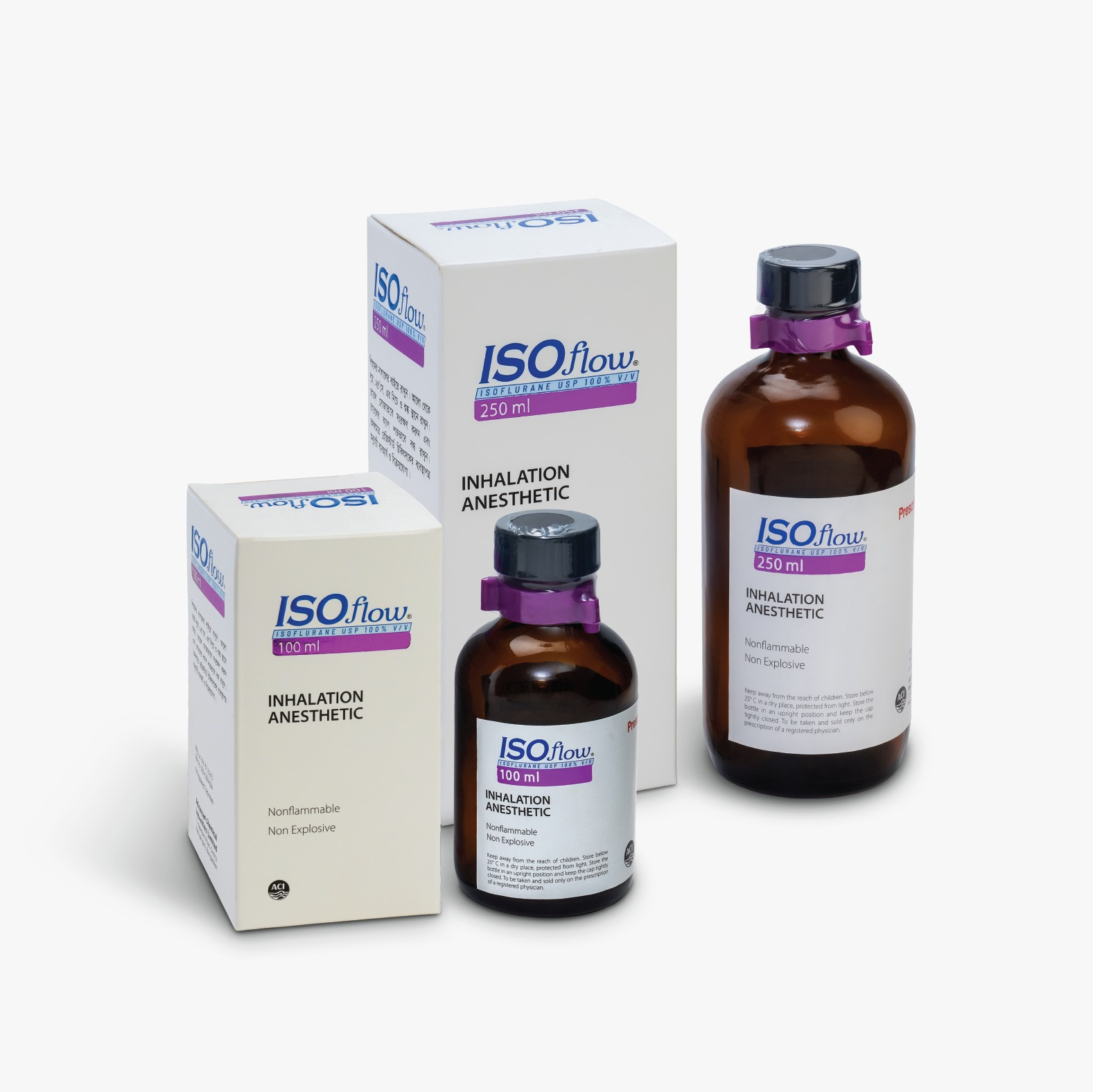
Introduction
A stable, non-explosive inhalation anesthetic, relatively free from significant side effects.
Uses
Isoflurane is an inhaled general anesthetic used in surgery.
For induction and maintenance of general anesthesia.
Associated Conditions
Pharmacodynamics
Isoflurane is a general inhalation anesthetic used for induction and maintenance of general anesthesia. It induces muscle relaxation and reduces pains sensitivity by altering tissue excitability. It does so by decreasing the extent of gap junction mediated cell-cell coupling and altering the activity of the channels that underlie the action potential.
Mechanism of Action
Isoflurane induces a reduction in junctional conductance by decreasing gap junction channel opening times and increasing gap junction channel closing times. Isoflurane also activates calcium dependent ATPase in the sarcoplasmic reticulum by increasing the fluidity of the lipid membrane. Also appears to bind the D subunit of ATP synthase and NADH dehydogenase. Isoflurane also binds to the GABA receptor, the large conductance Ca2+ activated potassium channel, the glutamate receptor and the glycine receptor.
Toxicity
LC50=15300 ppm/3 hrs (inhalation by rat)
Food Interactions
No interactions found.