Introduction
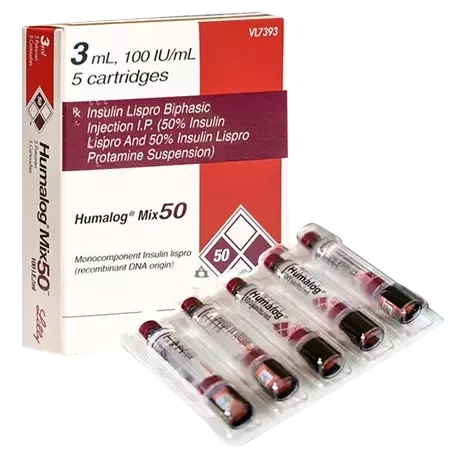
Insulin lispro is a rapid-acting form of insulin used for the treatment of hyperglycemia caused by Type 1 and Type 2 Diabetes. Insulin is prescribed for the management of diabetes mellitus to mimic the activity of endogenously produced human insulin, a peptide hormone produced by beta cells of the pancreas that promotes glucose metabolism. Insulin is released from the pancreas following a meal to promote the uptake of glucose from the blood into internal organs and tissues such as the liver, fat cells, and skeletal muscle. Absorption of glucose into cells allows for its transformation into glycogen or fat for storage. Insulin also inhibits hepatic glucose production, enhances protein synthesis, and inhibits lipolysis and proteolysis among many other functions.
Insulin is an important treatment in the management of Type 1 Diabetes (T1D) which is caused by an autoimmune reaction that destroys the beta cells of the pancreas, resulting in the body not being able to produce the insulin needed to manage circulating blood sugar levels. As a result, people with T1D rely primarily on exogenous forms of insulin, such as insulin lispro, to lower glucose levels in the blood. Insulin is also used in the treatment of Type 2 Diabetes (T2D), another form of diabetes mellitus that is a slowly progressing metabolic disorder caused by a combination of genetic and lifestyle factors that promote chronically elevated blood sugar levels. Without treatment or improvement in non-pharmacological measures such as diet and exercise to lower blood glucose, high blood sugar eventually cause cellular resistance to endogenous insulin, and in the long term, damage to pancreatic islet cells. Insulin is typically prescribed later in the course of T2D, after several oral medications such as Metformin, Gliclazide, or Sitagliptin have been tried, and when sufficient damage has been caused to pancreatic cells that the body is no longer able to produce insulin on its own.
Insulin lispro begins to exert its effects within 15 minutes of subcutaneous administration, while peak levels occur 30 to 90 minutes after administration. Due to its duration of action of around 5 hours, Humalog is considered "bolus insulin" as it provides high levels of insulin in a short period of time to mimic the release of endogenous insulin from the pancreas after meals. Bolus insulin is often combined with once daily, long-acting "basal insulin" such as Insulin detemir, Insulin degludec, or Insulin glargine to provide low concentrations of background insulin that can keep blood sugar stable between meals or overnight. Use of basal and bolus insulin together is intended to mimic the pancreas' production of endogenous insulin, with a goal of avoiding any periods of hypoglycemia.
Insulin lispro is produced by recombinant DNA technology utilizing a non-pathogenic laboratory strain of Escherichia coli and was the first commercially available insulin analog. Formerly called LYSPRO from the chemical nomenclature LYS(B28), PRO(B29), insulin lispro differs from human insulin in that the amino acid proline at position B28 is replaced by lysine and the lysine in position B29 is replaced by proline. These biochemical changes result in a reduced tendency for self-association resulting in dissolution to a dimer and then to a monomer that is absorbed more rapidly after subcutaneous injection compared to endogenous human insulin.
Without an adequate supply of insulin to promote absorption of glucose from the bloodstream, blood sugar levels can climb to dangerously high levels and can result in symptoms such as fatigue, headache, blurred vision, and increased thirst. If left untreated, the body starts to break down fat, instead of glucose, for energy which results in a build-up of ketone acids in the blood and a syndrome called ketoacidosis, which is a life-threatening medical emergency. In the long term, elevated blood sugar levels increase the risk of heart attack, stroke, and diabetic neuropathy.
Uses
Insulin lispro is a modified form of fast-acting insulin used to control hyperglycemia in diabetes mellitus.
Insulin lispro is indicated to improve glycemic control in adults and children with diabetes mellitus.
Associated Conditions
Pharmacodynamics
Insulin is a natural hormone produced by beta cells of the pancreas. In non-diabetic individuals, a basal level of insulin is supplemented with insulin spikes following meals. Increased insulin secretion following meals is responsible for the metabolic changes that occur as the body transitions from a postabsorptive to absorptive state. Insulin promotes cellular uptake of glucose, particularly in muscle and adipose tissues, promotes energy storage via glycogenesis, opposes catabolism of energy stores, increases DNA replication and protein synthesis by stimulating amino acid uptake by liver, muscle and adipose tissue, and modifies the activity of numerous enzymes involved in glycogen synthesis and glycolysis. Insulin also promotes growth and is required for the actions of growth hormone (e.g. protein synthesis, cell division, DNA synthesis). Insulin lispro is a rapid-acting insulin analogue used to mimic postprandial insulin spikes in diabetic individuals. The onset of action of insulin lispro is 10-15 minutes. Its activity peaks 60 minutes following subcutaneous injection and its duration of action is 4-5 hours. Compared to regular human insulin, insulin lispro has a more rapid onset of action and a shorter duration of action. Insulin lispro is also shown to be equipotent to human insulin on a molar basis.
Mechanism of Action
Insulin lispro binds to the insulin receptor (IR), a heterotetrameric protein consisting of two extracellular alpha units and two transmembrane beta units. The binding of insulin to the alpha subunit of IR stimulates the tyrosine kinase activity intrinsic to the beta subunit of the receptor. The bound receptor autophosphorylates and phosphorylates numerous intracellular substrates such as insulin receptor substrates (IRS) proteins, Cbl, APS, Shc and Gab 1. Activation of these proteins leads to the activation of downstream signaling molecules including PI3 kinase and Akt. Akt regulates the activity of glucose transporter 4 (GLUT4) and protein kinase C (PKC), both of which play critical roles in metabolism and catabolism. In humans, insulin is stored in the form of hexamers; however, only insulin monomers are able to interact with IR. Reversal of the proline and lysine residues at positions B28 and B29 of native insulin eliminates hydrophobic interactions and weakens some of the hydrogen bonds that contribute to the stability of the insulin dimers that comprise insulin hexamers. Hexamers of insulin lispro are produced in the presence of zinc and m-cresol. These weakly associated hexamers quickly dissociate upon subcutaneous injection and are absorbed as monomers through vascular endothelial cells. These properties give insulin lispro its fast-acting properties.
Absorption
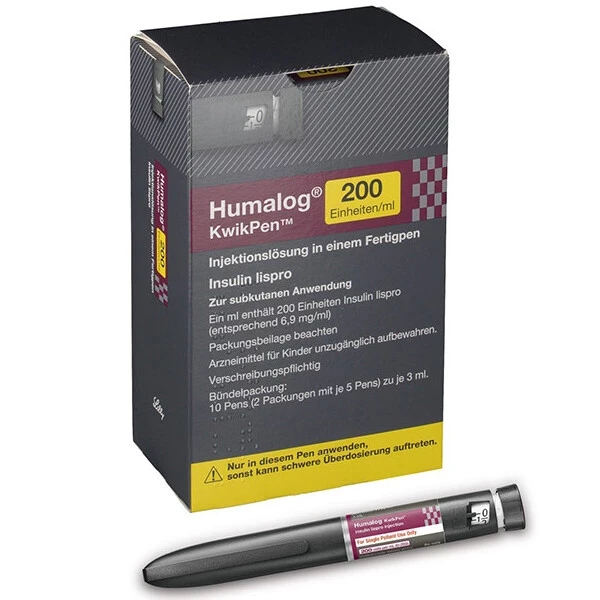
Insulin lispro is rapidly absorbed following subcutaneous administration. It is also absorbed more quickly than regular human insulin. Peak serum levels occur 30-90 minutes after injection in healthy subjects. Absorption also differs depending on the site of injection. After insulin lispro was administered in the abdomen, serum drug levels were higher and the duration of action was slightly shorter than after deltoid or thigh administration. The absolute bioavailability after subcutaneous injection ranges from 55% to 77% with doses between 0.1 to 0.2 unit/kg, inclusive. The mean observed area under the serum insulin concentration-time curve from time zero to infinity was 2360 pmol hr/L and 2390 pmol hr/L for HUMALOG U-200 and HUMALOG U-100, respectively. The corresponding mean peak serum insulin concentration was 795 pmol/L and 909 pmol/L for HUMALOG U-200 and HUMALOG U-100, respectively. The median time to maximum concentration was 1.0 hour for both formulations.
Volume of Distribution
When administered intravenously as bolus injections of 0.1 and 0.2 U/kg dose in two separate groups of healthy subjects, the mean volume of distribution of insulin lispro appeared to decrease with increase in dose (1.55 and 0.72 L/kg, respectively).
Half Life
After subcutaneous administration of insulin lispro, the t1/2 is shorter than that of regular human insulin (1 versus 1.5 hours, respectively).
Clearance
Clearance is dose dependent. When a dose of 0.1 unit/kg and 0.2 unit/kg were administered intravenously, the mean clearance was 21.0 mL/min/kg and 9.6 mL/min/kg respectively.
Toxicity
Inappropriately high dosages relative to food intake and/or energy expenditure may result in severe and sometimes prolonged and life-threatening hypoglycemia. Neurogenic (autonomic) signs and symptoms of hypoglycemia include trembling, palpitations, sweating, anxiety, hunger, nausea and tingling. Neuroglycopenic signs and symptoms of hypoglycemia include difficulty concentrating, lethargy/weakness, confusion, drowsiness, vision changes, difficulty speaking, headache, and dizziness. Mild hypoglycemia is characterized by the presence of autonomic symptoms. Moderate hypoglycemia is characterized by the presence of autonomic and neuroglycopenic symptoms. Individuals may become unconscious in severe cases of hypoglycemia. Rare cases of lipoatrophy or lipohypertrophy reactions have been observed.
Food Interactions
No interactions found.
Dosage
Type 1 diabetes mellitus: Approximately one third of the total daily insulin requirements SC; rapid-acting or short-acting, premeal insulin should be used to satisfy the remainder of the daily insulin requirements
Usual daily maintenance range: 0.5-1 unit/kg/day in divided doses; nonobese may require 0.4-0.6 unit/kg/day; obese may require 0.8-1.2 units/kg/day
Type 2 diabetes mellitus: If inadequately controlled with oral medication: 10 units/day SC (or 0.1 -0.2 unit/kg/day) of intermediate- or long-acting insulin given at bedtime generally recommended; as an alternative, rapid-acting formulations, such as insulin lispro, given before meals have also been used; dose must be adjusted carefully.