Introduction
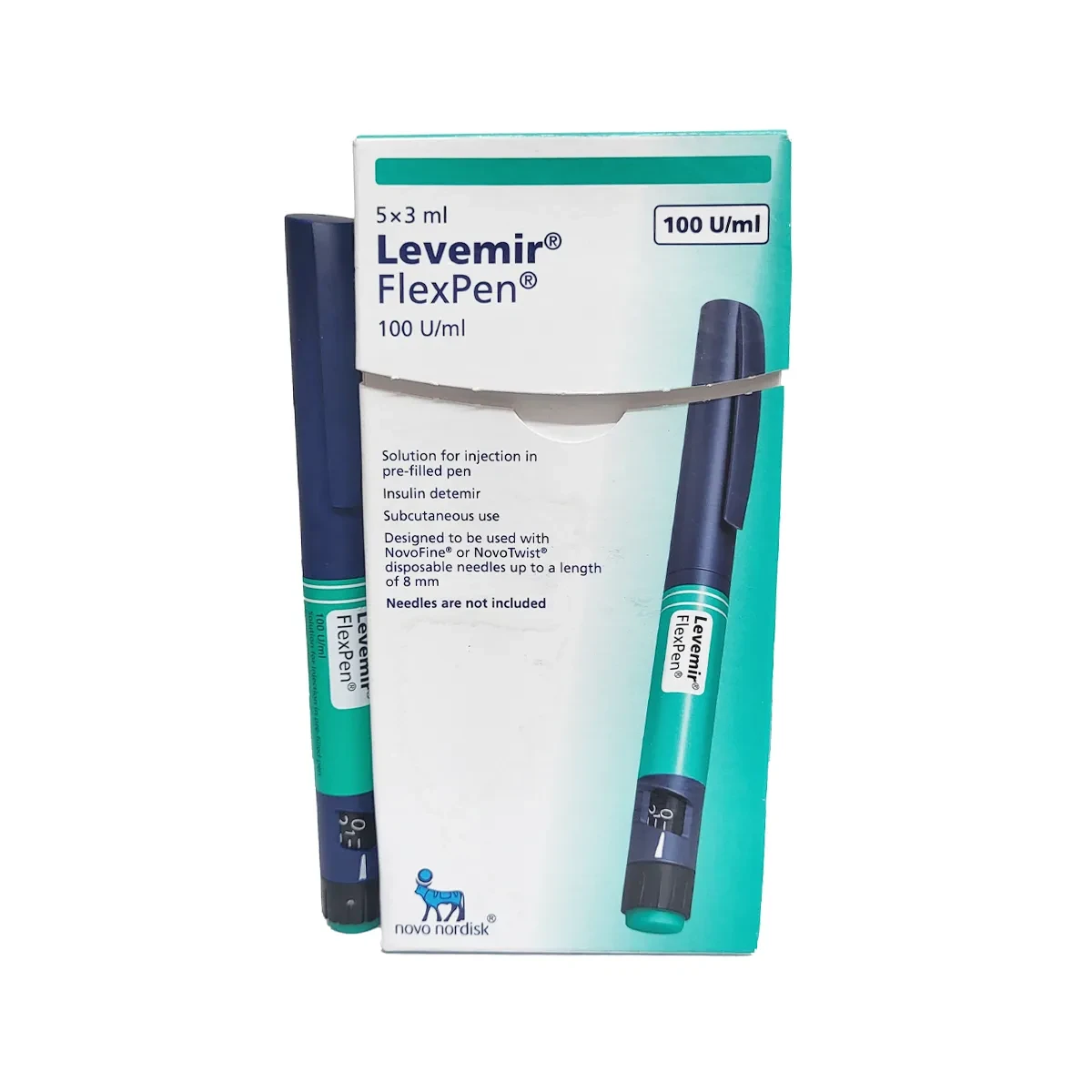
Insulin detemir is a long-acting basal insulin analogue used to improve glycemic control in type 1 and type 2 diabetes mellitus. It mimics the action of endogenous insulin by promoting glucose uptake into muscle, fat, and liver cells, suppressing hepatic glucose production, and regulating carbohydrate, fat, and protein metabolism. Structural modification with a myristic acid side chain enhances self-association and albumin binding, resulting in slow absorption and a prolonged duration of action of approximately 16–24 hours, allowing for once-daily basal insulin therapy. Insulin detemir is often used in combination with rapid-acting mealtime insulin as part of a basal–bolus regimen to provide stable blood glucose control and reduce the risk of hyperglycemia and long-term diabetes-related complications.
Uses
Insulin detemir is a long-acting form of insulin used for glycemic control in type 1 and type 2 diabetes mellitus.
Insulin detemir is indicated to improve glycemic control in adults and children with diabetes mellitus.
Associated Conditions
Pharmacodynamics
Insulin is a natural hormone produced by beta cells of the pancreas. In non-diabetic individuals, the pancreas produces a continuous supply of low levels of basal insulin along with spikes of insulin following meals. Increased insulin secretion following meals is responsible for the metabolic changes that occur as the body transitions from a postabsorptive to absorptive state. Insulin promotes cellular uptake of glucose, particularly in muscle and adipose tissues, promotes energy storage via glycogenesis, opposes catabolism of energy stores, increases DNA replication and protein synthesis by stimulating amino acid uptake by the liver, muscle and adipose tissue, and modifies the activity of numerous enzymes involved in glycogen synthesis and glycolysis. Insulin also promotes growth and is required for the actions of growth hormone (e.g. protein synthesis, cell division, DNA synthesis). Insulin detemir is a long-acting insulin analogue with a flat and predictable action profile. It is used to mimic the basal levels of insulin in diabetic individuals. The onset of action of insulin detemir is 1 to 2 hours and its duration of action is up to 24 hours. Interestingly, it has a lower affinity (30%) for the insulin receptor than human insulin.
Mechanism of Action
Insulin detemir binds to the insulin receptor (IR), a heterotetrameric protein consisting of two extracellular alpha units and two transmembrane beta units. The binding of insulin to the alpha subunit of IR stimulates the tyrosine kinase activity intrinsic to the beta subunit of the receptor. The bound receptor autophosphorylates and phosphorylates numerous intracellular substrates such as insulin receptor substrates (IRS) proteins, Cbl, APS, Shc and Gab 1. Activation of these proteins leads to the activation of downstream signalling molecules including PI3 kinase and Akt. Akt regulates the activity of glucose transporter 4 (GLUT4) and protein kinase C (PKC), both of which play critical roles in metabolism and catabolism. Insulin detemir’s long duration of action appears to be a result of slow systemic absorption from the injection site and delayed distribution to target tissues. The myristic acid side chain on insulin detemir increases self-association and gives it a high binding affinity to serum albumin. These features slow its distribution into target tissues and prolong its duration of action.
Absorption
Maximum serum concentrations are reached 6 to 8 hours following subcutaneous injection. The duration of action of insulin detemir is mediated by slowed systemic absorption of insulin detemir molecules from the injection site due to self-association of the drug molecule. When single dose of 0.5 units/kg of insulin detemir was given to adult type 1 diabetes patients, the maximum serum concentration (Cmax) was 4,641 ± 2,299 pmol/L. Insulin detemir has a slow and prolonged absorption and a relatively constant concentration/time profile over 24 hours with no pronounced peak. The median time to maximum serum insulin concentration was 12 hours after injection. On average, serum insulin concentrations declined to baseline by approximately 24 hours. The absolute bioavailability of insulin detemir is approximately 60%.
Volume of Distribution
Insulin detemir has an apparent volume of distribution of approximately 0.1 L/kg.
Protein Binding
More than 98% of insulin detemir in the bloodstream is bound to albumin. The results of in vitro and in vivo protein binding studies demonstrate that there is no clinically relevant interaction between insulin detemir and fatty acids or other protein-bound drugs.
Half Life
After subcutaneous administration in patients with type 1 diabetes, insulin detemir has a terminal half-life of 5 to 7 hours depending on dose.
Clearance
Apparent clearance (CL/F), type 1 diabetes adult patients = 3.41 ± 1.00 L/min·kg
Toxicity
Hypoglycemia may occur with inappropriately high doses. Neurogenic (autonomic) signs and symptoms of hypoglycemia include trembling, palpitations, sweating, anxiety, hunger, nausea and tingling. Neuroglycopenic signs and symptoms of hypoglycemia include difficulty concentrating, lethargy/weakness, confusion, drowsiness, vision changes, difficulty speaking, headache, and dizziness. Mild hypoglycemia is characterized by the presence of autonomic symptoms. Moderate hypoglycemia is characterized by the presence of autonomic and neuroglycopenic symptoms. Individuals may become unconscious in severe cases of hypoglycemia. Injection site reactions may also occur. Symptoms include: redness, inflammation, bruising, swelling and itching at the injection site.
Food Interactions
- Take with food. Once daily administration should be given with the evening meal or prior to bedtime.
Dosage
In patients on basal insulin only: May substitute with insulin detemir on a unit-for-unit basis based on the current basal insulin dosage, adjust subsequently to achieve glycaemic targets.