Introduction
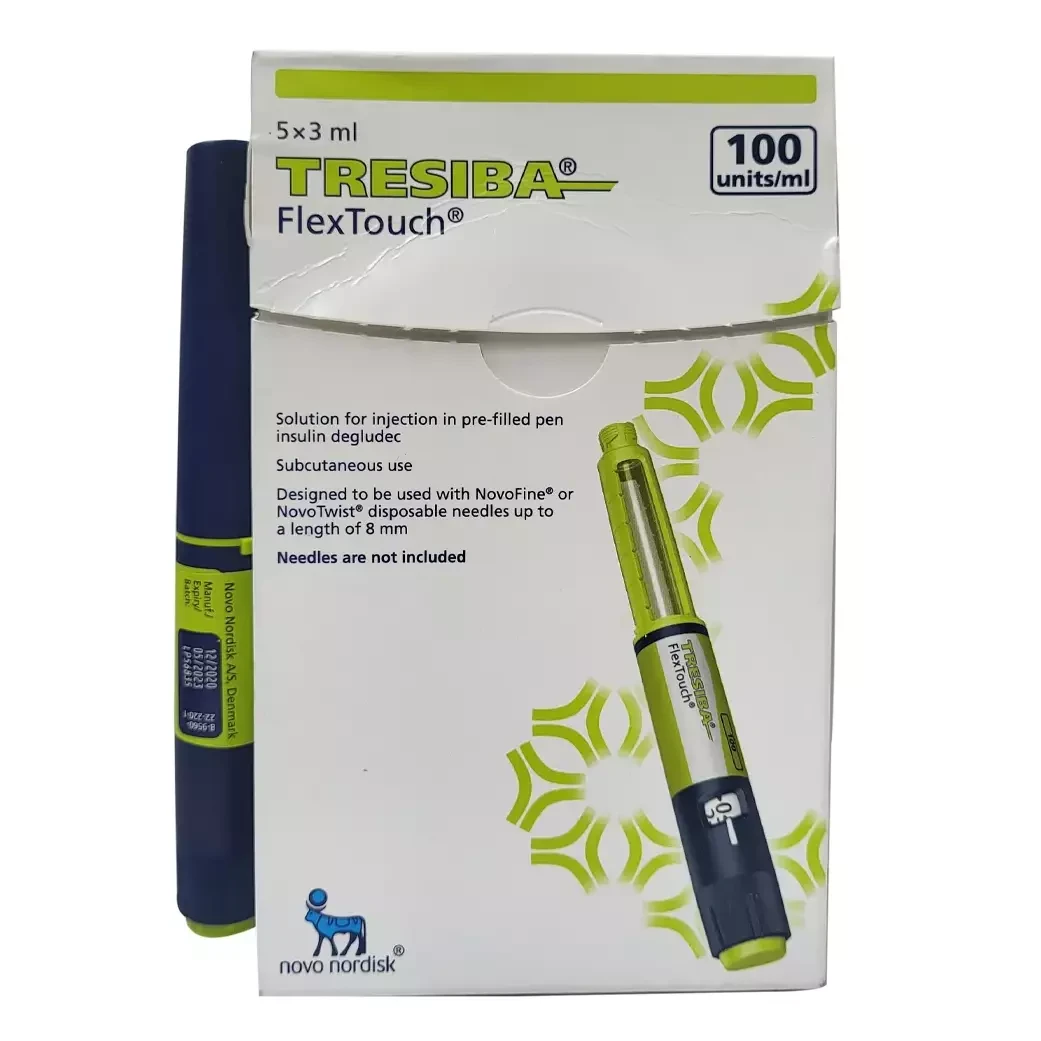
Insulin degludec is an ultra-long-acting basal insulin analogue used to improve glycemic control in type 1 and type 2 diabetes mellitus. It mimics the action of endogenous insulin by promoting glucose uptake into muscle, fat, and liver cells, suppressing hepatic glucose production, and regulating carbohydrate, fat, and protein metabolism. Structural modification enables the formation of multi-hexamers after subcutaneous injection, creating a depot that slowly releases insulin and provides a duration of action of up to 42 hours with stable, once-daily basal insulin coverage. Compared with other long-acting insulin analogues, insulin degludec offers more consistent glucose control, particularly overnight, with less pharmacokinetic variability. It is commonly used in combination with rapid-acting mealtime insulin in patients requiring a basal–bolus regimen to mimic normal physiological insulin secretion and reduce the risk of hyperglycemia and diabetes-related complications.
Uses
Insulin degludec is a long acting insulin used to treat hyperglycemia caused by type 1 and 2 diabetes mellitus.
Insulin degludec is indicated to improve glycemic control in patients 1 year of age and older with diabetes mellitus.
Associated Conditions
Pharmacodynamics
Insulin is a natural hormone produced by beta cells of the pancreas. In non-diabetic individuals, the pancreas produces a continuous supply of low levels of basal insulin along with spikes of insulin following meals. Increased insulin secretion following meals is responsible for the metabolic changes that occur as the body transitions from a postabsorptive to absorptive state. Insulin promotes cellular uptake of glucose, particularly in muscle and adipose tissues, promotes energy storage via glycogenesis, opposes catabolism of energy stores, increases DNA replication and protein synthesis by stimulating amino acid uptake by the liver, muscle and adipose tissue, and modifies the activity of numerous enzymes involved in glycogen synthesis and glycolysis. Insulin also promotes growth and is required for the actions of growth hormone (e.g. protein synthesis, cell division, DNA synthesis). Insulin detemir is a long-acting insulin analogue with a flat and predictable action profile. It is used to mimic the basal levels of insulin in diabetic individuals. The onset of action of insulin detemir is 1 to 2 hours and its duration of action is up to 24 hours. Interestingly, it has a lower affinity (30%) for the insulin receptor than human insulin.
Mechanism of Action
Insulin detemir binds to the insulin receptor (IR), a heterotetrameric protein consisting of two extracellular alpha units and two transmembrane beta units. The binding of insulin to the alpha subunit of IR stimulates the tyrosine kinase activity intrinsic to the beta subunit of the receptor. The bound receptor autophosphorylates and phosphorylates numerous intracellular substrates such as insulin receptor substrates (IRS) proteins, Cbl, APS, Shc and Gab 1. Activation of these proteins leads to the activation of downstream signalling molecules including PI3 kinase and Akt. Akt regulates the activity of glucose transporter 4 (GLUT4) and protein kinase C (PKC), both of which play critical roles in metabolism and catabolism.
Absorption
In patients with type 1 diabetes, after 8 days of once daily subcutaneous dosing with 0.4 U/kg, maximum degludec concentrations of 4472 pmol/L were attained at a median of 9 hours (tmax). After the first dose of, median onset of appearance was around one hour. The glucose lowering effect lasted at least 42 hours after the last of 8 once-daily injections. Insulin degludec concentration reach steady state levels after 3-4 days.
Protein Binding
The affinity of insulin degludec to serum albumin corresponds to a plasma protein binding of >99% in human plasma. The results of the in vitro protein binding studies demonstrate that there is no clinically relevant interaction between insulin degludec and other protein bound drugs.
Half Life
The half-life after subcutaneous administration is determined primarily by the rate of absorption from the subcutaneous tissue. On average, the half-life at steady state is approximately 25 hours independent of dose.
Clearance
The mean apparent clearance of insulin degludec is 0.03 L/kg (2.1 L/h in 70 kg individual) after single subcutaneous dose of 0.4 units/kg.
Toxicity
Observe for signs and symptoms of hypoglycemia, hypokalemia, and fluid retention and heart failure with concomitant use of Thiazolidinediones. Pregnancy Category C
Food Interactions
- Avoid alcohol. Alcohol may impair blood glucose control.
Dosage
Patients with type 2 diabetes mellitus: The recommended daily starting dose is 10 units followed by individual dosage adjustments.
Patients with type 1 diabetes mellitus: Insulin Degludec is to be used once-daily with meal-time insulin and requires subsequent individual dosage adjustments.
In patients with type 2 diabetes mellitus, Insulin Degludec can be administered alone or in any combination with oral anti-diabetic medicinal products, GLP-1 receptor agonists and bolus insulin. In type 1 diabetes mellitus, Insulin Degludec must be combined with short-/rapid-acting insulin to cover mealtime insulin requirements. On occasions when administration at the same time of the day is not possible, Insulin Degludec allows for flexibility in the timing of insulin administration. A minimum of 8 hours between injections should always be ensured. Patients who forget a dose, are advised to take it upon discovery and then resume their usual once-daily dosing schedule.