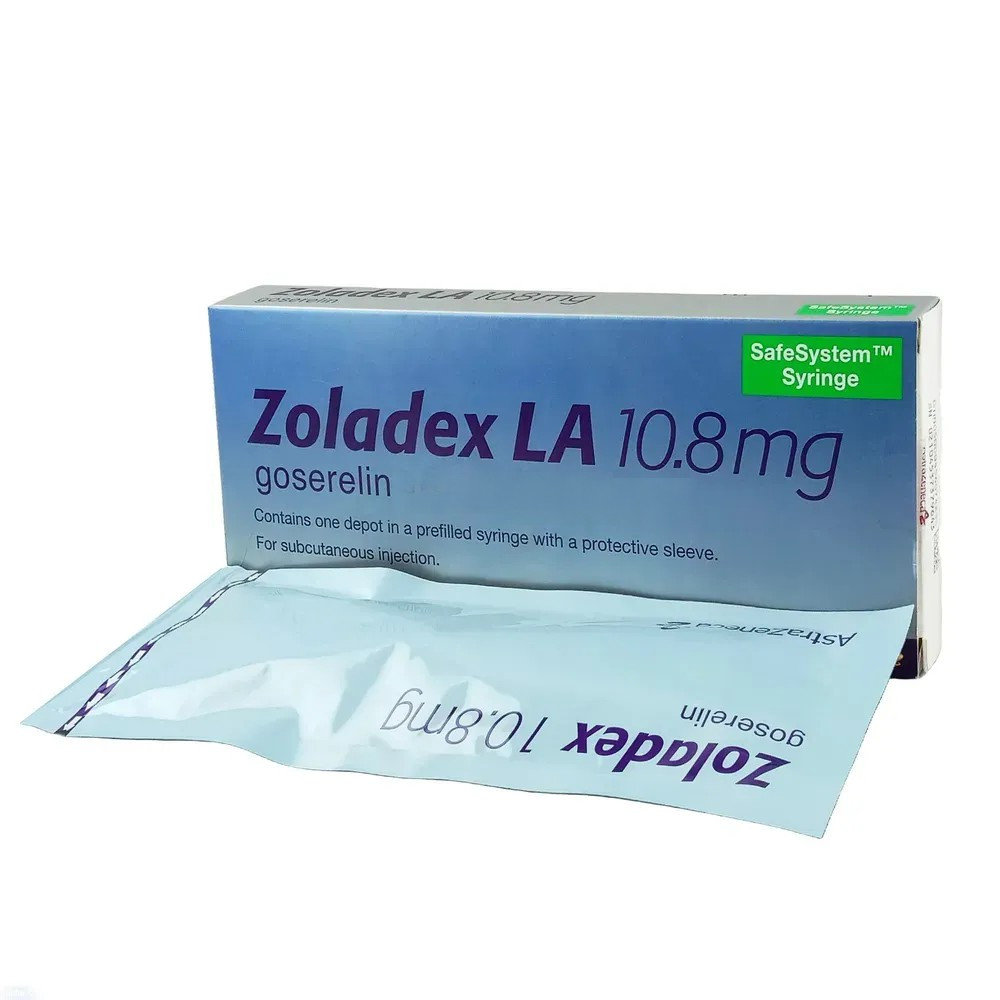
Introduction
Goserelin is a synthetic hormone. In men, it stops the production of the hormone testosterone, which may stimulate the growth of cancer cells. In women, goserelin decreases the production of the hormone estradiol (which may stimulate the growth of cancer cells) to levels similar to a postmenopausal state. When the medication is stopped, hormone levels return to normal.
Uses
Goserelin is a synthetic analog of luteinizing hormone-releasing hormone used to treat breast cancer and prostate cancer by reducing secretion of gonadotropins from the pituitary.
Goserelin is indicated for:
- Use in combination with flutamide for the management of locally confined carcinoma of the prostate
- Palliative treatment of advanced carcinoma of the prostate
- The management of endometriosis
- Use as an endometrial-thinning agent prior to endometrial ablation for dysfunctional uterine bleeding
- Use in the palliative treatment of advanced breast cancer in pre- and perimenopausal women
Associated Conditions
Pharmacodynamics
The pharmacokinetics of goserelin have been determined in both male and female healthy volunteers and patients. In these studies, goserelin was administered as a single 250µg (aqueous solution) dose and as a single or multiple 3.6 mg depot dose by subcutaneous route.
Mechanism of Action
Goserelin is a synthetic decapeptide analogue of LHRH. Goserelin acts as a potent inhibitor of pituitary gonadotropin secretion when administered in the biodegradable formulation. The result is sustained suppression of LH and serum testosterone levels.
Absorption
Inactive orally, rapidly absorbed following subcutaneous administration.
Volume of Distribution
- 44.1 ± 13.6 L [subcutaneous administration of 250 mcg]
Protein Binding
27.3%
Route of Elimination
Clearance of goserelin following subcutaneous administration of a radiolabeled solution of goserelin was very rapid and occurred via a combination of hepatic and urinary excretion. More than 90% of a subcutaneous radiolabeled solution formulation dose of goserelin was excreted in urine.
Half Life
4-5 hours
Clearance
- 121 +/- 42.4 mL/min [prostate cancer with 10.8 mg depot]
Toxicity
No experience of overdosage from clinical trials.
Food Interactions
No interactions found.
Dosage
- Stage B2-C Prostatic Carcinoma: When Goserelin is given in combination with radiotherapy and flutamide for patients with Stage T2b-T4 (Stage B2-C) prostatic carcinoma, treatment should be started 8 weeks prior to initiating radiotherapy and should continue during radiation therapy. A treatment regimen using a Goserelin 3.6 mg depot 8 weeks before radiotherapy, followed in 28 days by the Goserelin 10.8 mg depot, can be administered. Alternatively, four injections of 3.6 mg depot can be administered at 28-day intervals, two depots preceding and two during radiotherapy.
- Prostatic Carcinoma: For the management of advanced prostate cancer, Goserelin is intended for long-term administration unless clinically inappropriate.
- Endometriosis: For the management of endometriosis, the recommended duration of administration is 6 months. Currently, there are no clinical data on the effect of treatment of benign gynecological conditions with Goserelin for periods in excess of 6 months. Retreatment cannot be recommended for the management of endometriosis since safety data for retreatment are not available. If the symptoms of endometriosis recur after a course of therapy, and further treatment with Goserelin is contemplated, consideration should be given to monitoring bone mineral density. Clinical studies suggest the addition of Hormone Replacement Therapy (estrogens and/or progestins) to Goserelin is effective in reducing the bone mineral loss
- which occurs with Goserelin alone without compromising the efficacy of Goserelin in relieving the symptoms of endometriosis. The addition of Hormone Replacement Therapy may also reduce the occurrence of vasomotor symptoms and vaginal dryness associated with hypoestrogenism. The optimal drugs, dose and duration of treatment has not been established.
- Endometrial Thinning: For use as an endometrial-thinning agent prior to endometrial ablation, the dosing recommendation is one or two depots (with each depot given four weeks apart). When one depot is administered, surgery should be performed at four weeks. When two depots are administered, surgery should be performed within two to four weeks following administration of the second depot.
- Breast Cancer: For the management of advanced breast cancer, Goserelin is intended for long-term administration unless clinically inappropriate.
- Renal or Hepatic Impairment: No dosage adjustment is necessary for patients with renal or hepatic impairment.
- Stage B2-C Prostatic Carcinoma: When Goserelin is given in combination with radiotherapy and flutamide for patients with Stage T2b-T4 (Stage B2-C) prostatic carcinoma, treatment should be started 8 weeks prior to initiating radiotherapy and should continue during radiation therapy. A treatment regimen using one Goserelin 3.6 mg depot, followed in 28 days by one Goserelin 10.8 mg depot, should be administered.
- Prostatic Carcinoma: For the management of advanced prostate cancer, Goserelin is intended for long-term administration unless clinically inappropriate.
- Renal or Hepatic Impairment: No dosage adjustment is necessary for patients with renal or hepatic impairment.
- Women: Goserelin 10.8 mg implant is not indicated in women as the data are insufficient to support reliable suppression of serum estradiol. For female patients requiring treatment with goserelin, refer to prescribing information for Goserelin 3.6 mg implant.