Introduction
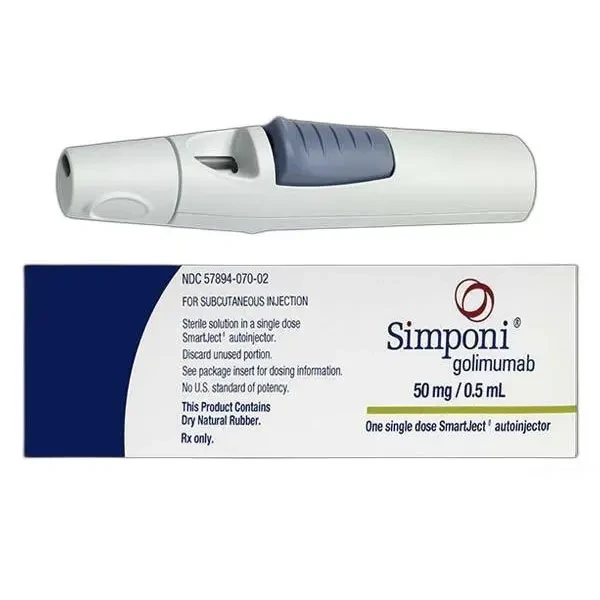
Golimumab is a human IgG1қ monoclonal antibody derived from immunizing genetically engineered mice with human TNFα. Golimumab binds and inhibits soluble and transmembrane human TNFα. Increased TNFα is associated with chronic inflammation. Thus golimumab is indicated for use in adults (i) as an adjunct to methotrexate treatment in patients with moderate to severe active rheumatoid arthritis (RA), (ii) alone or as an adjunct to methotrexate treatment in patients with active psoriatic arthritis (PsA), (iii) as a single agent in patients with active ankylosing spondylitis (AS), and (iv) as a single agent in patients with moderate to severe ulcerative colitis (UC) who require chronic steroids or have experienced intolerance or only a partial response to previous medications. Additionally in children and adolescents taking golimumab, there have been lymphoma and other malignancies observed.
Uses
Golimumab is a TNFα inhibitor used in the symptomatic treatment of various active inflammatory disorders, such as rheumatoid arthritis, psoriatic arthritis, ankylosing spondylitis, and ulcerative colitis.
Used in adults (i) as an adjunct to methotrexate treatment in patients with moderate to severe active rheumatoid arthritis (RA), (ii) in patients 2 years old and above with active psoriatic arthritis (PsA), (iii) as a single agent in patients with active ankylosing spondylitis (AS) or in combination with methotrexate, and (iv) as a single agent in patients with moderate to severe ulcerative colitis (UC) who require chronic steroids or have experienced intolerance or only a partial response to previous medications. It is also indicated (v) for the treatment of active polyarticular juvenile idiopathic arthritis (pJIA) in patients 2 years of age and older.
Associated Conditions
Pharmacodynamics
Golimumab inhibits the activity of the cytokine, tumor necrosis factor alpha (TNFα). In areas such as the joints and blood, increased TNFα is associated with chronic inflammation seen in patients with rheumatoid arthritis, psoriatic arthritis, and ankylosing spondylitis. Thus golimumab decreases the inflammation in these conditions. Concerning ulcerative colitis, the physiological effects of golimumab has yet to be determined.
Mechanism of Action
As a human monoclonal antibody, golimumab binds and inhibits soluble and transmembrane human TNFα. Inhibition of TNFα prevents it binding to its receptors, which prevents both leukocyte infiltration through prevention of cell adhesion proteins such as E-selectin, ICAM-1 and VCAM-1, and pro-inflammatory cytokine secretion such as IL-6, IL-8, G-CSF and GM-CSF in vitro. Consequently, in patients with chronic inflammatory conditions, decreases in ICAM-1 and IL-6 as well as C-reactive protein (CRP), matrix metalloproteinase 3 (MMP-3), and vascular endothelial growth factor (VEGF) were observed.
Absorption
After subcutaneous administration, golimumab can achieve maximum serum concentrations in 2 to 6 days and has an approximate bioavailability of 53%. In healthy volunteers, the maximum average concentration reached was 3.2 ± 1.4 μg/mL.
Volume of Distribution
After IV administration, golimumab has a volume of distribution of about 58 to 126 mL/kg. This means that golimumab stays mostly in the circulatory system.
Protein Binding
Plasma protein binding was not quantified.
Route of Elimination
The route of elimination for golimumab has yet to be determined.
Half Life
Golimumab has a long half-life of about 2 weeks.
Clearance
After one IV dose of golimumab, the systemic clearance was about 4.9 to 6.7 mL/day/kg.
Toxicity
The FDA label includes a black box warning of serious infections and malignancy. Specifically there have been hospitalizations or death from infections such as bacterial sepsis, tuberculosis (TB), and invasive fungal (histoplasmosis) and other opportunistic infections. Additionally in children and adolescents taking golimumab, there have been lymphoma and other malignancies observed.
Food Interactions
No interactions found.
Dosage
Dosage in Moderately to Severely Active Ulcerative Colitis: The recommended Golimumab induction dosage regimen is a 200-mg subcutaneous injection at Week 0, followed by 100 mg at Week 2, and then maintenance therapy with 100 mg every 4 weeks.