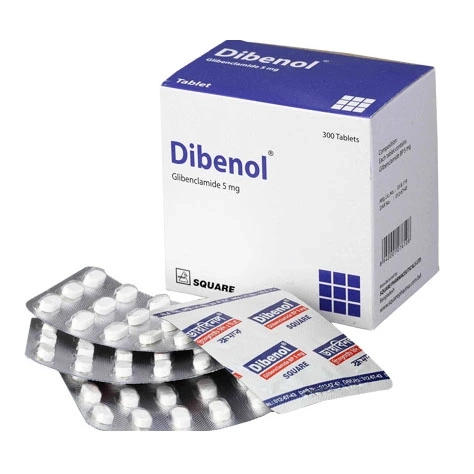
Introduction
Glyburide is a second generation sulfonylurea used to treat patients with diabetes mellitus type II. It is typically given to patients who cannot be managed with the standard first line therapy, metformin. Glyburide stimulates insulin secretion through the closure of ATP-sensitive potassium channels on beta cells, raising intracellular potassium and calcium ion concentrations.
Uses
Glyburide is a sulfonylurea used in the treatment of non insulin dependent diabetes mellitus.
Glyburide is indicated alone or as part of combination product with metformin, as an adjunct to diet and exercise, to improve glycemic control in adults with type 2 diabetes mellitus.
Associated Conditions
Pharmacodynamics
Glyburide is a second generation sulfonylurea that stimulates insulin secretion through the closure of ATP-sensitive potassium channels on beta cells, raising intracellular potassium and calcium ion concentrations. Glibenclamide has a long duration of action as it is given once daily, and a wide therapeutic index as patients are started at doses as low as 0.75mg but that can increase as high as 10mg or more. Patients taking glyburide should be cautioned regarding an increased risk of cardiovascular mortality as seen with tolbutamide, another sulfonylurea.
Mechanism of Action
Glyburide belongs to a class of drugs known as sulfonylureas. These drugs act by closing ATP-sensitive potassium channels on pancreatic beta cells. The ATP-sensitive potassium channels on beta cells are known as sulfonylurea receptor 1 (SUR1).
Under low glucose concentrations, SUR1 remains open, allowing for potassium ion efflux to create a -70mV membrane potential.
Normally SUR1 closes in response to high glucose concentrations, the membrane potential of the cells becomes less negative, the cell depolarizes, voltage gated calcium channels open, calcium ions enter the cell, and the increased intracellular calcium concentration stimulates the release of insulin containing granules.
Glyburide bypasses this process by forcing SUR1 closed and stimulating increased insulin secretion.
Absorption
Elderly patients taking glyburide reached a Cmax of 211-315ng/mL with a Tmax of 0.9-1.0h, while younger patients reached a Cmax of 144-302ng/mL with a Tmax of 1.3-3.0h. Patients taking glyburide have and AUC of 348ng*h/mL.
Volume of Distribution
Elderly patients have a volume of distribution of 19.3-52.6L, while younger patients have a volume of distribution of 21.5-49.3L.
Protein Binding
Glyburide is 99.9% bound to protein in plasma with >98% accounted for by binding to serum albumin.
Route of Elimination
Unlike other sulfonylureas, glyburide is 50% excreted in the urine and 50% in the feces. Glyburide is mainly excreted as the metabolite 4-trans-hydroxyglyburide.
Half Life
Elderly patients have a terminal elimination half life of 4.0-13.4h, while younger patients have a terminal elimination half life of 4.0-13.9h.
Clearance
Elderly patients have a clearance of 2.70-3.55L/h, while younger patients have a clearance of 2.47-4.11L/h.
Toxicity
The oral LD50 in rats is >3200mg/kg, in mice is >1500mg/kg, in rabbits is >10,000mg/kg, and in guinea pigs is >1500mg/kg.
Patients experiencing an overdose may present with hypoglycemia. Mild hypoglycemia should be treated with oral glucose and adjustments to drug doses or meal schedules. Severe hypoglycemia may present with coma, seizure, and neurological impairment. This should be treated immediately in hospital with intravenous glucose and monitoring for 24-48 hours.
Food Interactions
- Avoid alcohol. Alcohol increases the risk of hypoglycemia.
- Take before a meal. Take 30-60 minutes before breakfast.