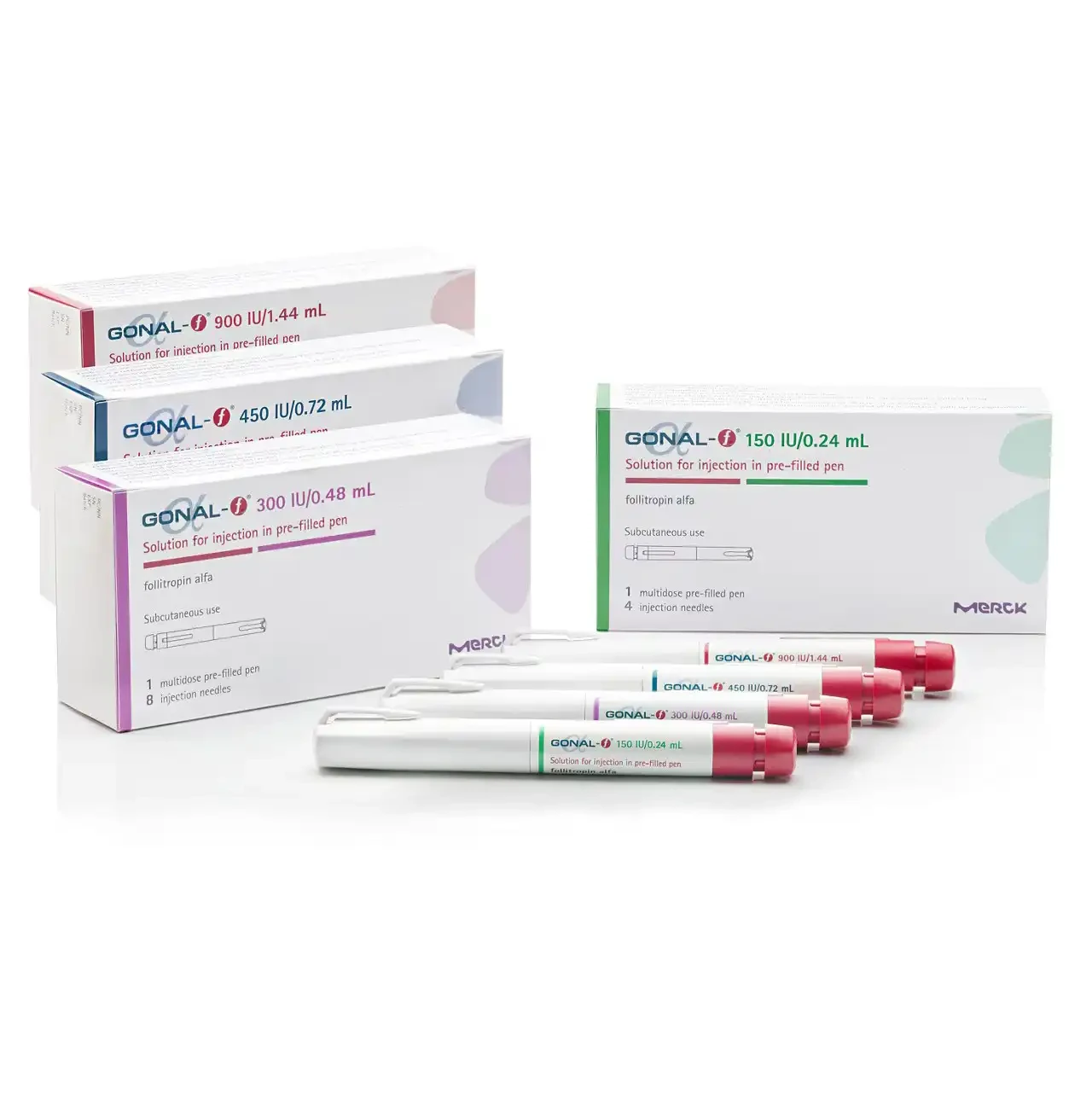
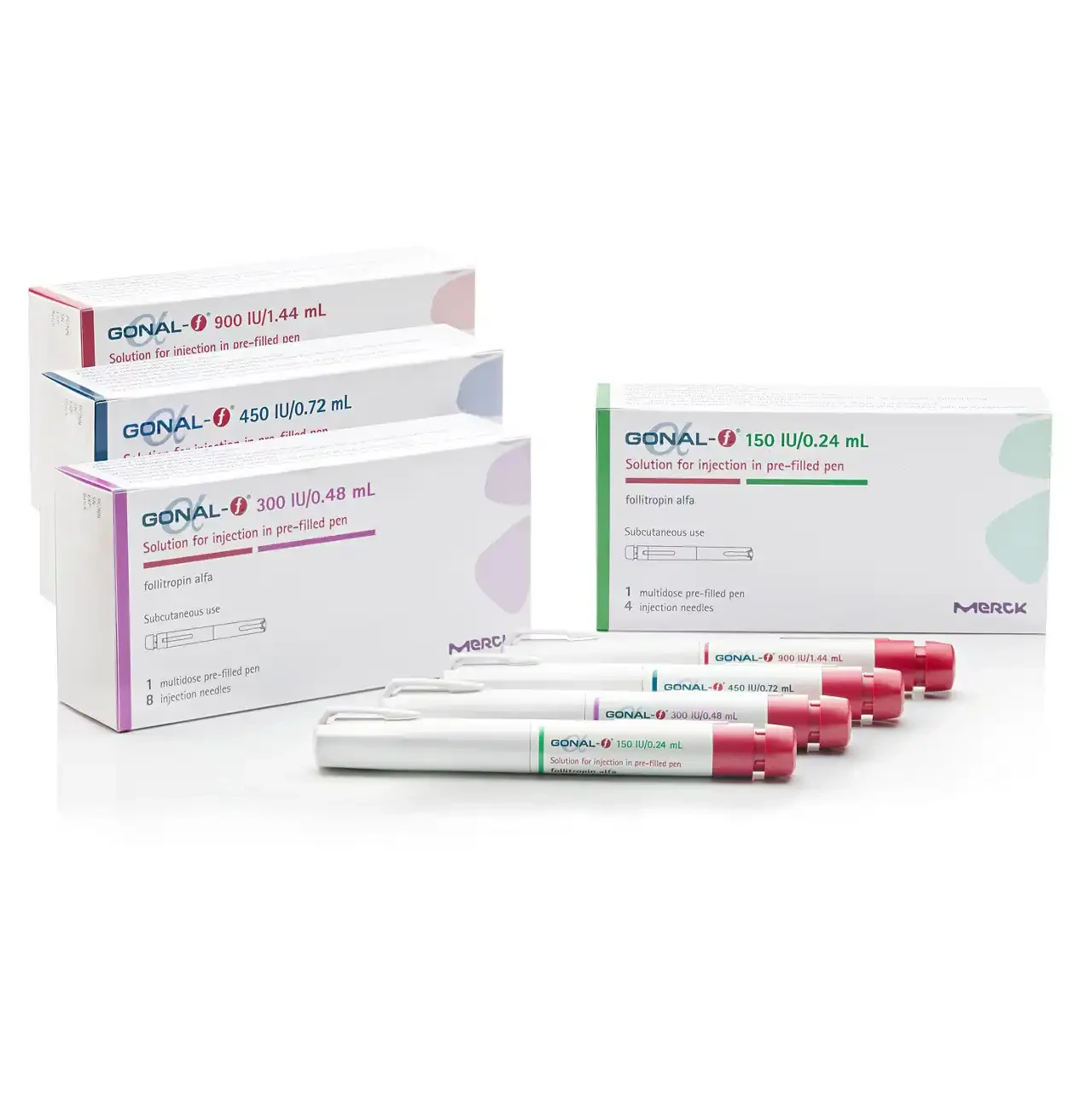
Introduction
Follitropin is a human follicle stimulating hormone (FSH) preparation of recombinant DNA origin, which consists of two non-covalently linked, non-identical glycoproteins designated as the alpha- and beta- subunits. The alpha- and beta- subunits have 92 and 111 amino acids. The alpha subunit is glycosylated at Asn 51 and Asn 78 while the beta subunit is glycosylated at Asn 7 and Asn 24. Follitropin beta is produced in genetically engineered Chinese hamster cell lines (CHO). Follitropin is important in the development of follicles produced by the ovaries. Given by subcutaneous injection, it is used in combination with human chorionic gonadotropin (hCG) to assist in ovulation and fertility. Follitropin may also be used to cause the ovary to produce several follicles, which can then be harvested for use in gamete intrafallopian transfer (GIFT) or in vitro fertilization (IVF). Numerous physio-chemical tests and bioassays indicate that follitropin beta and follitropin alpha are indistinguishable. However, a more recent study showed there is may be a slight clinical difference, with the alpha form tending towards a higher pregnancy rate and the beta form tending towards a lower pregnancy rate, but with significantly higher estradiol (E2) levels. Structural analysis shows that the amino acid sequence of follitropin beta is identical to that of natural human follicle stimulating hormone (FSH). Further, the ogliosaccharide side chains are very similar, but not completely identical to that of natural FSH. However, these small differences do not affect the bioactivity compared to natural FSH.
Uses
Follitropin is a form of recombinant human follicle stimulating hormone used to stimulate follicle development in women with primary ovarian hypogonadism and in men with hypogonadotropic hypogonadism.
In women having been diagnosed with primary ovarian failure, it is used in combination with human chorionic gonadotropin (hCG) to assist in ovulation and fertility. In men with hypogonadotrophic hypogonadism, it is used to induce spermatogenesis. Follitropin may also be used to cause the ovary to produce several follicles, which can then be harvested for use in gamete intrafallopian transfer (GIFT) or in vitro fertilization (IVF).
Associated Conditions
Pharmacodynamics
Used for the treatment of female infertility, Follitropin beta or follicle stimulating hormone (FSH) stimulates ovarian follicular growth in women who do not have primary ovarian failure. FSH, the active component of Follitropin beta is the primary hormone responsible for follicular recruitment and development.
Mechanism of Action
Follitropin is a recombinant form of endogenous follicle stimulating hormone (FSH). FSH binds to the follicle stimulating hormone receptor which is a G-coupled transmembrane receptor. Binding of the FSH to its receptor seems to induce phosphorylation and activation of the PI3K (Phosphatidylinositol-3-kinase) and Akt signaling pathway, which is known to regulate many other metabolic and related survival/maturation functions in cells.
Absorption
The absorption rate is the main driving force behind the pharmokinetics of Follitropin alpha as the rate of absorption was found to be slower than the elimination rate after administration subcutaneously and intramuscularly. The bioavailability is approximately 66-76%. The time to peak after subcutaneous injection in healthy volunteers was 8-16 hours in females and 11-20 hours in males.
Volume of Distribution
- 8 L [female subjects following intravenous administration of a 300 IU dose]
Route of Elimination
Via liver and kidneys.
Half Life
Circulation half life of 3-4 hours, elimination half life of 35-40 hours
Clearance
- 0.01 1*h-1kg-1 [European women with a single intramuscular dose of 300 IU]
- 0.01 1*h-1kg-1 [Japanese women with a single intramuscular dose of 300 IU]
Toxicity
Headaches, ovarian cysts, nausea and upper respiratory tract infections occurred in more than 10% of women in clinical trials. In men, the most serious adverse events reported were testicular surgery for cryptorchidism which existed prestudy, hemoptysis, an infected pilonidal cyst, and lymphadenopathy associated with an Epstein-Barr viral infection. Other concerns include overstimulation of the ovaries, pulmonary and vascular complications and multiple births. Post-marketing reports revealed hypersensitivity reactions including anaphylactoid reactions and asthma. Follitropin is contraindicated in pregnant women. No studies have been done in nursing mothers.
Food Interactions
No interactions found.
Dosage
Assisted reproductive technologies Initial: 150-225 IU/day for at least 4 days, to be started on day 2 or 3 of cycle, until follicular development is adequate. Adjust dose based on ovarian response. Usual max: 450 IU/day. Once follicular development is adequate, administer hCG to induce final follicular maturation. Withhold hCG if ovaries are abnormally enlarged.
Spermatogenesis induction 150 IU 3 times/week with continued chorionic gonadotrophin for at least 4 mth. Max: 300 IU 3 times/week