Introduction
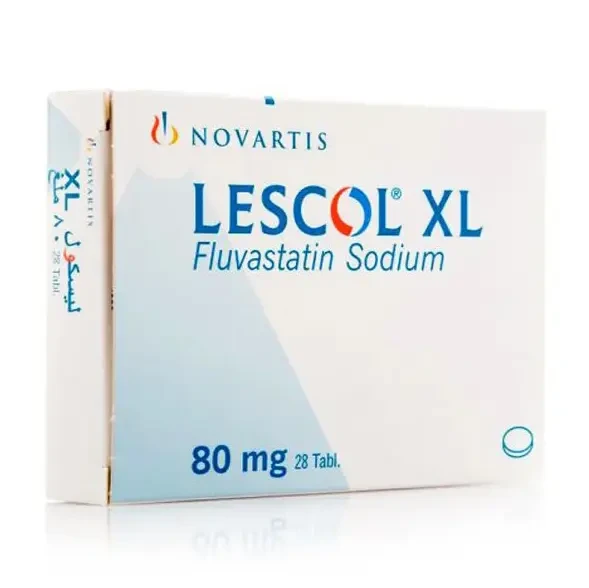
Fluvastatin is an antilipemic agent that competitively inhibits hydroxymethylglutaryl-coenzyme A (HMG-CoA) reductase. HMG-CoA reductase catalyzes the conversion of HMG-CoA to mevalonic acid, the rate-limiting step in cholesterol biosynthesis. Fluvastatin belongs to a class of medications called statins and is used to reduce plasma cholesterol levels and prevent cardiovascular disease. It is also the first entirely synthetic HMG-CoA reductase inhibitor and is structurally distinct from the fungal derivatives of this therapeutic class. Fluvastatin is a racemate comprising equimolar amounts of (3R,5S)- and (3S,5R)-fluvastatin.
Uses
Fluvastatin is an HMG-CoA reductase inhibitor used to lower lipid levels and reduce the risk of cardiovascular disease including myocardial infarction and stroke.
To be used as an adjunct to dietary therapy to prevent cardiovascular events. May be used as secondary prevention in patients with coronary heart disease (CHD) to reduce the risk of requiring coronary revascularization procedures, for reducing progression of coronary atherosclerosis in hypercholesterolemic patients with CHD, and for the treatment of primary hypercholesterolemia and mixed dyslidipidemia.
Associated Conditions
Pharmacodynamics
Fluvastatin, the first synthetically-derived HMG-CoA reductase inhibitor, is a hydrophilic, acidic, antilipemic agent used to lower cholesterol and triglyceride levels associated with primary hypercholesterolemia and mixed dyslipidemia (Fredrickson types IIa and IIb), to slow the progression of coronary atherosclerosis in patients with CHD and as secondary prevention therapy in patients with CHD to reduce the risk of requiring coronary revascularization procedures. Although similar to lovastatin, simvastatin, and pravastatin, fluvastatin has a shorter half-life, no active metabolites, extensive protein binding, and minimal CSF penetration. Fluvastatin acts primarily in the liver. It is prepared as a racemate of two erythro enantiomers of which the 3R,5S enantiomer exerts the pharmacologic effect.
Mechanism of Action
Fluvastatin selectively and competitively inhibits the hepatic enzyme hydroxymethylglutaryl-coenzyme A (HMG-CoA) reductase. HMG-CoA reductase is responsible for converting HMG-CoA to mevalonate, the rate-limiting step in cholesterol biosynthesis. Inhibition results in a decrease in hepatic cholesterol levels which stimulates the synthesis of LDL receptors and increases hepatic uptake of LDL cholesterol. The end result is decreased levels of plasma total and LDL cholesterol.
Absorption
Rapidly and almost completely absorbed (> 90%), but undergoes extensive first pass metabolism. Bioavailability is 24% (range 9-50%) when a 10 mg dose is given. The mean relative bioavailability of the extended-release tablet is 29% (range: 9% to 66%) compared to an immediate-release capsule administered under fasting conditions. When given orally, fluvastatin reaches peak concentrations (Tmax) in less than one hour. Taking the extended release tablet with a high-fat meal will delay absorption (Tmax = 6 hours) and increase bioavailability by approximately 50%. However, the maximum concentration of fluvastatin sodium extended-release tablets seen after a high fat meal is less than the peak concentration following a single dose or twice daily dose of the 40 mg fluvastatin capsule.
Volume of Distribution
- 0.35 L/kg
Protein Binding
98% bound to plasma proteins. At therapeutic concentrations, the protein binding of fluvastatin is not affected by warfarin, salicylic acid and glyburide.
Route of Elimination
When orally administered, fluvastatin is primarily excreted in the faces ( ~90%) as metabolites, with less than 2% present as unchanged drug. Approximately 5% was recovered in the urine.
Half Life
3 hours
Clearance
- 0.8 L/h/kg
- 107 ± 38.1 L/h [Hypercholesterolemia patients receiving a single dose of 20 mg]
- 87.8 ± 45 L/h [Hypercholesterolemia patients receiving 20 mg twice daily]
- 108 ± 44.7 L/h [Hypercholesterolemia patients receiving 40 mg single]
- 64.2 ± 21.1 L/h [Hypercholesterolemia patients receiving 40 mg twice daily]
Toxicity
Generally well-tolerated. May cause gastrointestinal upset (diarrhea, nausea, constipation, gas, abdominal pain), myotoxicity (mypothy, myositis, rhabdomyolysis), and hepatotoxicity.
Food Interactions
- Take with or without food. Should be taken consistently in regards to meals.