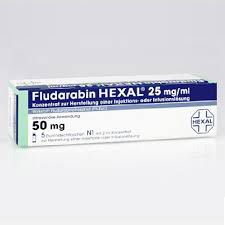
Generic Name Fludarabine Phosphate
Bangla Name ফ্লুডারাবিন ফসফেট
Available brands 3
Language

Introduction

Fludarabine is a chemotherapeutic agent used in the treatment of hematological malignancies.

Uses

Fludarabine is a purine analog antimetabolite that inhibits DNA synthesis.

For the treatment of adult patients with B-cell chronic lymphocytic leukemia (CLL) who have not responded to or whose disease has progressed during treatment with at least one standard alkylating-agent containing regimen

Associated Conditions

  • B-cell chronic lymphocytic leukemia/prolymphocytic leukemia/small lymphocytic lymphoma refractory
  • Refractory Non-Hodgkin's lymphoma

Pharmacodynamics

Fludarabine is a chemotherapy drug used in the treatment of chronic lymphocytic leukemia. It acts at DNA polymerase alpha, ribonucleotide reductase and DNA primase, results in the inhibition of DNA synthesis, and destroys the cancer cells.

Mechanism of Action

Fludarabine phosphate is rapidly dephosphorylated to 2-fluoro-ara-A and then phosphorylated intracellularly by deoxycytidine kinase to the active triphosphate, 2-fluoro-ara-ATP. This metabolite appears to act by inhibiting DNA polymerase alpha, ribonucleotide reductase and DNA primase, thus inhibiting DNA synthesis. The mechanism of action of this antimetabolite is not completely characterized and may be multi-faceted.

Absorption

Bioavailability is 55% following oral administration.

Protein Binding

19-29%

Half Life

20 hours

Clearance

  • 117-145 mL/min [patients with B-cell CLL receiving IV administration of a single dose of 40 mg/m^2.

Food Interactions

  • Take with or without food. Administration with food delays absorption, but not to a clinically significant extent.

Dosage

Fludarabine injection: This should be administered under the supervision of a qualified physician experienced in the use of antineoplastic therapy. The recommended dose is 25 mg Fludarabinebine phosphate/m² body surface given daily for 5 consecutive days every 28 days by the intravenous route. Each vial is to be made up in 2 ml water for injection. Each ml of the resulting solution for injection/infusion will contain 25 mg Fludarabinebine phosphate. The required dose (calculated on the basis of the patient's body surface) is drawn up into a syringe. For intravenous bolus injection, this dose is further diluted into 10 ml of 0.9% sodium chloride. Alternatively, for infusion, the required dose drawn up in a syringe may be diluted into 100 ml 0.9% sodium chloride and infused over approximately 30 minutes. The duration of treatment depends on the treatment success and the tolerability of the drug. In CLL patients, Fludarabine should be administered up to the achievement of best response (complete or partial remission, usually 6 cycles) and then the drug should be discontinued. In patients with Lg-NHL, treatment with Fludarabine is recommended up to the achievement of best response (complete or partial remission). Two cycles of consolidation should be considered after best response has been reached. In clinical trials with Lg-NHL, the majority of patients underwent not more than 8 cycles.

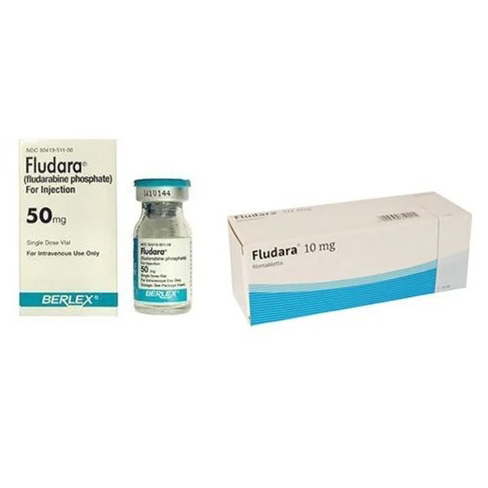
Fludarabine tablet: The usual starting dose of Fludarabine tablets is 40 mg/m2 of Fludarabinebine phosphate administered once daily for five consecutive days every 28 days. The duration of treatment depends on the treatment success and the tolerability of the drug. Fludarabine oral should be administered until the achievement of a maximal response (complete or partial remission, usually 6 cycles) and then the drug should be discontinued.

Medical review

Last reviewed: 24 Jul 2026

Medically reviewed by:

This is general information, not personal medical advice. Consult a doctor before taking any medicine.

Taking medicines without doctor's advice can cause long-term problems.
Brand medicines containing Fludarabine Phosphate