Introduction
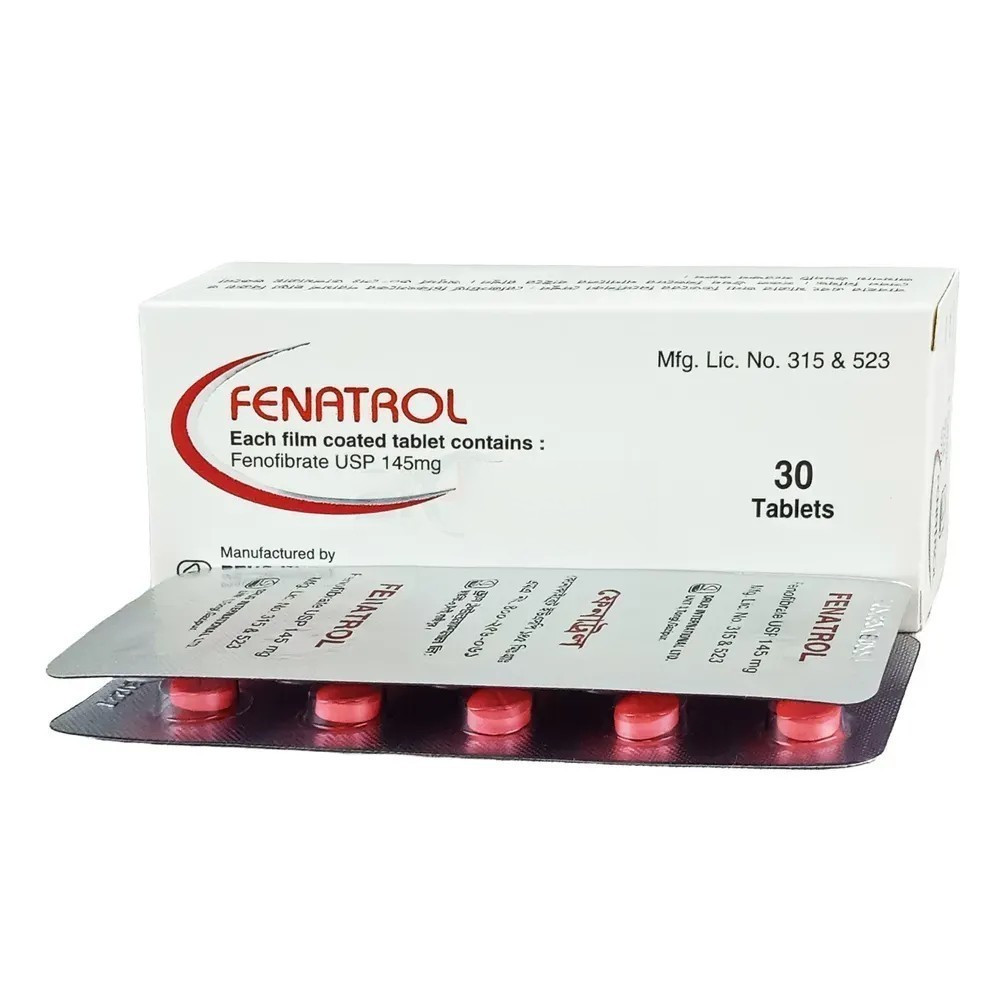
Fenofibrate is a fibric acid derivative like clofibrate and gemfibrozil. Fenofibrate is used to treat primary hypercholesterolemia, mixed dyslipidemia, severe hypertriglyceridemia.
Uses
Fenofibrate is a peroxisome proliferator receptor alpha activator used to lower LDL-C, total-C, triglycerides, and Apo B, while increasing HDL-C in hypercholesterolemia, dyslipidemia, and hypertriglyceridemia.
Fenofibrate is indicated as adjunctive therapy to diet to reduce elevated LDL-C, Total-C, Triglycerides, and Apo B, and to increase HDL-C adults with primary hypercholesterolemia or mixed dyslipidemia. Fenofibrate is also indicated to treat adults with severe hypertriglyceridemia.
Associated Conditions
Pharmacodynamics
Fenofibrate is a fibrate that activates peroxisome proliferator activated receptor alpha (PPARα) to alter lipid metabolism and treat primary hypercholesterolemia, mixed dyslipidemia, and severe hypertriglyceridemia. Fenofibrate requires once daily dosing and has a half life of 19-27 hours so its duration of action is long. Fenofibrate capsules are given at a dose of 50-150mg daily so the therapeutic index is wide. Patients should be counselled about the risk of rhabdomyolysis, myopathy, and cholelithiasis when taking fibrates.
Mechanism of Action
Fenofibrate activates peroxisome proliferator activated receptor alpha (PPARα), increasing lipolysis, activating lipoprotein lipase, and reducing apoprotein C-III. PPARα is a nuclear receptor and its activation alters lipid, glucose, and amino acid homeostasis. Activation of PPARα activates transcription of gene transcription and translation that generates peroxisomes filled with hydrogen peroxide, reactive oxygen species, and hydroxyl radicals that also participate in lipolysis. This mechanism of increased lipid metabolism is also associated with increased oxidative stress on the liver. In rare cases this stress can lead to cirrhosis and chronic active hepatitis.
Absorption
A single 300mg oral dose of fenofibrate reaches a Cmax of 6-9.5mg/L with a Tmax of 4-6h in healthy, fasting volunteers.
Volume of Distribution
The volume of distribution of fenofibrate is 0.89L/kg, and can be as high as 60L.
Protein Binding
Fenofibrate is 99% protein bound in serum, primarily to albumin.
Route of Elimination
5-25% of a dose of fenofibrate is eliminated in the feces, while 60-88% is eliminated in the urine. 70-75% of the dose recovered in the urine is in the form of fenofibryl glucuronide and 16% as fenofibric acid.
Half Life
Fenofibric acid, the active metabolite of fenofibrate, has a half life of 23 hours. Fenofibrate has a half life of 19-27 hours in healthy subjects and up to 143 hours in patients with renal failure.
Clearance
The oral clearance of fenofibrate is 1.1L/h in young adults and 1.2L/h in the elderly.
Toxicity
The oral LD50 in rats is >2g/kg and in mice is 1600mg/kg. The oral TDLO in rats is 9mg/kg.
Treat patients with supportive care including monitoring of vital signs and observing clinical status. Recent overdose may be treated with inducing vomiting or gastric lavage. Due to fenofibrate's extensive protein binding, hemodialysis is not expected to be useful.
Food Interactions
- Take with food. Bioavailability is increased 2- to 3-fold when taken with food.
Dosage
- For the treatment of adult patients with hypercholesterolemia or mixed hyperlipidemia, the initial dose of Fenofibrate is 200 mg per day.
- For adult patients with hypertriglyceridemia, the initial dose is 67 to 200 mg per day.
- Dose should be individualized according to patient response. Fenofibrate should be given with meal there by, optimizing the bioavailability of the medication. Or, as directed by the registered physician.