Introduction
Famotidine is a competitive histamine-2 (H2) receptor antagonist that works to inhibit gastric acid secretion. It is commonly used in gastrointestinal conditions related to acid secretion, such as gastric ulcers and gastroesophageal reflux disease (GERD), in adults and children. Compared to other H2 receptor antagonists, famotidine displays high selectivity towards this receptor; in a study consisting of healthy volunteers and patients with acid hypersecretory disease, famotidine was about 20 to 50 times more potent at inhibiting gastric acid secretion than cimetidine and eight times more potent than ranitidine on a weight basis. Famotidine is used in various over-the-counter and off-label uses. While oral formulations of famotidine are more commonly used, the intravenous solution of the drug is available for use in hospital settings.
Uses
Famotidine is a histamine H2 receptor antagonist used to treat duodenal ulcers, benign gastric ulcers, GERD, and Zollinger-Ellison syndrome.
Famotidine is indicated in pediatric and adult patients (with the bodyweight of 40 kg and above) for the management of active duodenal ulcer (DU), active gastric ulcer, symptomatic non-erosive gastroesophageal reflux disease (GERD), and erosive esophagitis due to GERD, diagnosed by biopsy.
It is also indicated in adult patients for the treatment of pathological hypersecretory conditions (e.g., Zollinger-Ellison Syndrome, multiple endocrine neoplasias) and reduction of the risk of DU recurrence.
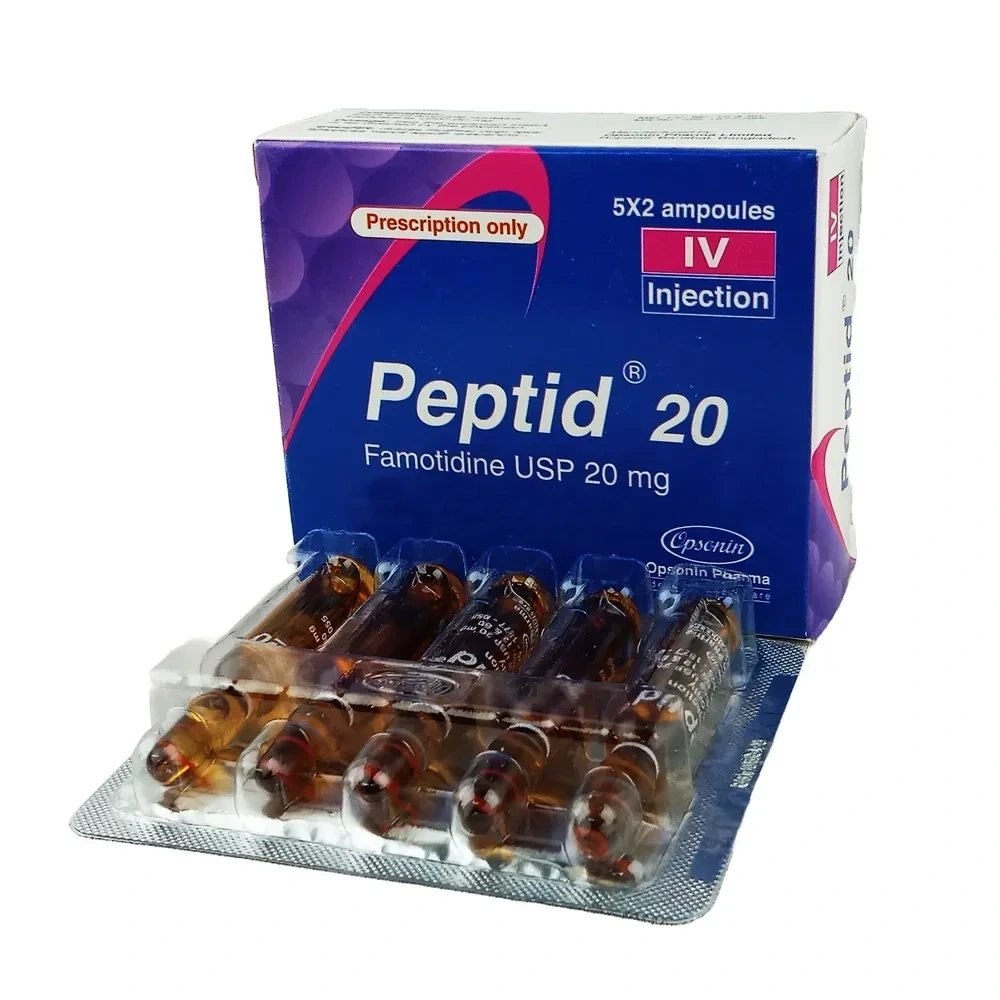
The intravenous formulation of famotidine is available for some hospitalized patients with pathological hypersecretory conditions or intractable ulcers or as an alternative to the oral dosage form for short-term use in patients who are unable to take oral medication.
Over-the-counter famotidine is used for the management and prevention of heartburn caused by gastroesophageal reflux in children and adults. Off-label uses of famotidine include the reduction of NSAIDs-associated gastrointestinal effects, treatment of refractory urticarial, prevention of stress ulcer in critically-ill patients, and symptomatic relief of gastritis.
Associated Conditions
Pharmacodynamics
Famotidine decreases the production of gastric acid, suppresses acid concentration and pepsin content, and decreases the volume of gastric secretion. Famotidine inhibits both basal and nocturnal gastric acid secretion, as well as acid secretion stimulated by food, caffeine, insulin, and pentagastrin.
Famotidine has a dose-dependent therapeutic action, with the highest dose having the most extended duration of action and the highest inhibitory effect on gastric acid secretion. Following oral administration, the onset of action is within one hour, and the peak effect is reached within 1-3 hours. The duration of effect is about 10-12 hours.
Mechanism of Action
Histamine acts as a local hormone that stimulates the acid output by parietal cells via a paracrine mechanism. Neuroendocrine cells called enterochromaffin-like (ECL) cells lie close to the parietal cells and regulate the basal secretion of histamine. Histamine release is also promoted from stimulation by acetylcholine and gastrin, a peptide hormone. Gastrin (G) cells release gastrin, which works on CCK2 receptors on ECL cells. This action promotes the release of histamine from ECL cells. Upon release, histamine acts on H2 receptors expressed on the basolateral membrane of parietal cells, leading to increased intracellular cAMP levels and activated proton pumps on parietal cells. Proton pump releases more protons into the stomach, thereby increasing the secretion of acid. In conditions that are associated with acid hypersecretion such as ulcers, there is a loss of regulation of acid secretion. Famotidine works on H2 receptors and blocks the actions of histamine.
Absorption
Following oral administration, the absorption of famotidine is dose-dependent and incomplete. The oral bioavailability ranges from 40-50%, and the Cmax is reached in 1-4 hours post-dosing. While the bioavailability can be slightly increased with the intake of food and decreased by antacids, there is no clinical significance.
Volume of Distribution
The steady-state volume of distribution ranges from 1.0 to 1.3 L/kg. Famotidine is found in breast milk; however, it is found in breast milk at the lowest concentrations compared to other H2 receptor antagonists.
Protein Binding
The protein binding of famotidine is about 15 to 22%.
Route of Elimination
About 65-70% of the total administered dose of famotidine undergoes renal elimination, and 30-35% of the dose is cleared by metabolism. Following intravenous administration, about 70% of the drug is eliminated in the urine as an unchanged drug.
Half Life
The elimination half-life is about 2 to 4 hours. The half-life is expected to increase nonlinearly in patients with decreased renal function.
Clearance
Renal clearance is 250-450 mL/min, indicating some tubular excretion. Because the renal clearance rate exceeds the glomerular filtration rate, famotidine is thought to be mainly eliminated via both glomerular filtration and renal tubular secretion.
Toxicity
The oral LD50 is 4049 mg/kg in rats and 4686 mg/kg in mice. The subcutaneous LD50 is 800 mg/kg in rats and mice. The lowest published toxic dose (TDLo) in man following oral administration is 4 mg/kg/7D.
Symptoms of overdose resemble the adverse events seen with the use of recommended doses, and they should be responded with supportive and symptomatic treatment. Any unabsorbed drug should be removed from the gastrointestinal tract, and the patient should be monitored accordingly. The use of hemodialysis to eliminate the drug from the systemic circulation is effective, but the experience of using hemodialysis in response to famotidine overdose is limited in clinical settings.
Food Interactions
- Avoid excessive or chronic alcohol consumption. Alcohol increases the risk of gastric irritation.
- Limit caffeine intake. Caffeine and other acidic beverages increases the risk of gastric irritation.
- Take with or without food. Food slightly increases bioavailability, but not to a clinically significant extent.
Dosage
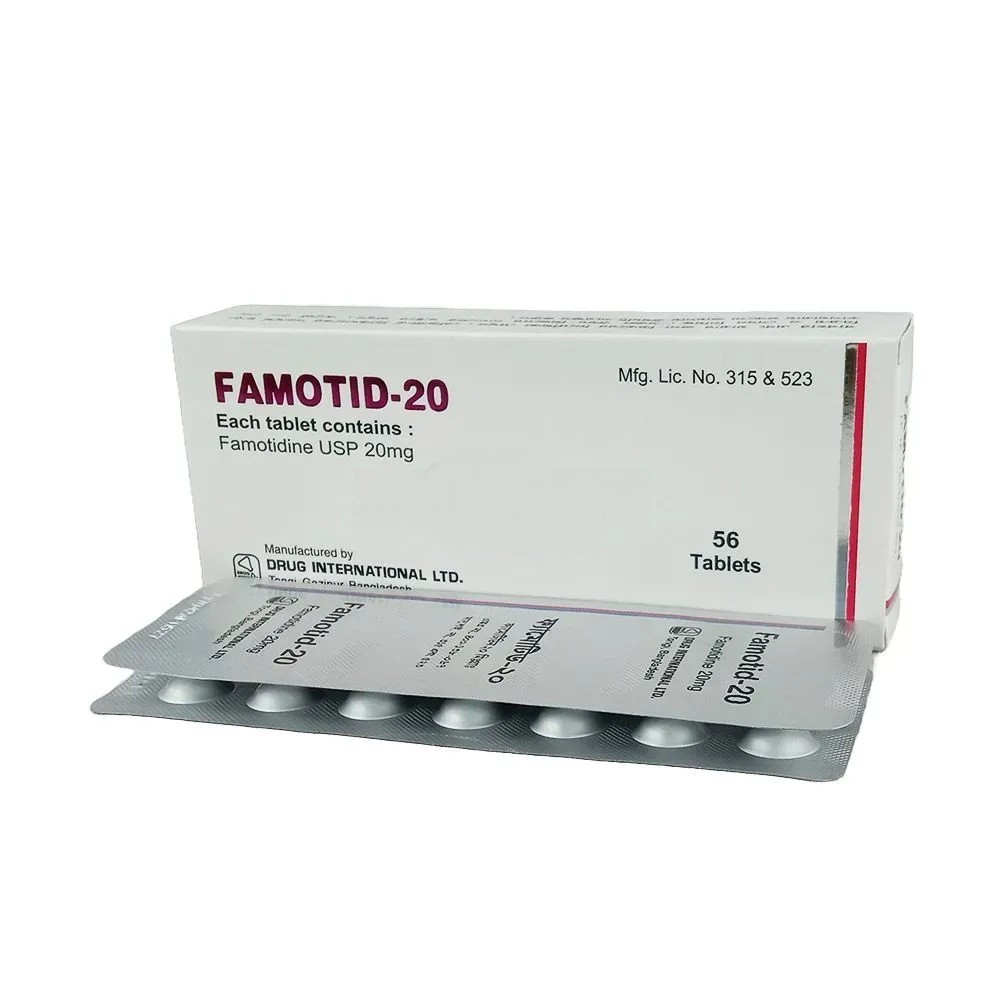
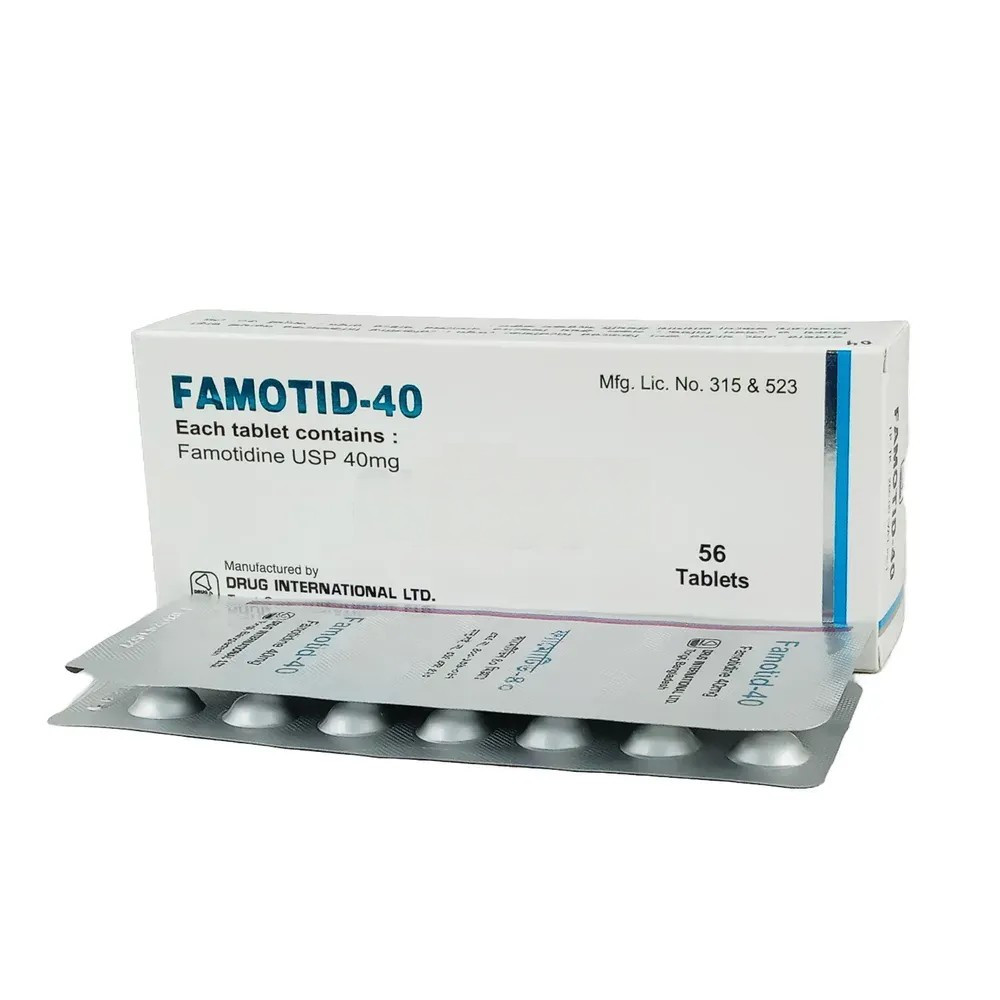
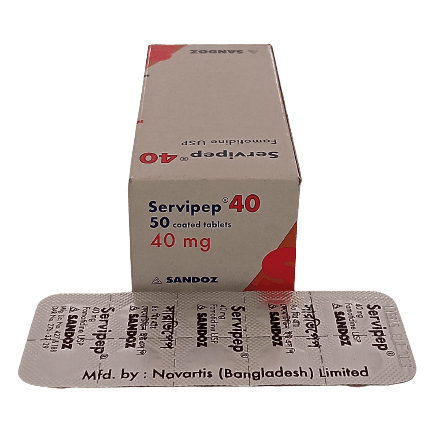
- For gastric ulcer, duodenal ulcer, anastomotic ulcer, upper gastro-intestinal hemorrhage, reflux esophagitis and Zollinger-Ellison syndrome: Usual dose for adults: Famotidine 20 mg twice daily (after breakfast and after supper or before bed time) or Famotidine 40 mg can be administered orally once daily at bed time.
- For the treatment of acute gastritis, chronic gastritis in acute exacerbation stage: Usual dosage for adults is Famotidine 20 mg orally twice a day (after breakfast and after supper or before bed time). Also Famotidine 40 mg can be orally administered once a day (before bed time), dosage should be adjusted according to age and symptoms. Most ulcer patients heal within 4-8 weeks. For maintenance therapy the recommended oral dose is 20 mg once daily. Or, as directed by the registered physician.
Gastroesophageal Reflux Disease(GERD):
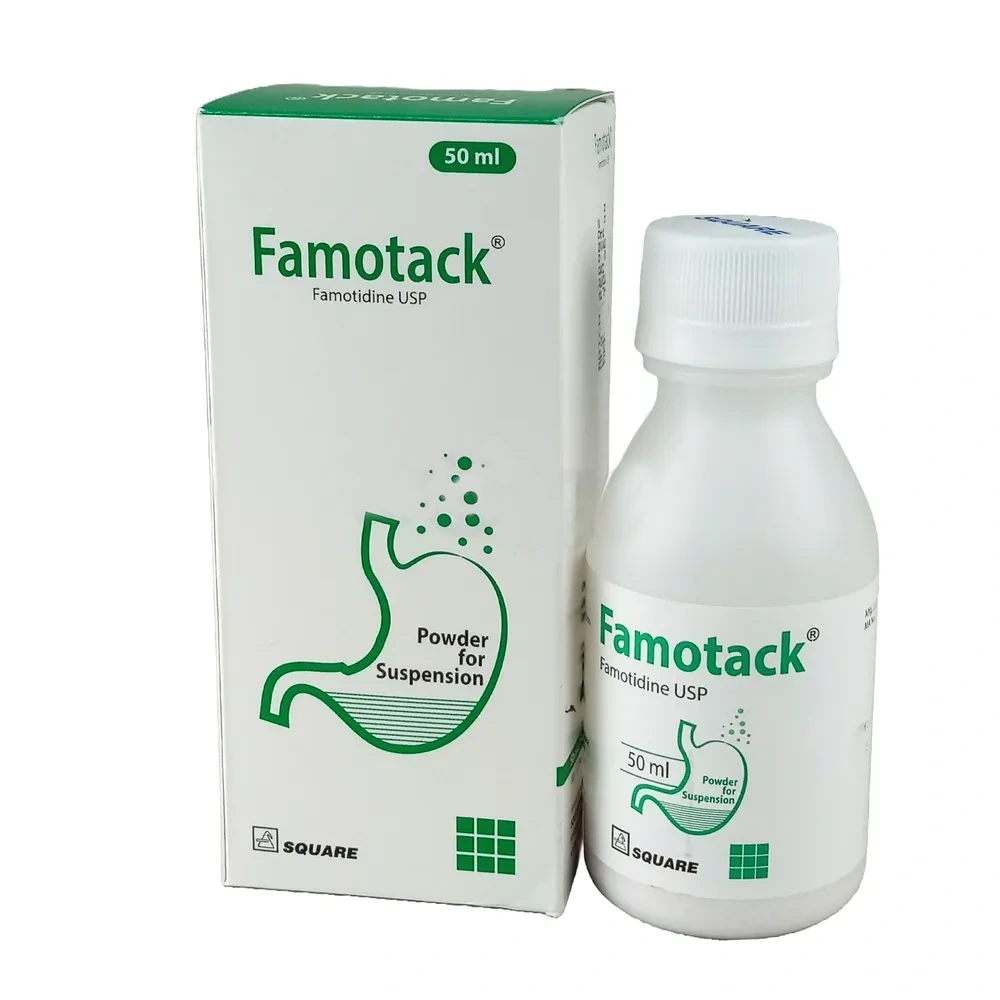
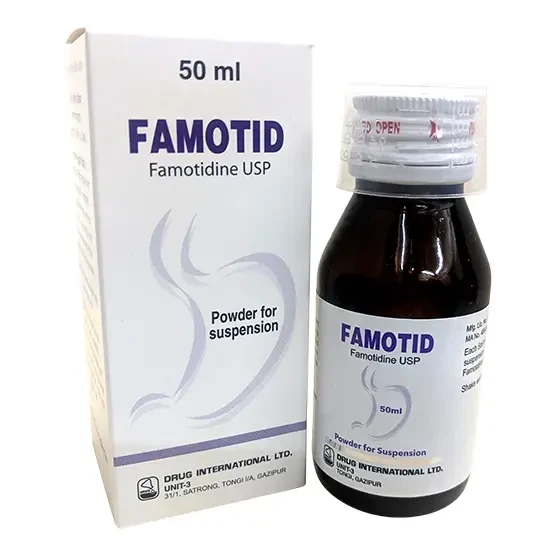
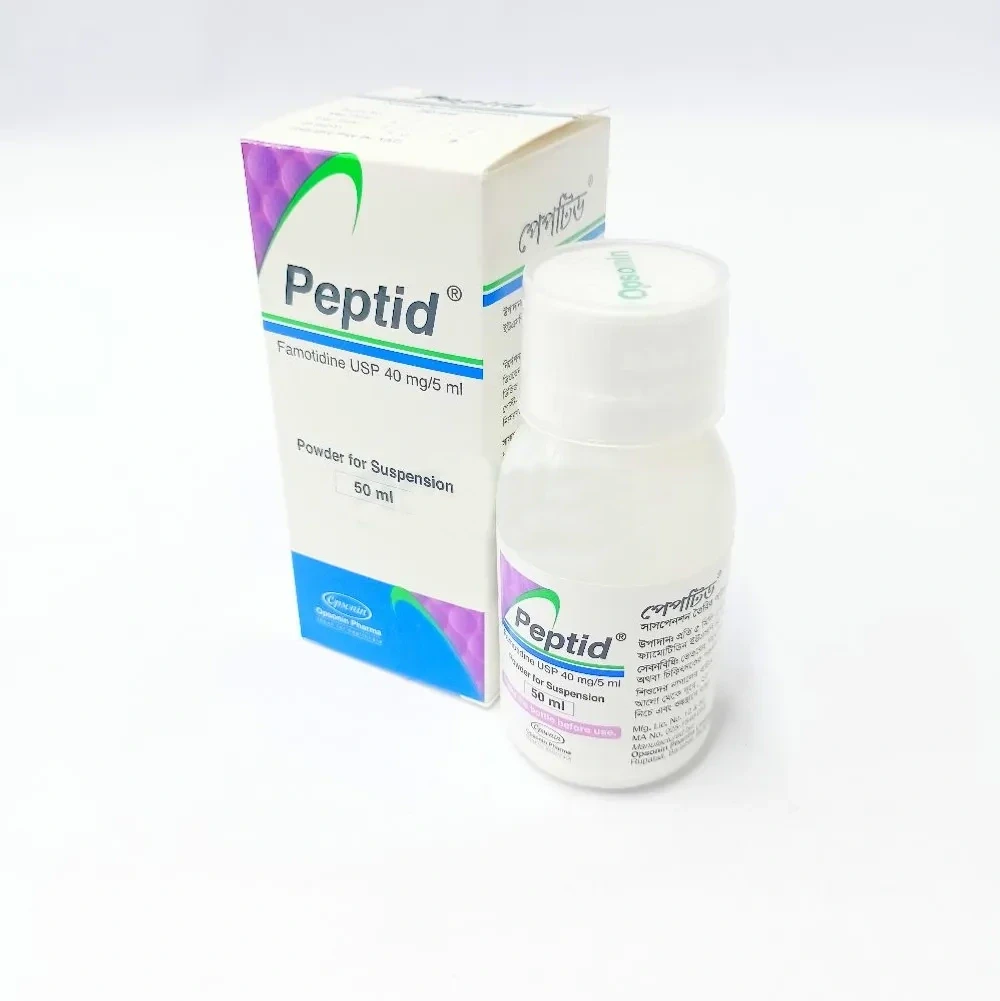
- <1 year of age: 0.5 mg/kg/dose of famotidine oral suspension up to 8 weeks once daily in patients
- Age 3 to 11 months: 0.5 mg/kg/dose twice daily up to 8 weeks
- Age 1 to 2 months: 0.5 mg/kg/dose once daily up to 8 weeks
- Neonates: 0.5 mg/kg/dose maximum once daily up to 8 weeks
- Gastroesophageal Reflux Disease(GERD): 1 mg/kg/day p.o. divided b.i.d. up to 40 mg b.i.d.
- Duodonal ulcer: 0.5 mg/kg/day p.o. at bedtime or divided b.i.d. up to 40 mg/day.
- Peptic ulcer: 0.5 mg/kg/day p.o. at bedtime or divided b.i.d. up to 40 mg/day.
- Maintenance therapy: 40 mg at daily night.
- Reflux esophagitis: 2 mg/kg/day
- Zollinger-Ellison Syndrome: 40 mg 3 times daily.