Introduction
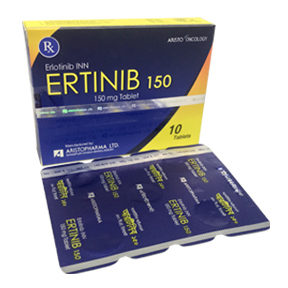
Erlotinib is an inhibitor of the epidermal growth factor receptor (EGFR) tyrosine kinase that is used in the treatment of non-small cell lung cancer, pancreatic cancer and several other types of cancer. Erlotinib binds to the epidermal growth factor receptor (EGFR) tyrosine kinase in a reversible fashion at the adenosine triphosphate (ATP) binding site of the receptor. Recent studies demonstrate that erlotinib is also a potent inhibitor of JAK2V617F, which is a mutant form of tyrosine kinase JAK2 found in most patients with polycythemia vera (PV) and a substantial proportion of patients with idiopathic myelofibrosis or essential thrombocythemia. This finding introduces the potential use of erlotinib in the treatment of JAK2V617F-positive PV and other myeloproliferative disorders.
Uses
Erlotinib is an EGFR tyrosine kinase inhibitor used to treat certain small cell lung cancers or advanced metastatic pancreatic cancers.
Erlotinib is indicated for:
The treatment of metastatic non-small cell lung cancer (NSCLC) with tumors showing epidermal growth factor receptor (EGFR) exon 19 deletions or exon 21 (L858R) substitution mutations .
In combination with first-line treatment for patients diagnosed with locally advanced, unresectable or metastatic pancreatic cancer .
The safety and efficacy of erlotinib have not been established for patients with NSCLC whose tumors show other EGFR mutations. Additionally it is not recommended for use in combination with platinum-based chemotherapy.
Associated Conditions
Mechanism of Action
The mechanism of clinical antitumor action of erlotinib is not fully characterized. Erlotinib inhibits the intracellular phosphorylation of tyrosine kinase associated with the epidermal growth factor receptor (EGFR). Specificity of inhibition with regard to other tyrosine kinase receptors has not been fully characterized. EGFR is expressed on the cell surface of normal cells and cancer cells.
Absorption
Erlotinib is about 60% absorbed after oral administration and its bioavailability is substantially increased by food to almost 100%. Peak plasma levels occur 4 hours after dosing. The solubility of erlotinib is pH dependent. Solubility decreases pH increases. Smoking also decrease the exposure of erlotinib.
Volume of Distribution
Apparent volume of distribution = 232 L
Protein Binding
93% protein bound to albumin and alpha-1 acid glycoprotein (AAG)
Route of Elimination
Following a 100 mg oral dose, 91% of the dose was recovered in which 83% was in feces (1% of the dose as unchanged parent compound) and 8% in urine (0.3% of the dose as unchanged parent compound).
Half Life
Median half-life of 36.2 hours.
Clearance
Smokers have a 24% higher rate of erlotinib clearance.
Toxicity
Symptoms of overdose include diarrhea, rash, and liver transaminase elevation. The most common adverse reactions (>50%) in NSCLC are rash, diarrhea, anorexia and fatigue. The most common adverse reactions (>50%) in pancreatic cancer are fatigue, rash, nausea and anorexia.
Food Interactions
- Exercise caution with grapefruit products. Grapefruit inhibits CYP3A4 metabolism, which may increase the serum concentration of erlotinib.
- Exercise caution with St. John's Wort. This herb induces CYP3A4 metabolism, which may reduce the serum concentration of erlotinib.
- Take on an empty stomach. Food increases erlotinib bioavailability, therefore administer at least 1 hour before or 2 hours after meals.
Dosage
Pancreatic Cancer: The recommended daily dose of Erlotinib for pancreatic cancer is 100 mg taken once daily in combination with gemcitabine. Take Erlotinib on an empty stomach, i.e., at least one hour before or two hours after the ingestion of food. Treatment should continue until disease progression or unacceptable toxicity occurs.
Reduce Erlotinib by 50 mg decrements: If severe reactions occur with concomitant use of strong CYP3A4 inhibitors (such as atazanavir, Clarithromycin, Indinavir, Itraconazole, Ketoconazole, Nefazodone, Nelfinavir, Ritonavir, Saquinavir, Telithromycin, Voriconazole or grapefruit or grapefruit juice] or when using concomitantly with an inhibitor of both CYP3A4 and CYP1A2 (e.g., Ciprofloxacin).
Increase Erlotinib by 50 mg increments as tolerated for: Concomitant use with CYP3A4 inducers, such as rifampin, rifabutin, rifapentine, phenytoin, carbamazepine, phenobarbital, or St. John's Wort. Increase doses by 50 mg increments at 2 week intervals to a maximum of 450 mg. Avoid concomitant use, if possible.
Concurrent cigarette smoking: Increase by 50 mg increments at 2 week intervals to a maximum of 300 mg. Immediately reduce the dose of Erlotinib to the recommended dose (150 mg or 100 mg daily) upon cessation of smoking.