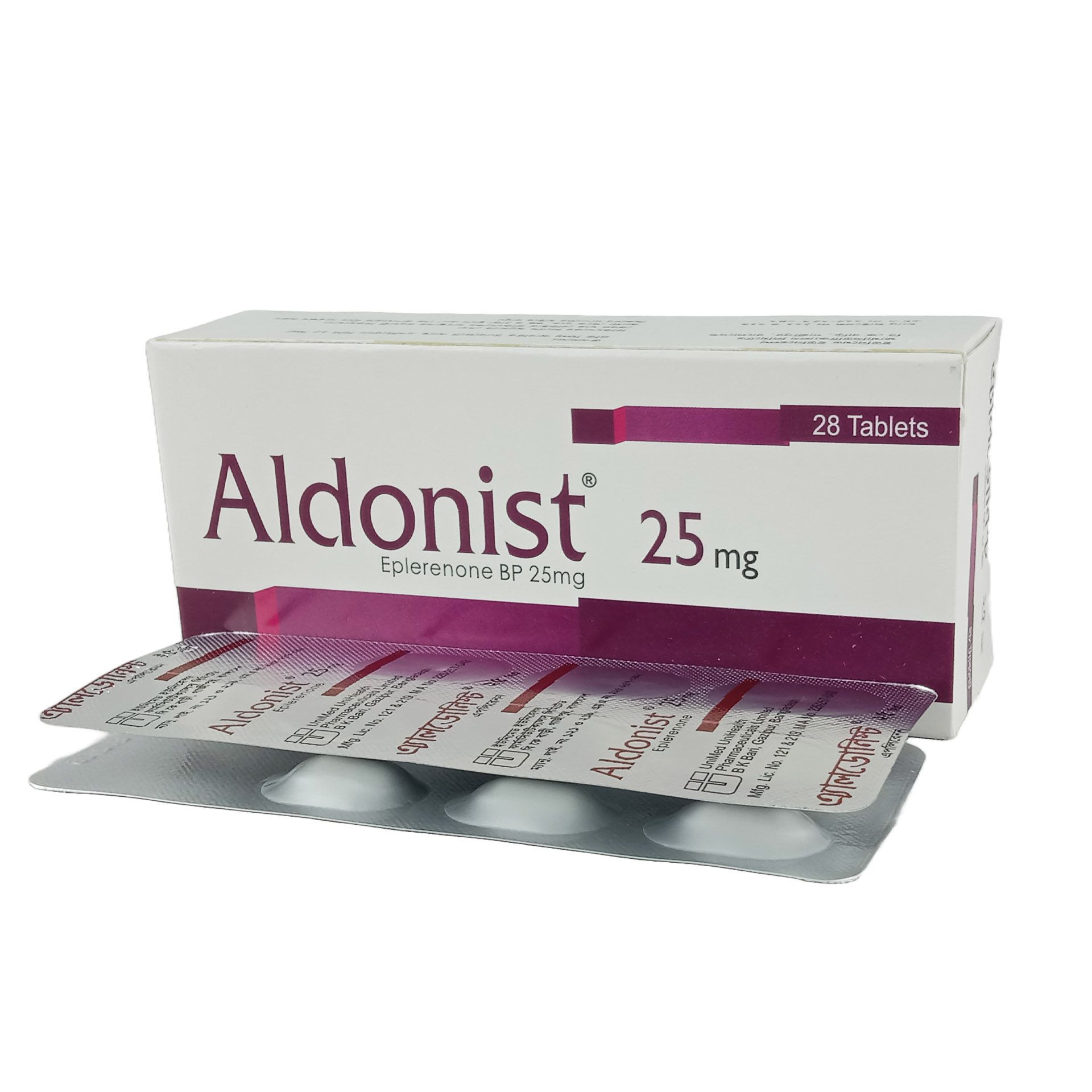
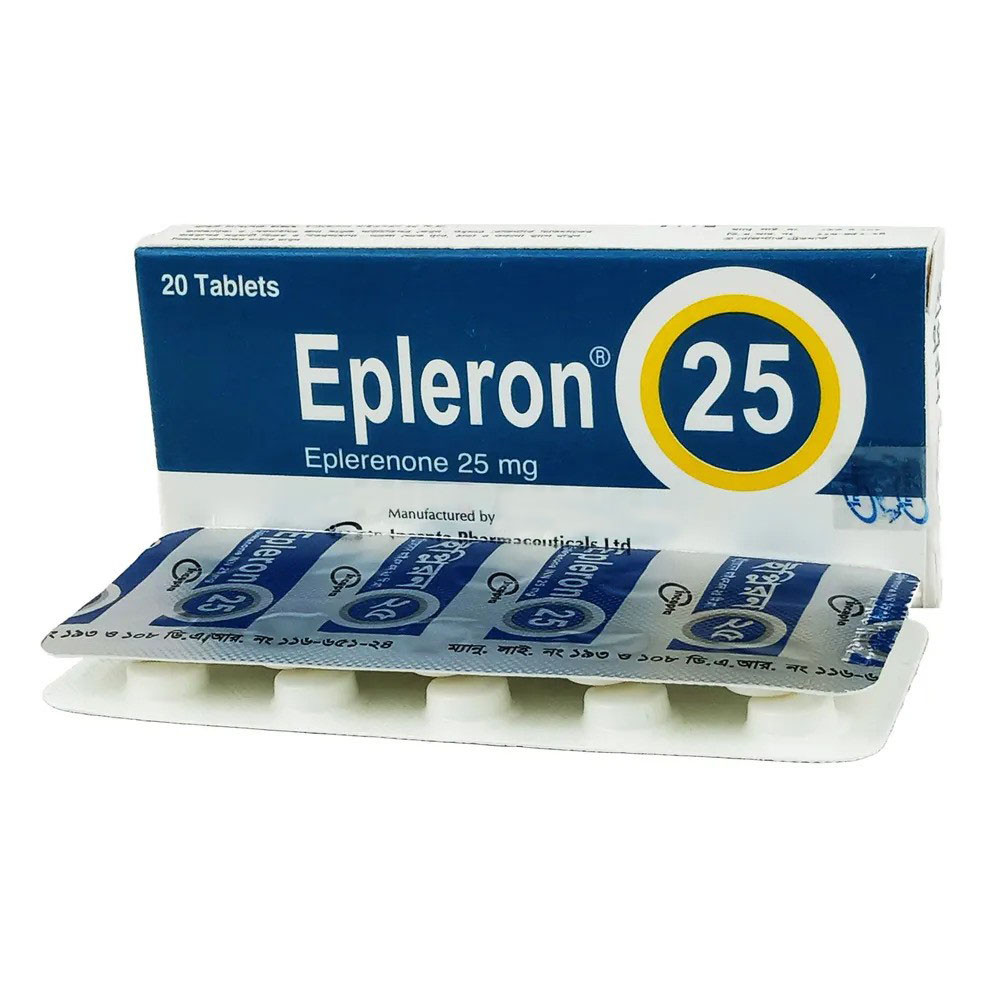
Introduction
Eplerenone, an aldosterone receptor antagonist similar to spironolactone, has been shown to produce sustained increases in plasma renin and serum aldosterone, consistent with inhibition of the negative regulatory feedback of aldosterone on renin secretion. The resulting increased plasma renin activity and aldosterone circulating levels do not overcome the effects of eplerenone. Eplerenone selectively binds to recombinant human mineralocorticoid receptors relative to its binding to recombinant human glucocorticoid, progesterone and androgen receptors.
Uses
Eplerenone is an aldosterone receptor antagonist used to improve survival of patients with symptomatic heart failure and to reduce blood pressure.
For improvement of survival of stable patients with left ventricular systolic dysfunction (ejection fraction <40%) and clinical evidence of congestive heart failure after an acute myocardial infarction.
Associated Conditions
Pharmacodynamics
Eplerenone, an aldosterone receptor antagonist similar to spironolactone, has been shown to produce sustained increases in plasma renin and serum aldosterone, consistent with inhibition of the negative regulatory feedback of aldosterone on renin secretion. The resulting increased plasma renin activity and aldosterone circulating levels do not overcome the effects of eplerenone. Eplerenone selectively binds to recombinant human mineralocorticoid receptors relative to its binding to recombinant human glucocorticoid, progesterone and androgen receptors.
Mechanism of Action
Eplerenone binds to the mineralocorticoid receptor and thereby blocks the binding of aldosterone (component of the renin-angiotensin-aldosterone-system, or RAAS). Aldosterone synthesis, which occurs primarily in the adrenal gland, is modulated by multiple factors, including angiotensin II and non-RAAS mediators such as adrenocorticotropic hormone (ACTH) and potassium. Aldosterone binds to mineralocorticoid receptors in both epithelial (e.g., kidney) and nonepithelial (e.g., heart, blood vessels, and brain) tissues and increases blood pressure through induction of sodium reabsorption and possibly other mechanisms.
Absorption
The absolute bioavailability of eplerenone is unknown.
Volume of Distribution
- 43 to 90 L
Protein Binding
50%
Half Life
4-6 hours
Clearance
- Apparent plasma cl=10 L/hr
Toxicity
The most likely symptoms of human overdosage would be anticipated to be hypotension or hyperkalemia. However, no cases of human overdosage with eplerenone have been reported.
Food Interactions
- Avoid grapefruit products. Grapefruit juice may increase the serum levels of eplerenone by 25% by inhibiting CYP3A4.
- Take with or without food.
Dosage
Hypertension: Eplerenone may be used alone or in combination with other antihypertensive agents. The recommended starting dose of Eplerenone is 50 mg administered once daily. For patients with an inadequate blood pressure response to 50mg once daily the dosage of Eplerenone should be increased to 50mg twice daily. Higher dosages of Eplerenone are not recommended either because they have no greater effect on blood pressure than 100 mg or because they are associated with an increased risk of hyperkalemia.
Pediatric use: The safety and effectiveness of Eplerenone has not been established in pediatric patients.
Geriatric use: No differences in overall incidence of effectivity or safety was observed in elderly patients.