Introduction
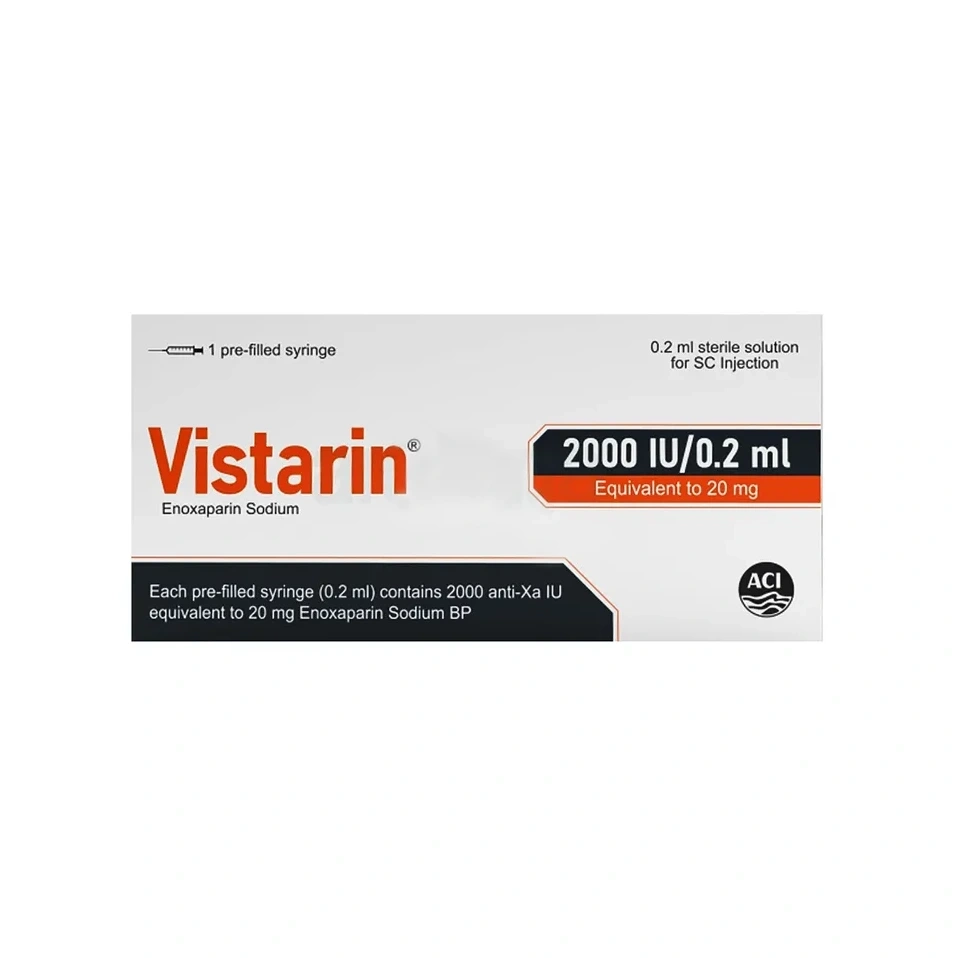
Enoxaparin is a common low-molecular-weight heparin (LMWH) used in the prevention and management of various thromboembolic disorders. It is administered by a subcutaneous or intravenous injection. Enoxaparin markedly reduces the incidence of venous thromboembolism in hospitalized patients when compared to unfractionated heparin, without increasing the risk of serious bleeding.
Uses
Enoxaparin is a low molecular weight heparin used for the prophylaxis of deep vein thrombosis and ischemic complications of unstable angina and non-Q-wave myocardial infarction.
Enoxaparin is indicated for the prevention of ischemic complications in unstable angina and in non Q-wave myocardial infarction; it is indicated in conjunction with percutaneous intervention and/or other treatment for the management of acute ST elevation myocardial infarction.
Enoxaparin is also indicated in the prophylaxis of DVT in abdominal surgery, hip replacement, knee replacement, or medical patients with severely restricted mobility during acute illness. Additionally, enoxaparin is indicated for the inpatient treatment of DVT with or without pulmonary embolism and the treatment of outpatient DVT without pulmonary embolism.
Associated Conditions
Pharmacodynamics
This drug has an immediate onset of action. Enoxaparin increases Thrombin Time (TT) and activated partial thromboplastin time (aPTT), preventing and reducing thromboembolic complications such as DVT, pulmonary embolism, and ischemic cardiac complications. Administered at 1.5 mg/kg subcutaneously in a pharmacodynamic study, enoxaparin led to a higher ratio of anti-Factor Xa to anti-Factor IIa activity (mean ±SD, 14.0±3.1) (based on areas under anti-Factor activity versus time curves) when compared to that of heparin (mean ±SD, 1.22±0.13). Increases in the TT and aPTT were 1.8 times those of the control group. Enoxaparin at 1 mg/kg subcutaneously every 12 hours led to aPTT values of 45 seconds or less in most patients. Average aPTT prolongation time on Day 1 was approximately 16% higher than on Day 4 of enoxaparin therapy.
Caution is advised during treatment with enoxaparin - the risk of hemorrhage and thrombocytopenia is increased. In pregnant women with prosthetic mechanic heart valves, the risk of thromboembolism is increased.
Mechanism of Action
Enoxaparin binds to antithrombin III, a serine protease inhibitor, forming a complex that irreversibly inactivates factor Xa, which is frequently used to monitor anticoagulation in the clinical setting. Following factor Xa inactivation, enoxaparin is released and binds to other anti-thrombin molecules. Factor IIa (thrombin) is directly inhibited by enoxaparin, however with less potency than unfractionated heparin (UFH). Due to the cascade of effects resulting from enoxaparin binding, thrombin is unable to convert fibrinogen to fibrin and form a clot, preventing thromboembolic events.
Absorption
Mean absolute bioavailability of enoxaparin, after 1-2 mg/kg given subcutaneously is approximately 100% in healthy volunteers. The absorption of enoxaparin is proportional to the dose, demonstrating linear absorption. The average maximum plasma anti-Xa activity is reached 3 to 5 hours after a subcutaneous injection. A 30 mg IV bolus preceding an immediate 1 mg/kg SC every twice a day led to maximum anti-Factor Xa levels of 1.16 IU/mL. Steady-state is reached within 3-4 days of treatment with a Cmax of 1.2 IU/mL. The AUC under the thrombin generation curve was 305 +/- 48.
Volume of Distribution
The volume of distribution of enoxaparin is approximately 4-5L, similar to normal blood volume.
Protein Binding
Enoxaparin binds to antithrombin III. The percentage of plasma protein binding for enoxaparin is not readily available in the literature.
Route of Elimination
Enoxaparin is mainly excreted by the kidneys. Renal clearance of active fragments represents about 10% of the administered dose and total renal excretion of active and non-active fragments 40% of the dose.
Half Life
The half-life of enoxaparin is about 4 hours after a single dose administered subcutaneously and about 7 hours after several doses. One source mentions a half-life ranging from 1 hour to 4.5 hours.
Clearance
The mean clearance of enoxaparin is 0.74 L/h after a 1.5 mg/kg intravenous infusion over 6 hours; clearance of enoxaparin is significantly decreased in patients with severe renal impairment.
Toxicity
The oral LD50 for enoxaparin in mice is >5000 mg/kg; the subcutaneous LD50 of enoxaparin in mice is >2500 mg/kg. Accidental overdose after the administration of enoxaparin may cause hemorrhage. Enoxaparin administered by injection is mainly neutralized by gradual intravenous injection of a 1% protamine sulfate solution. The dose of protamine sulfate should be equal to the dose of enoxaparin administered: 1 mg protamine sulfate for 1 mg enoxaparin, of enoxaparin was administered in the previous 8 hours. If a minimum of 12 hours has passed since the last enoxaparin dose, protamine may not be necessary; it is important to avoid an overdose with protamine, as fatal reactions may occur.
Food Interactions
- Avoid herbs and supplements with anticoagulant/antiplatelet activity. Examples include garlic, ginger, bilberry, danshen, piracetam, and ginkgo biloba.
Dosage
Treatment of unstable angina and non-Q-wave myocardial infarction, administered concurrently with aspirin: Subcutaneously 100 anti-Xa lU/kg twice daily for 2- 8 days. Should be administered concurrently with oral aspirin (100 to 325 mg once daily). Treatment with Enoxaparin Sodium in these patients should be prescribed fora minimum of 2 days and continued until clinical stabilization.
Prevention of thrombus formation in extra corporeal circulation during hemodialysis: Recommended dose is 100 anti-Xa lU/kg. For patients with a high risk of hemorrhage, the dose should be reduced to 50 anti-Xa lU/kg for double vascular access or 75 anti-Xa lU/kg for single vascular access. During hemodialysis, Enoxaparin Sodium should be introduced into the arterial line of the circuit at the beqinninq of the dialysis session.
Prophylaxis of venous thromboembolic disease in surgical patients:
- Patients undergoing general surgery with a moderate risk of thromboembolism (e.g. abdominal surgery): Subcutaneously 2000 anti-Xa IU (0.2 ml) or 4000 anti-Xa IU (0.4 ml) once daily for 7 to 10 days. The first injection should be given 2 hours before the surgical procedure.
- Patients undergoing orthopedic surgery with a high risk of thromboembolism: Subcutaneously 4000 anti-Xa IU (0.4 ml) once daily for 7 to 10 days. The first injection should be given 12 hours before the surgical procedure. Longer treatment duration may be appropriate in some patients like continued therapy with 4000 anti-Xa IU once daily for 3 weeks following the initial therapy has been proven to be beneficial in orthopaedic surqery.