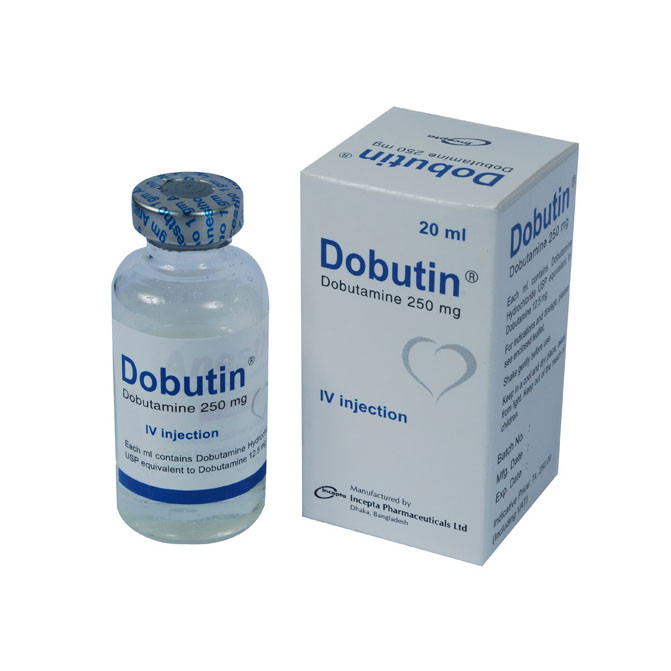
Introduction
A beta-1 agonist catecholamine that has cardiac stimulant action without evoking vasoconstriction or tachycardia. It is proposed as a cardiotonic after myocardial infarction or open heart surgery.
Uses
Dobutamine is a beta-1 agonist used to treat cardiac decompensation in patients with organic heart disease or from cardiac surgery.
Indicated when parenteral therapy is necessary for inotropic support in the short-term treatment of patients with cardiac decompensation due to depressed contractility resulting either from organic heart disease or from cardiac surgical procedures.
Associated Conditions
Pharmacodynamics
Dobutamine is a direct-acting inotropic agent whose primary activity results from stimulation of the beta-adrenoceptors of the heart while producing comparatively mild chronotropic, hypertensive, arrhythmogenic, and vasodilative effects. Dobutamine acts primarily on beta-1 adrenergic receptors, with negligible effects on beta-2 or alpha receptors. It does not cause the release of endogenous norepinephrine, as does dopamine.
Mechanism of Action
Dobutamine directly stimulates beta-1 receptors of the heart to increase myocardial contractility and stroke volume, resulting in increased cardiac output.
Route of Elimination
In human urine, the major excretion products are the conjugates of dobutamine and 3-O-methyl dobutamine.
Half Life
2 minutes
Food Interactions
No interactions found.