Introduction
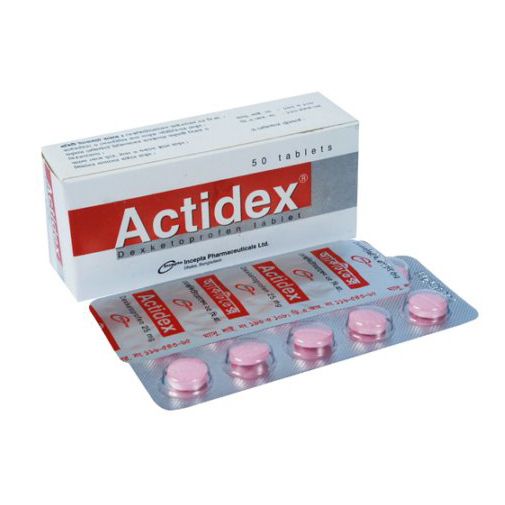
Dexketoprofen is a non-steroidal anti-inflammatory drug. It is available in the various countries in Europe, Asia and Latin America. It has analgesic, antipyretic and anti-inflammatory properties .
Uses
Dexketoprofen is an NSAID that is the R(-)-enantiomer of racemic ketoprofen with analgesic and anti-inflammatory properties used for the treatment of mild to moderate pain.
For short-term treatment of mild to moderate pain, including dysmenorrhoea, musculoskeletal pain and toothache .
Associated Conditions
Pharmacodynamics
This drug is an isomer of ketoprofen. Dexketoprofen a propionic acid derivative with analgesic, anti-inflammatory, and antipyretic properties .
Mechanism of Action
It is a non-steroidal anti-inflammatory drug (NSAID) that reduces prostaglandin synthesis via inhibition of cyclooxygenase pathway (both COX-1 and COX-2) activity .
Absorption
After oral ingestion, the Dexketoprofen onset of action is within 30 minutes. The plasma half-life of Dexketoprofen is about 4-6 hours. The Cmax is about 30 minutes [L1204]
Volume of Distribution
3
Protein Binding
Highly protein bound .
Route of Elimination
Approximately 70 to 80% of the ingested dose is recovered in the urine during the first 12 hours post-ingestion, mainly as the acyl-conjugated form of the drug .
Half Life
1.65 h
Clearance
Mainly cleared via glucuronide conjugation and followed by renal excretion, mainly unchanged .
Toxicity
Nausea and/or vomiting, stomach pain, diarrhea, digestive problems (dyspepsia) are the most common symptoms of toxicity. More toxicity symptoms include dizziness, sleepiness, disturbed sleep, nervousness, headache, palpitations, flushing, stomach problems, constipation, dry mouth, flatulence, skin rash, tiredness, pain, feeling feverish and shivering, and malaise.
Severe toxicity can lead to thrombocytopenia and anemia with bleeding episodes. Dexketoprofen is associated with a small increased risk of myocardial infarction .