Introduction
Dequalinium is a quaternary ammonium cation that contains two quaternary quinolinium units linked by an N-decylene chain. It is an antiseptic and disinfectant agent with a broad bactericidal and fungicidal activity. It is most commonly available as a dichloride salt but is available as other various salts as well. It is used in wound dressings and mouth infections and may also have antifungal action, but may associate with skin ulceration. Dequalinium chloride is used as an active ingredient in tablets as Fluomizin for vaginal bacterial infections and in topical bacteriostat formulation as Dequadin. It has been studied for use in treatment of malaria and acute promyelocytic leukemia. Its multiple mode of action is thought to reduce the risk of resistance of pathogens.
Uses
Dequalinium is a quaternary ammonium cation antimicrobial agent used to treat common infections of the mouth and throat that has been studied in the treatment of vaginal candidiasis.
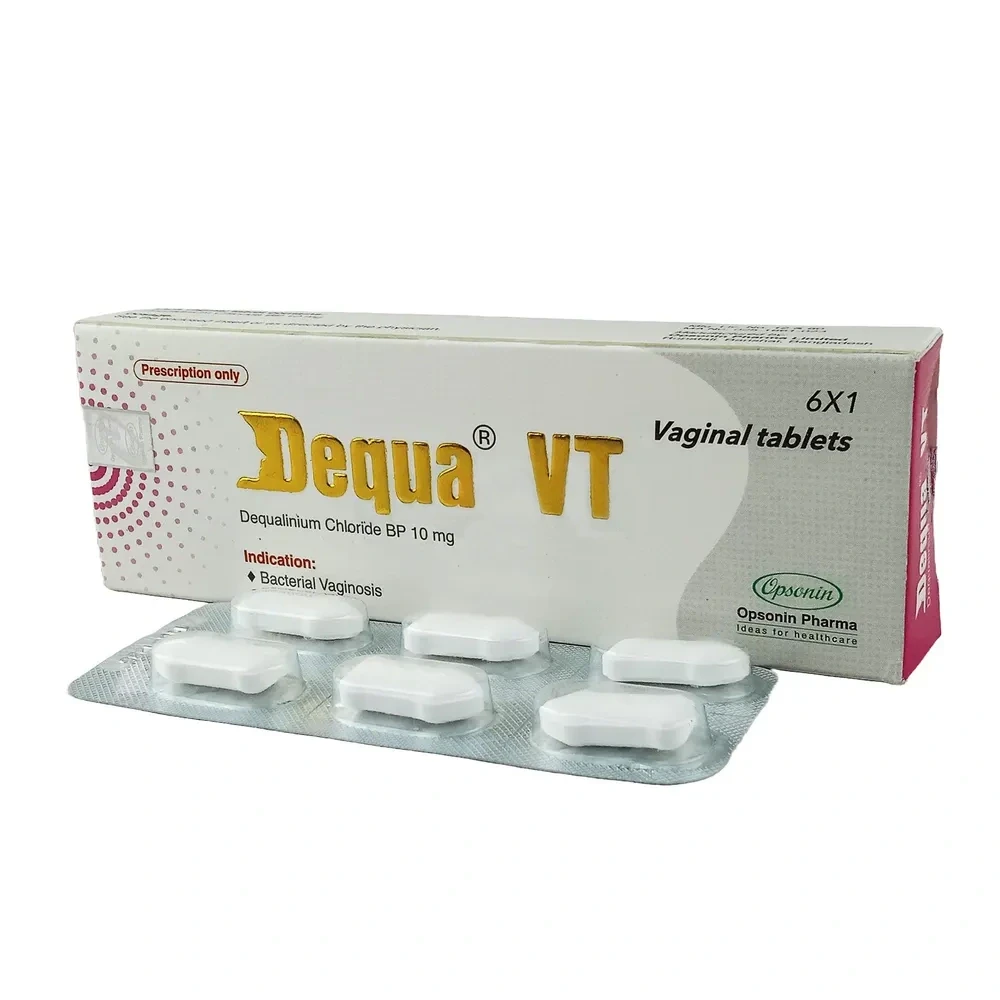
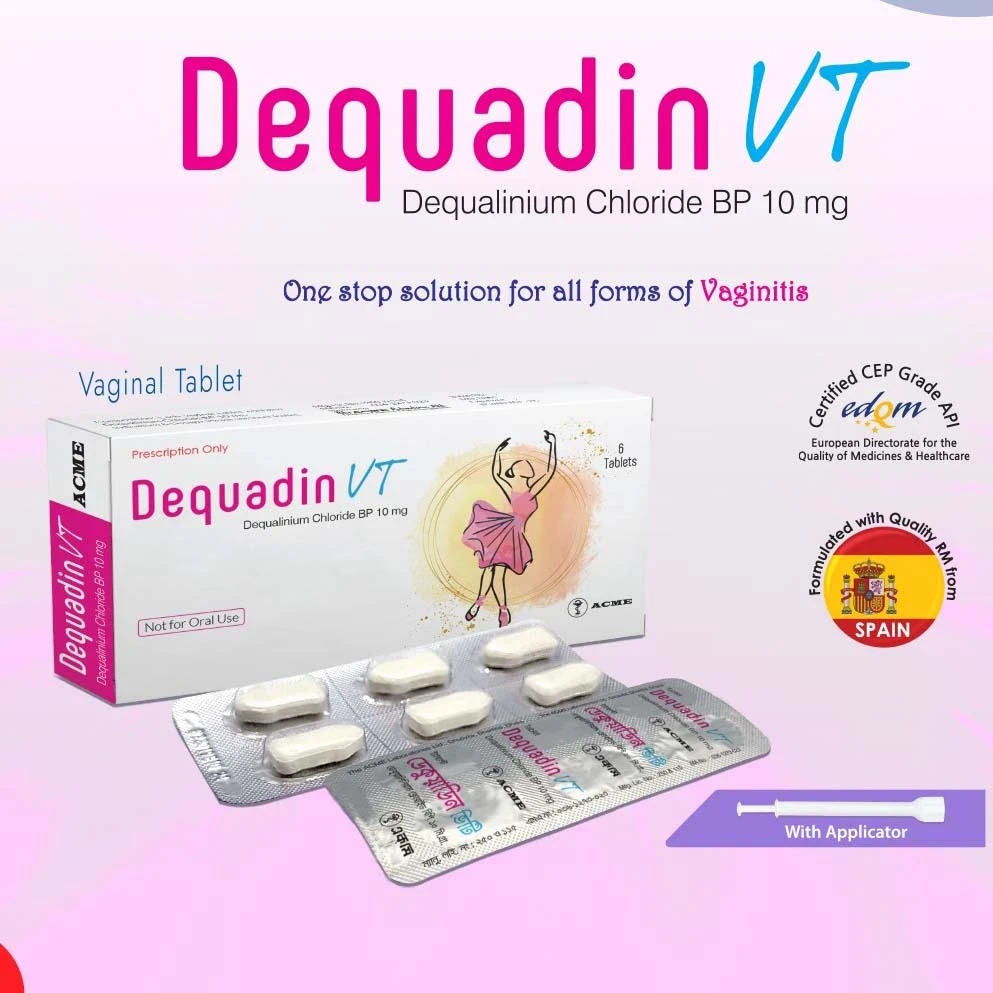
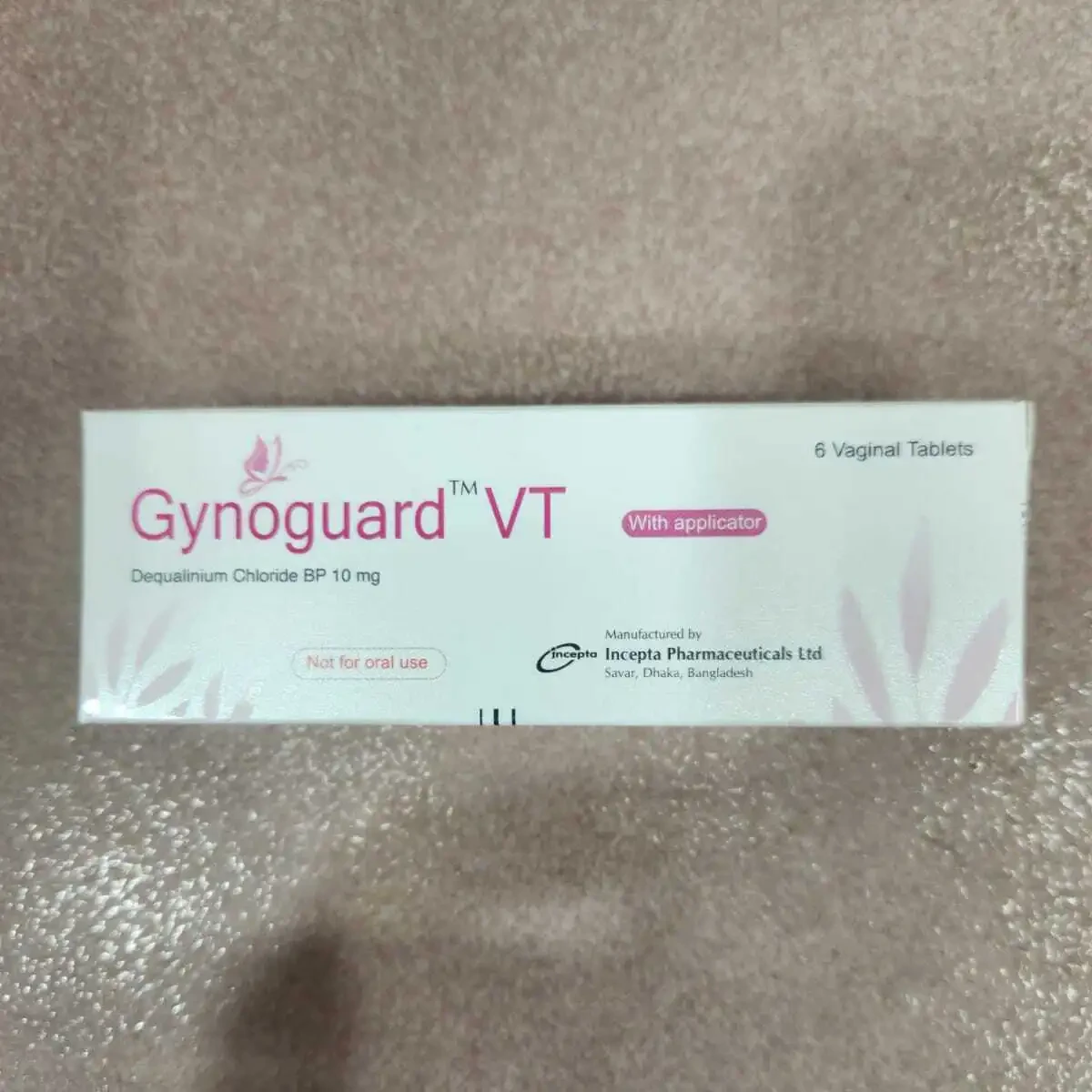
Effective local treatment as vaginal tablets for infections such as fluor vaginalis, bacterial vaginosis, aerobic vaginitis, vulvo-vaginal candidiasis and trichomoniasis. Used as a topical antimicrobial agent.
Associated Conditions
Pharmacodynamics
Dequalinium is an antimicrobial against Gram negative and positive bacteria, yeast and protozoa. It primarily mediates this action by increasing the cell permeability with subsequent loss of enzyme activity under a rapid bactericidal and fungicidal action. The enzymatic inactivation initially might be reversible but becomes irreversible after a longer contact time between the drug and bacteria . The bactericidal and fungicidal effect of dequalinium chloride has been demonstrated to occur within 30–60 min . Dequalinium targets a broad spectrum of microorganisms including aerobic and anaerobic bacteria, as well as Candida species.
Mechanism of Action
Dequalinium has a multiple mode of action. It disrupts the cell permeability of the bacteria by absorbing onto the bacterial cell surface and diffusing across the membrane. It also binds to the cytoplasmic membrane with subsequent formation of complexes and protein precipitation and lyses the membrane in adequate concentrations, perturbing osmotic exchange. Loss of normal enzymatic activity is achieved through several different processes. Denaturation of proteins results in inhibition of bacterial cell metabolism. Disruption of bacterial energy production is mediated through inhibition of glucose metabolism and inhibition of mitochondrial ATP synthesis via inhibition of bacterial F1-ATPase. Protein synthesis is also terminated at the level of ribosomes. Bacterial nucleic acids are also affected through direct binding of the drug to DNA in vitro, and precipitation of cytoplasmic material with nucleic acids being the most sensitive . The cationic form of dequalinium accumulates in the mitochondria and promotes anticancer activity in human leukemia cells. It mediates a cytotoxic effect by altering redox balance in cells and downregulating Raf/MEK/ERK1/2 and PI3K/Akt signaling pathways in these cells which leads to cell death by apoptosis and/or necrosis . Dequalinium inhibits mycothiol ligase activity in Mycobacterium tuberculosis strains .
Absorption
The degree of absorption is minimal in case of topical or vaginal administration thus systemic exposure is negligible. <0.1 % is absorbed systemically after oral administration.
Toxicity
The oral LD50 value of dequalinium chloride for mouse is 300mg/kg. Lethal dose (LD50) of a single intraperitoneal administration in a murine model system is 18.3 mg/kg. The majority of the adverse reactions of vaginal dequalinium tablets in clinical studies (about 90 %) were local reactions, particularly vaginal discharge, vulvovaginal pruritus, and a vaginal burning sensation. Dequalinuim is not reported to possess embryo-foetal toxicity at clinically relevant doses.
Food Interactions
No interactions found.
Dosage
Children and adolescents: There is insufficient experience of the use of Dequalinium chloride in children and adolescents under 18 years of age.
Women above 55 years and elderly: There is insufficient experience of the use of Dequalinium chloride in women above 55 years.
Use in Pregnancy & Lactation: Based on previous experience and since this vaginal tablet acts locally, no harmful effects on pregnancy and/or the unborn and breast fed infant are expected. This vaginal tablet should only be used during pregnancy and during breast-feeding if medically needed.