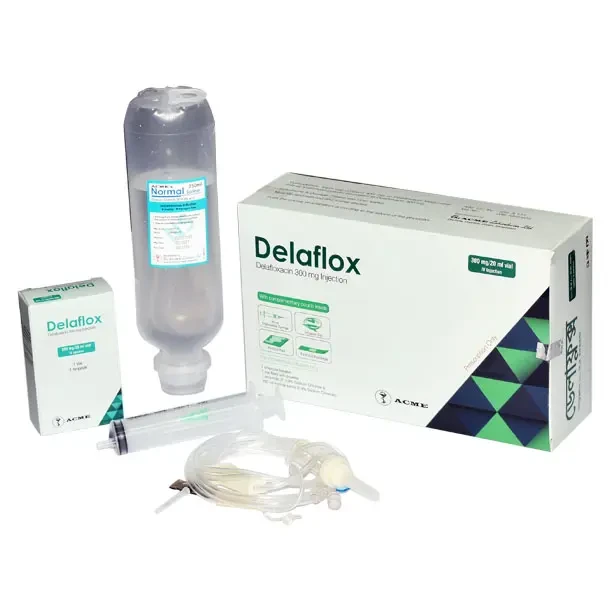
Introduction
Delafloxacin is a fluoroquinolone antibiotic which has been used in trials studying the treatment and basic science of Gonorrhea, Hepatic Impairment, Bacterial Skin Diseases, Skin Structure Infections, and Community Acquired Pneumonia, among others. It was approved in June 2017 under the trade name Baxdela for use in the treatment of acute bacterial skin and skin structure infections.
Uses
Delafloxacin is a fluoroquinolone antibiotic used to treat skin and skin structure infections.
Delafloxacin is indicated for the treatment of acute bacterial skin and skin structure infections caused by the Gram-positive organisms Staphylococcus aureus (including methicillin-resistant and methicillin-susceptible isolates), Staphylococcus haemolyticus, Staphylococcus lugdunensis, Streptococcus agalactiae, Streptococcus anginosus Group (including Streptococcus anginosus, Streptococcus intermedius, and Streptococcus constellatus), Streptococcus pyogenes, and Enterococcus faecalis as well as the Gram-negative organisms Escherichia coli, Enterobacter cloacae, Klebsiella pneumoniae, and Pseudomonas aeruginosa .
Associated Conditions
Pharmacodynamics
Delafloxacin is a fluoroquinolone antibacterial drug which kills bacterial cells .
Mechanism of Action
Delafloxacin inhibits the activity of bacterial DNA topoisomerase IV and DNA gyrase (topoisomerase II) . This interferes with bacterial DNA replication by preventing the relaxation of positive supercoils introduced as part of the elongation process . The resultant strain inhibits further elongation. Delafloxacin exerts concentration-dependent bacteriocidal activity .
Absorption
The median time to peak plasma concentration for orally administered Delafloxacin is 0.75 (0.5-4.0) hours after a single dose and 1.00 (0.5-6.0) hours for steady state dosing . The median time to peak plasma concentration for intravenously administered Delafloxacin is 1.00 (1.0-1.2) hours for a single dose and 1.0 (1.0-1.0) hour for steady state dosing. The absolute bioavailability for orally administed Delafloxacin is 58.8%.
Volume of Distribution
The steady sate volume of distrubution of Delafloxacin is 30-48 liters .
Protein Binding
Delafloxacin is 84% bound to human plasma proteins . It primarily binds to serum albumin.
Route of Elimination
After a single intravenous dose, 65% of Delafloxacin was excreted in the urine either unchanged or as glucuronide metabolites with 28% excreted unchanged in the feces . After a single oral dose, 50% of Delafloxacin was excreted in the urine either unchanged or as glucuronide metabolites with 48% excreted unchanged in the feces.
Half Life
The mean half life of elimination of Delafloxacin is 3.7 hours after a single intravenous administration . The mean half life of elimination for multple oral administrations is 4.2-8.5 hours.
Clearance
The mean total clearance of Delafloxacin is 16.3 liters per hour . Renal clearance accounts for 35-45% of total clearance.
Toxicity
The most common adverse reactions noted with Delafloxacin were nausea (8%), diarrhea (8%), headache (3%), transaminase elevations (3%), and vomiting (2%) . Fluoroquinolones are associated with increased frequency of tendon rupture and tendonitis, increased risk of peipheral neuropathy, excacerbation of myasthenia gravis, and development of Clostridium difficile-associated diarrhea. Fluoroquinolones are also associated with an increased risk of central nervous system reactions (CNS), including: convulsions and increased intracranial pressure (including pseudotumor cerebri) and toxic psychosis. Fluoroquinolones may also cause CNS reactions of nervousness, agitation, insomnia, anxiety, nightmares, paranoia, dizziness, confusion, tremors, hallucinations, depression, and suicidal thoughts or acts.
Food Interactions
- Avoid multivalent ions. Separate the administration of multivalent cations from delafloxacin by at least 6 hours before or 2 hours after delafloxacin.
- Take separate from antacids. The administration of antacids should be separated from delafloxacin by at least 6 hours before or 2 hours after delafloxacin.
- Take with or without food.
Dosage
| Indications | Dosage and Route of Administration | Total Duration (days) |
| Acute Bacterial Skin and Skin Structure Infections (ABSSSI) | 300 mg of Delafloxacin Injection every 12 hours over 60 minutes by intravenous infusion | 5 to 14 |
| Community-Acquired Bacterial Pneumonia (CABP) | 5 to 10 |
Hepatic Impairment: No dosage adjustment is necessary for Delaflox (Delafloxacin) in patients with hepatic impairment.
Renal Impairment: Dosage adjustment is required for patients with severe renal impairment (eGFR 15-29 mL/min/1.73m2). In patients with severe renal impairment or ESRD (eGFR of < 15 mL/min/1.73 m2), accumulation of the intravenous vehicle, sulfobutylether-β-cyclodextrin (SBECD) occurs. Serum creatinine levels should be carefully monitored in patients in such case. If serum creatinine level increases, consider switching to oral Delafloxacin. Discontinue Delafloxacin if eGFR decreases to < 15 mL/min/1.73 m2.