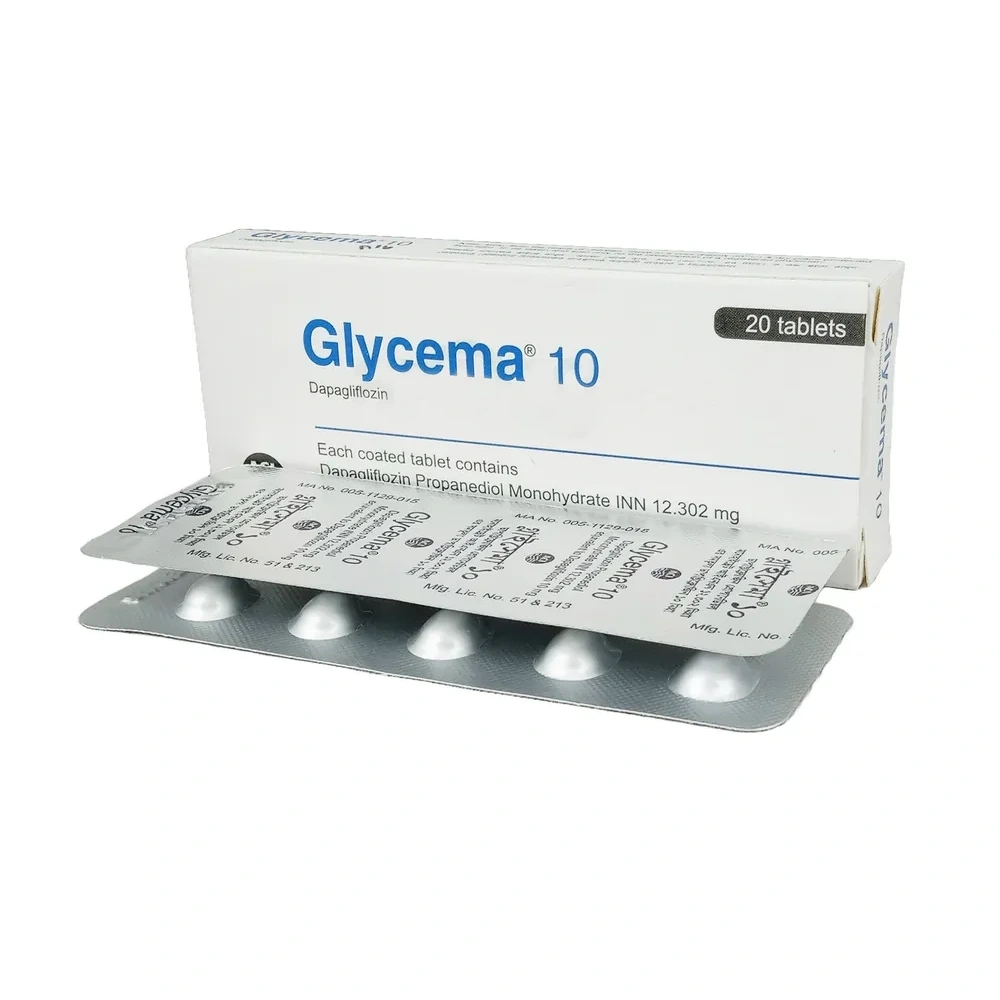
Introduction
Dapagliflozin is a sodium-glucose cotransporter 2 inhibitor indicated for managing diabetes mellitus type 2. When combined with diet and exercise in adults, dapagliflozin helps to improve glycemic control by inhibiting glucose resorption in the proximal tubule of the nephron and causing glycosuria.
Uses
Dapagliflozin is a sodium-glucose cotransporter 2 inhibitor used in the management of type 2 diabetes mellitus.
Dapagliflozin is indicated to improve glycemic control in adult patients with type 2 diabetes mellitus along with diet and exercise.
Associated Conditions
Pharmacodynamics
Dapagliflozin inhibits the sodium-glucose contransporter 2(SGLT2) which is primarily located in the proximal tubule of the nephron. SGLT2 facilitates 90% of glucose resorption in the kidneys and so its inhibition allows for glucose to be excreted in the urine. This excretion allows for better glycemic control and potentially weight loss in patients with type 2 diabetes mellitus.
Mechanism of Action
Dapagliflozin inhibits the sodium-glucose contransporter 2(SGLT2) which is primarily located in the proximal tubule of the nephron. SGLT2 facilitates 90% of glucose resorption in the kidneys and so its inhibition allows for glucose to be excreted in the urine. This excretion allows for better glycemic control and potentially weight loss in patients with type 2 diabetes mellitus.
Absorption
Oral dapagliflozin reaches a maximum concentration within 1 hour of administration when patients have been fasting. When patients have consumed a high fat meal, the time to maximum concentration increases to 2 hours and the maximum concentration decreases by half though a dose adjustment is not necessary. Oral dapagliflozin is 78% bioavailable.
Volume of Distribution
118L.
Protein Binding
91%.
Route of Elimination
75.2% of dapagliflozin is recovered in the urine with 1.6% of the dose unchanged by metabolism. 21% of the dose is excreted in the feces with 15% of the dose unchanged by metabolism.
Half Life
13.8h.
Clearance
Oral plasma clearance was 4.9 mL/min/kg, and renal clearance was 5.6 mL/min.
Toxicity
Age, gender, race, and body weight do not affect dapagliflozin dosing requirements. Although age does not affect dosing requirements, safety has not been established in pediatric populations and patients at an especially advanced age may be more susceptible to adverse effects. Animal studies in pregnancy showed no fetal toxicity in the first trimester but exposure later in pregnancy was associated with renal pelvic dilatation and maternal toxicity at much higher doses than the maximum recommended human dose. Due to this data, dapagliflozin is not recommended in the second and third trimester of pregnancy. Dapagliflozin is excreted in milk from rats, though this may not necessarily be the case in humans. Children under 2 years old who are exposed to dapagliflozin may be at risk of improper kidney development. Dapagliflozin is not recommended in patients with a creatinine clearance below 45mL/min and is contraindicated in patients with creatinine clearance below 30mL/min. Dose adjustments are not necessary in patients with hepatic impairment at any stage, although the risk and benefit to the patient must be assessed as there is limited data on dapagliflozin use in this population.
Food Interactions
- Avoid excessive or chronic alcohol consumption. Binge drinking or drinking alcohol often may predispose patients to ketoacidosis.
- Take with or without food.
Dosage
Children: The safety and efficacy of Dapagliflozin in children and adolescents (<18 years) have not been established.