Introduction
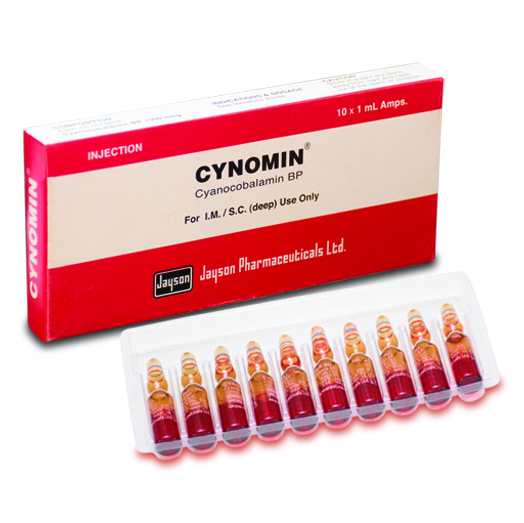
Cyanocobalamin (commonly known as Vitamin B12) is a highly complex, essential vitamin, owing its name to the fact that it contains the mineral, cobalt. This vitamin is produced naturally by bacteria , and is necessary for DNA synthesis and cellular energy production. Vitamin B12 has many forms, including the cyano-, methyl-, deoxyadenosyl- and hydroxy-cobalamin forms. The cyano form, is the most widely used form in supplements and prescription drugs .
Uses
Vitamin B12 is a vitamin available in many formulations to correct vitamin B12 deficiency.
Nasal spray
The cyanocobalamin nasal spray is indicated for the maintenance of vitamin B12 concentrations after normalization with intramuscular vitamin B12 therapy in patients with deficiency of this vitamin who have no nervous system involvement .
Note: CaloMist , the nasal spray form, has not been evaluated for the treatment of newly diagnosed vitamin B12 deficiency.
Injection forms (subcutaneous, intramuscular)
These forms are indicated for vitamin B12 deficiencies due to various causes, with or without neurologic manifestations . Vitamin B12 deficiency is frequently caused by malabsorption, which is often associated with the following conditions :
Addisonian (pernicious) anemia
Gastrointestinal pathology, dysfunction, or surgery, including gluten enteropathy or sprue, small bowel bacterial overgrowth, total or partial gastrectomy
Fish tapeworm infestation
Malignancy of the pancreas or bowel
Folic acid deficiency
Oral forms
Vitamin B12 supplements are widely available and indicated in patients who require supplementation for various reasons. Dose requirements for vitamin B12 which are higher than normal (caused by pregnancy, thyrotoxicosis, hemolytic anemia, hemorrhage, malignancy, hepatic and renal disease) can usually be achieved with oral supplementation . Oral products of vitamin B12 are not recommended in patients with malabsorption, as these forms are primarily absorbed in the gastrointestinal tract .
Associated Conditions
Pharmacodynamics
General effects
Cyanocobalamin corrects vitamin B12 deficiency and improves the symptoms and laboratory abnormalities associated with pernicious anemia (megaloblastic indices, gastrointestinal lesions, and neurologic damage). This drug aids in growth, cell reproduction, hematopoiesis, nucleoprotein, and myelin synthesis. It also plays an important role in fat metabolism, carbohydrate metabolism, as well as protein synthesis. Cells that undergo rapid division (for example, epithelial cells, bone marrow, and myeloid cells) have a high demand for vitamin B12 .
Parenteral cyanocobalamin effects
The parenteral administration of vitamin B12 rapidly and completely reverses the megaloblastic anemia and gastrointestinal symptoms of vitamin B12 deficiency. Rapid parenteral administration of vitamin B12 in deficiency related neurological damage prevents the progression of this condition .
Nasal spray effects
In 24 vitamin B12 deficient patients who were already stabilized on intramuscular (IM) vitamin B12 therapy, single daily doses of intranasal cyanocobalamin for 8 weeks lead to serum vitamin B12 concentrations that were within the target therapeutic range (>200 ng/L) .
Mechanism of Action
Vitamin B12 serves as a cofactor for methionine synthase and L-methylmalonyl-CoA mutase enzymes. Methionine synthase is essential for the synthesis of purines and pyrimidines that form DNA. L-methylmalonyl-CoA mutase converts L-methylmalonyl-CoA to succinyl-CoA in the degradation of propionate , an important reaction required for both fat and protein metabolism. It is a lack of vitamin B12 cofactor in the above reaction and the resulting accumulation of methylmalonyl CoA that is believed to be responsible for the neurological manifestations of B12 deficiency . Succinyl-CoA is also necessary for the synthesis of hemoglobin .
In tissues, vitamin B12 is required for the synthesis of methionine from homocysteine. Methionine is required for the formation of S-adenosylmethionine, a methyl donor for nearly 100 substrates, comprised of DNA, RNA, hormones, proteins, as well as lipids . Without vitamin B12, tetrahydrofolate cannot be regenerated from 5-methyltetrahydrofolate, and this can lead to functional folate deficiency , . This reaction is dependent on methylcobalamin (vitamin B12) as a co-factor and is also dependent on folate, in which the methyl group of methyltetrahydrofolate is transferred to homocysteine to form methionine and tetrahydrofolate. Vitamin B12 incorporates into circulating folic acid into growing red blood cells; retaining the folate in these cells . A deficiency of vitamin B12 and the interruption of this reaction leads to the development of megaloblastic anemia.
Absorption
Vitamin B12 is quickly absorbed from intramuscular (IM) and subcutaneous (SC) sites of injection; with peak plasma concentrations achieved about 1 hour after IM injection .
Orally administered vitamin B12 binds to intrinsic factor (IF) during its transport through the stomach. The separation of Vitamin B12 and IF occurs in the terminal ileum when calcium is present, and vitamin B12 is then absorbed into the gastrointestinal mucosal cells. It is then transported by transcobalamin binding proteins . Passive diffusion through the intestinal wall can occur, however, high doses of vitamin B12 are required in this case (i.e. >1 mg). After the administration of oral doses less than 3 mcg, peak plasma concentrations are not reached for 8 to 12 hours, because the vitamin is temporarily retained in the wall of the lower ileum .
Volume of Distribution
Cobalamin is distributed to tissues and stored mainly in the liver and bone marrow .
Protein Binding
Very high (to specific plasma proteins called transcobalamins); binding of hydroxocobalamin is slightly higher than cyanocobalamin [FDA label.
Route of Elimination
This drug is partially excreted in the urine . According to a clinical study, approximately 3-8 mcg of vitamin B12 is secreted into the gastrointestinal tract daily via the bile. In patients with adequate levels of intrinsic factor, all except approximately 1 mcg is reabsorbed. When vitamin B12 is administered in higher doses that saturate the binding capacity of plasma proteins and the liver, the unbound vitamin B12 is eliminated rapidly in the urine. The body storage of vitamin B12 is dose-dependent .
Half Life
Approximately 6 days (400 days in the liver) .
Clearance
During vitamin loading, the kidney accumulates large amounts of unbound vitamin B12. This drug is cleared partially by the kidney, however, multiligand receptor megalin promotes the reuptake and reabsorption of vitamin B12 into the body , .
Toxicity
LD50 Oral (mouse): > 5,000 mg/kg .
General toxicity
Vitamin B12 is generally non-toxic, even at higher doses. Mild, transient diarrhea, polycythemia vera, peripheral vascular thrombosis, itching, transitory exanthema, a feeling of swelling of entire body, pulmonary edema and congestive heart failure in early treatment stages, anaphylactic shock and death have been observed after vitamin B12 administration .
Carcinogenesis and mutagenesis
Long term studies in animals examining the carcinogenic potential of any of the vitamin B12 formulations have not completed to date. There is no evidence from long-term use in patients with pernicious anemia that vitamin B12 has carcinogenic potential. Pernicious anemia is known to be associated with an increased incidence of stomach carcinoma, however, this malignancy has been attributed to the underlying cause of pernicious anemia and has not been found to be related to treatment with vitamin B12 .
Use in pregnancy
No adverse effects have been reported with ingestion of normal daily requirements during pregnancy .
A note on the use of the nasal spray in pregnancy
Although vitamin B12 is an essential vitamin and requirements are increased during pregnancy, it is currently unknown whether the nasal spray form can cause fetal harm when administered to a pregnant woman or can affect reproduction capacity. The nasal spray form should be given to a pregnant woman only if clearly needed, as it is considered a pregnancy category C drug in this form. Sufficient well-controlled studies have not been done to this date in pregnant women .
Use in lactation
Vitamin B12 has been found distributed into the milk of nursing women in concentrations similar to the maternal blood vitamin B12 concentrations. No adverse effects have been reported to date with intake of normal required doses during lactation .
Food Interactions
- Take with or without food. Recommendations vary from product to product - consult individual product monographs for additional information.
Dosage
Initial dose: 1000 mcg intramuscularly or deep subcutaneous once a day for 6 to 7 days
If clinical improvement and reticulocyte response is seen from the above dosing:
- 100 mcg every other day for 7 doses, then
- 100 mcg every 3 to 4 days for 2 to 3 weeks, then
- Maintenance dose: 100 to 1000 mcg monthly
Usual Adult Dose for B12 Nutritional Deficiency: 25 to 2000 mcg orally daily
Usual Adult Dose for Schilling Test: 1000 mcg intramuscularly is the flushing dose
Usual Pediatric Dose for B12 Nutritional Deficiency: 0.5 to 3 mcg daily