Introduction
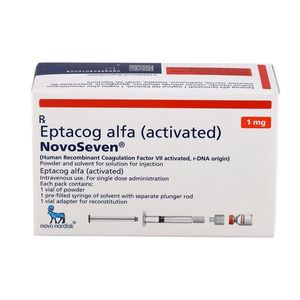
Coagulation Factor VIIa [Eptacog Alfa] is a recombinant form of human Factor VIIa, a protein crucial in the blood clotting process. It is used to treat and prevent bleeding episodes in patients with hemophilia A or B who have developed inhibitors against conventional Factor VIII or IX treatments.
Uses
Eptacog Alfa is primarily used for:
- Hemophilia: Managing and preventing bleeding episodes in patients with hemophilia A or B with inhibitors to Factor VIII or IX.
- Major Surgery: Preventing bleeding complications during and after major surgeries in hemophilia patients with inhibitors.
Mechanism of Action
Eptacog Alfa works by mimicking the action of endogenous Factor VIIa. It binds to tissue factor (TF) on the surface of damaged tissues, forming a complex that activates Factor X, which then converts prothrombin to thrombin. This process helps to form a stable blood clot and prevent excessive bleeding.
How Long Does It Take to Work?
The onset of action for Eptacog Alfa is typically within 30 minutes of administration. The effects can last several hours, depending on the dose and the patient’s condition.
Absorption
As a protein, Eptacog Alfa is administered intravenously. Its absorption is directly related to its infusion into the bloodstream, bypassing gastrointestinal absorption issues.
Route of Elimination
Eptacog Alfa is primarily eliminated through the liver. The protein is broken down and cleared from the body via the reticuloendothelial system.
Dosage
Bleeding episodes in patients with haemophilia:- Adult: As activated eptacog alfa: Initially, 90 mcg/kg given via IV bolus over 2-5 min. Additional dose may be given as needed to achieve or maintain haemostasis, initially 2-3 hrly. May adjust dose or dosing interval according to response. May continue therapy for up to 3 wk or more in cases of serious bleeding episodes.
- Adult: As activated eptacog alfa: 15-30 mcg/kg 4-6 hrly via IV bolus over 2-5 min until haemostasis is achieved.
- Adult: As activated eptacog alfa: 90 mcg/kg 2 hrly via IV bolus over 2-5 min, give at least 3 doses.
The dosage of Eptacog Alfa is individualized based on the patient's weight, bleeding severity, and clinical condition:
- For Bleeding Episodes: Typically 90-120 mcg/kg body weight administered intravenously every 2-4 hours until hemostasis is achieved.
- For Surgical Procedures: Doses are adjusted based on the extent of the surgery and the patient's response, often ranging from 80-120 mcg/kg body weight.
Administration
Eptacog Alfa is administered via intravenous infusion. It should be given by a healthcare professional experienced in managing bleeding disorders.
Side Effects
Common side effects may include:
- Injection Site Reactions: Pain, redness, or swelling at the infusion site.
- Fever: Mild to moderate fever may occur.
- Allergic Reactions: Rare cases of allergic reactions, including rash or anaphylaxis.
Toxicity
Overdosage or excessive use may lead to complications such as thrombosis or embolism due to excessive clot formation. Monitoring for signs of thromboembolic events is essential.
Precautions
Precautions include:
- Monitoring: Regular monitoring of coagulation parameters is required to adjust dosing and prevent thromboembolic events.
- Renal and Hepatic Function: Use with caution in patients with severe renal or hepatic impairment.
Interaction
Eptacog Alfa may interact with other anticoagulants or antiplatelet agents, increasing the risk of bleeding complications. Always inform healthcare providers of all medications being taken.
Disease Interaction
Use with caution in patients with a history of thrombosis or thromboembolic disorders, as there is a risk of exacerbating these conditions.
Drug Interaction
Potential interactions with drugs such as anticoagulants (e.g., warfarin) or antiplatelet agents (e.g., aspirin) may increase bleeding risk. It is important to monitor patients for interactions and adjust therapy as needed.
Food Interactions
There are no significant food interactions reported with Eptacog Alfa. However, maintaining a balanced diet is important for overall health.
Pregnancy Use
The use of Eptacog Alfa during pregnancy should be considered only if the benefits outweigh the risks. The safety of Eptacog Alfa in pregnant women has not been well-studied, so consult a healthcare provider.
Lactation Use
It is not known whether Eptacog Alfa is excreted in human milk. Use during lactation should be considered only if the benefits outweigh the risks. Consult a healthcare provider for guidance.
Acute Overdose
In case of acute overdose, monitor for signs of thromboembolism and manage symptoms as needed. Seek medical attention immediately for appropriate treatment.
Contraindication
Contraindications include:
- Hypersensitivity: Known hypersensitivity to Eptacog Alfa or any of its components.
- Active Thrombosis: Contraindicated in patients with active thrombosis or a history of thromboembolic events.
Use Direction
Follow the healthcare provider’s instructions carefully regarding dosage and administration. Regular monitoring is required to ensure effectiveness and safety.
Storage Conditions
Store Eptacog Alfa in a refrigerator at 2-8°C (36-46°F). Do not freeze. Protect from light and keep it in its original packaging until use.
Volume of Distribution
The volume of distribution of Eptacog Alfa is approximately 1-2 liters per kilogram of body weight, reflecting its distribution throughout the intravascular compartment.
Half Life
The half-life of Eptacog Alfa is approximately 6-8 hours. This may vary based on individual patient factors and clinical conditions.
Clearance
Clearance of Eptacog Alfa is primarily via the liver, with the rate of clearance influenced by the patient's liver function and overall health status.