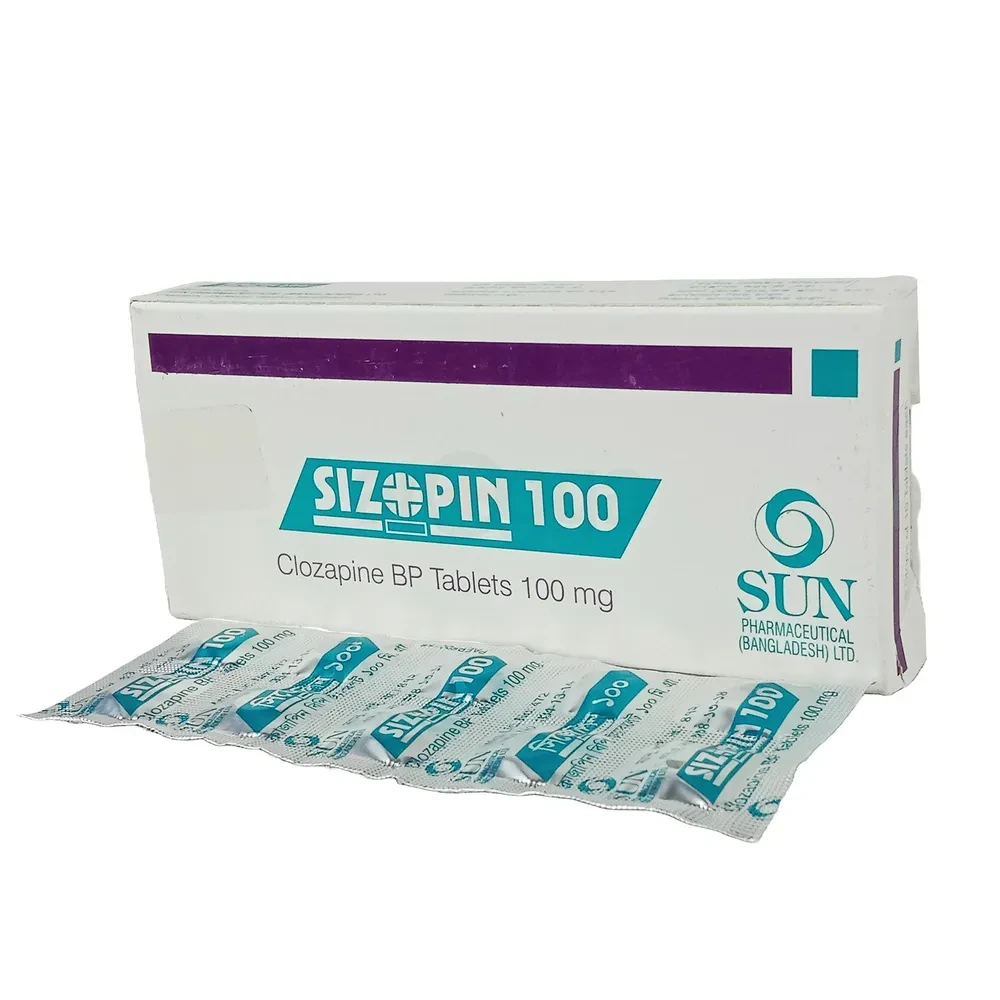
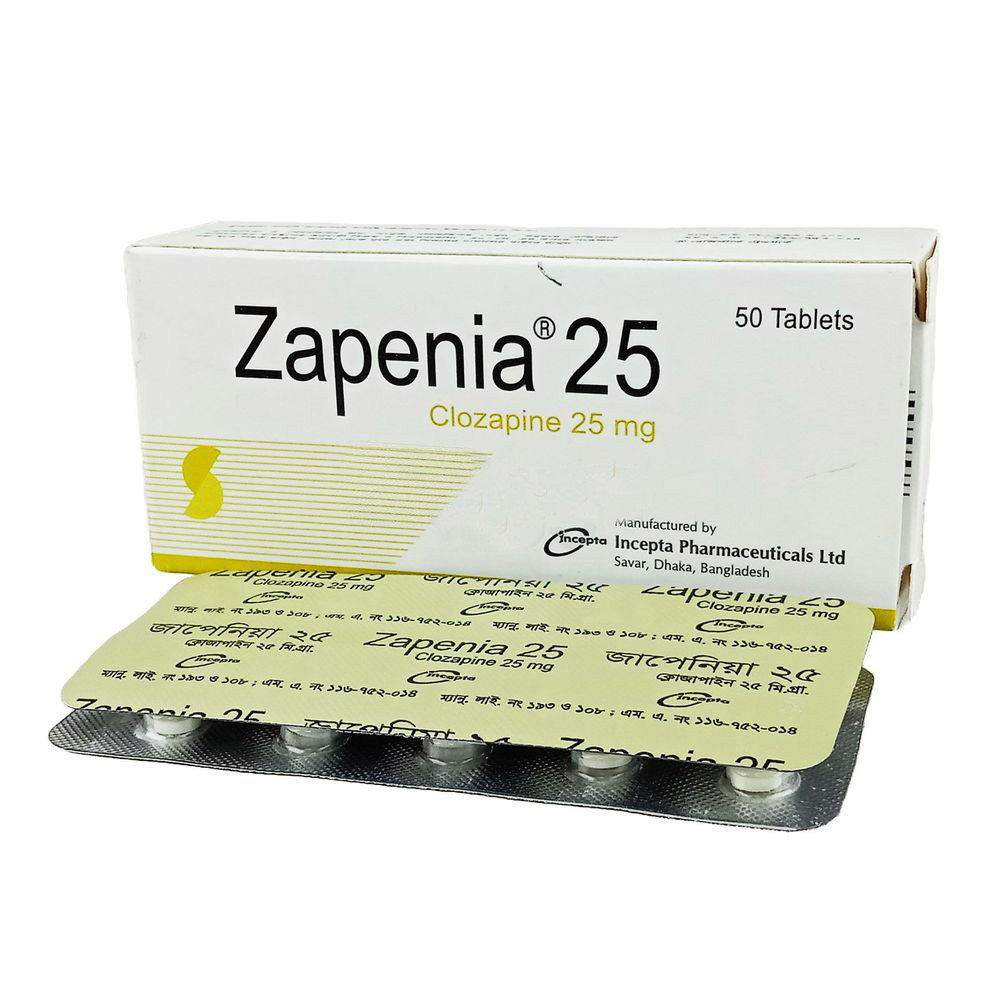
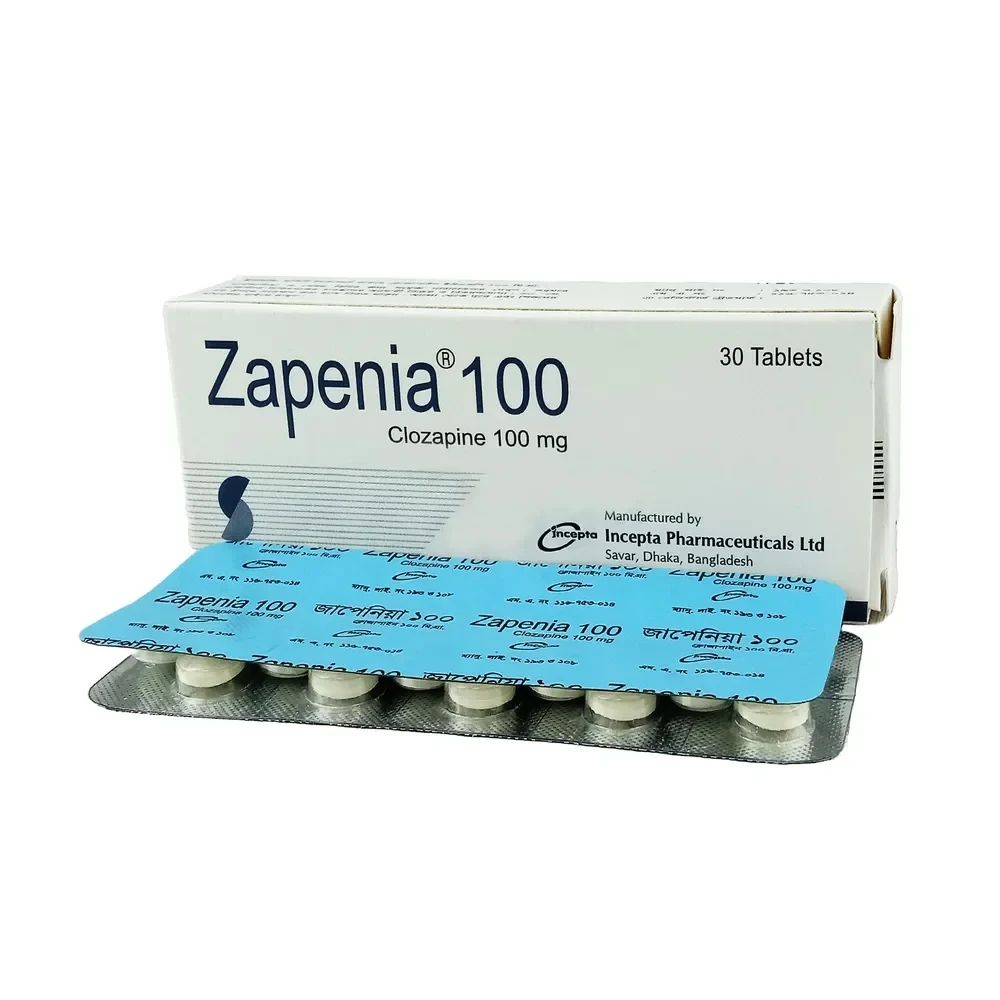
Introduction
A tricyclic dibenzodiazepine, classified as an atypical antipsychotic agent. It binds several types of central nervous system receptors, and displays a unique pharmacological profile. Clozapine is a serotonin antagonist, with strong binding to 5-HT 2A/2C receptor subtype. It also displays strong affinity to several dopaminergic receptors, but shows only weak antagonism at the dopamine D2 receptor, a receptor commonly thought to modulate neuroleptic activity. Agranulocytosis is a major adverse effect associated with administration of this agent.
Uses
Clozapine is an antipsychotic drug used in treatment resistant schizophrenia and to decrease suicide risk in schizophrenic patients.
For use in patients with treatment-resistant schizophrenia.
Associated Conditions
Pharmacodynamics
Clozapine is a psychotropic agent belonging to the chemical class of benzisoxazole derivatives and is indicated for the treatment of schizophrenia. Clozapine is a selective monoaminergic antagonist with high affinity for the serotonin Type 2 (5HT2), dopamine Type 2 (D2), 1 and 2 adrenergic, and H1 histaminergic receptors. Clozapine acts as an antagonist at other receptors, but with lower potency. Antagonism at receptors other than dopamine and 5HT2 with similar receptor affinities may explain some of the other therapeutic and side effects of clozapine. Clozapine's antagonism of muscarinic M1-5 receptors may explain its anticholinergic effects. Clozapine's antagonism of histamine H1 receptors may explain the somnolence observed with this drug. Clozapine's antagonism of adrenergic a1 receptors may explain the orthostatic hypotension observed with this drug.
Patients should be counseled regarding the risk of hypersensitivity reactions such as agranulocytosis and myocarditis with clozapine use. Clozapine induced agranulocytosis, which is a reduction in the absolute neutrophil count or white blood cell count, places the patient at an increased risk for infection. Agranulocytosis is most likely to occur in the first 3-6 months of therapy, but it can still occur after years of treatment. The mechanism is thought to be a dose-independent and immune-mediated reaction against neutrophils. Patients are strictly monitored by lab testing (complete blood count with differential) to ensure agranulocytosis is detected and treated if it occurs. Testing is initially completed at one-week intervals but is expanded to two-week intervals at six months, and then four-week intervals at twelve months if lab results have been within an appropriate range. Monitoring parameters may change if there is any break in therapy. In Canada, the patient's lab values are reported to the manufacturer for hematological monitoring, and in the USA, the patient's lab values are reported to the REMS (Risk Evaluation and Mitigation Strategy) program. These programs function to notify the care provider of any significant drop in WBC/neutrophil count, or if there is a drop below a threshold level. Patients who enter the "Red" zone (WBC5 Monitor the patient's troponin, CRP, ECG at baseline, and 28 days into treatment. Follow guidelines for appropriate next steps according to the patient's lab results. If myocarditis occurs, the patient should not be re-challenged with clozapine.
Mechanism of Action
Clozapine's antipsychotic action is likely mediated through a combination of antogistic effects at D2 receptors in the mesolimbic pathway and 5-HT2A receptors in the frontal cortex. D2 antagonism relieves positive symptoms while 5-HT2A antagonism alleviates negative symptoms.
Absorption
Rapid and almost complete.
Protein Binding
97% (bound to serum proteins)
Route of Elimination
Approximately 50% of the administered dose is excreted in the urine and 30% in the feces.
Half Life
8 hours (range 4-12 hours)
Toxicity
Clozapine carries a black-box warning for agranulocytosis.
Food Interactions
- Avoid alcohol.
- Exercise caution with St. John's Wort. This herb induces both CYP3A4 and CYP1A2 metabolism and may reduce clozapine serum levels.
- Limit caffeine intake. Caffeine may reduce clozapine metabolism.
- Take with or without food. The absorption is unaffected by food.
Dosage
Psychosis in Parkinson's disease: Adult over 16 years, 12.5 mg at bedtime then increased according to response in steps of 12.5 mg up to twice weekly; usual dose range 25-37.5 mg at bedtime, usual maximum 50 mg daily; exceptionally, dose may be increased further in steps of 12.5 mg weekly to maximum 100 mg daily in 1-2 divided doses.