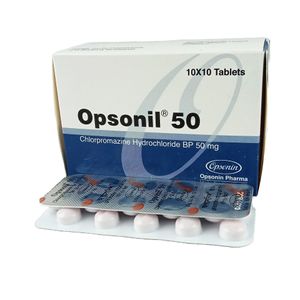
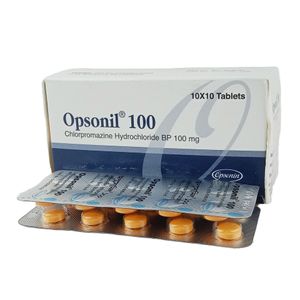
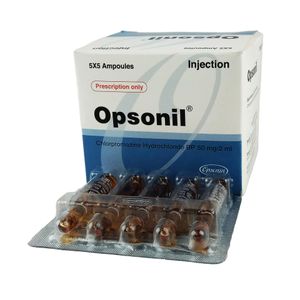
Introduction
The prototypical phenothiazine antipsychotic drug. Like the other drugs in this class, chlorpromazine's antipsychotic actions are thought to be due to long-term adaptation by the brain to blocking dopamine receptors. Chlorpromazine has several other actions and therapeutic uses, including as an antiemetic and in the treatment of intractable hiccup.
Uses
Chlorpromazine is a phenothiazine antipsychotic used to treat nausea, vomiting, preoperative anxiety, schizophrenia, bipolar disorder, and severe behavioral problems in children.
For the treatment of schizophrenia; to control nausea and vomiting; for relief of restlessness and apprehension before surgery; for acute intermittent porphyria; as an adjunct in the treatment of tetanus; to control the manifestations of the manic type of manic-depressive illness; for relief of intractable hiccups; for the treatment of severe behavioral problems in children (1 to 12 years of age) marked by combativeness and/or explosive hyperexcitable behavior (out of proportion to immediate provocations), and in the short-term treatment of hyperactive children who show excessive motor activity with accompanying conduct disorders consisting of some or all of the following symptoms: impulsivity, difficulty sustaining attention, aggressivity, mood lability, and poor frustration tolerance.
Associated Conditions
Pharmacodynamics
Chlorpromazine is a psychotropic agent indicated for the treatment of schizophrenia. It also exerts sedative and antiemetic activity. Chlorpromazine has actions at all levels of the central nervous system-primarily at subcortical levels-as well as on multiple organ systems. Chlorpromazine has strong antiadrenergic and weaker peripheral anticholinergic activity; ganglionic blocking action is relatively slight. It also possesses slight antihistaminic and antiserotonin activity.
Mechanism of Action
Chlorpromazine acts as an antagonist (blocking agent) on different postsysnaptic receptors -on dopaminergic-receptors (subtypes D1, D2, D3 and D4 - different antipsychotic properties on productive and unproductive symptoms), on serotonergic-receptors (5-HT1 and 5-HT2, with anxiolytic, antidepressive and antiaggressive properties as well as an attenuation of extrapypramidal side-effects, but also leading to weight gain, fall in blood pressure, sedation and ejaculation difficulties), on histaminergic-receptors (H1-receptors, sedation, antiemesis, vertigo, fall in blood pressure and weight gain), alpha1/alpha2-receptors (antisympathomimetic properties, lowering of blood pressure, reflex tachycardia, vertigo, sedation, hypersalivation and incontinence as well as sexual dysfunction, but may also attenuate pseudoparkinsonism - controversial) and finally on muscarinic (cholinergic) M1/M2-receptors (causing anticholinergic symptoms like dry mouth, blurred vision, obstipation, difficulty/inability to urinate, sinus tachycardia, ECG-changes and loss of memory, but the anticholinergic action may attenuate extrapyramidal side-effects). Additionally, Chlorpromazine is a weak presynaptic inhibitor of Dopamine reuptake, which may lead to (mild) antidepressive and antiparkinsonian effects. This action could also account for psychomotor agitation and amplification of psychosis (very rarely noted in clinical use).
Absorption
Readily absorbed from the GI tract. Bioavailability varies due to first-pass metabolism by the liver.
Volume of Distribution
- 20 L/kg
Protein Binding
> 90% to plasma proteins, primarily albumin
Route of Elimination
Kidneys, ~ 37% excreted in urine
Half Life
~ 30 hours
Toxicity
Agitation, coma, convulsions, difficulty breathing, difficulty swallowing, dry mouth, extreme sleepiness, fever, intestinal blockage, irregular heart rate, low blood pressure, restlessness
Food Interactions
- Avoid alcohol.
- Take with food. Food reduces irritation.
Dosage
- Oral route: average daily dose of 30 to 75 mg (mild cases) or 75 to 100 mg (more severe cases) in divided doses. It is occasionally necessary to give a higher dosage which, when increased gradually, can reach 900 mg or more per day in some psychiatric patients.
- Once the optimum dosage has been reached, it is maintained as long as necessary for the control of symptoms during the critical phase of the illness. Eventually, however, it should be gradually reduced so that the patient can be maintained on the lowest effective dosage.
- To potentiate hypnotics, analgesics and anesthetics and as an antiemetic.
- Oral route: doses of 25 to 50 mg are administered 2 to 3 hours before anesthesia and every 4 to 6 hours after surgery.
- Usual single dose: 1/4 mg per pound (1/2 mg/kg) by oral route. This dose can be repeated every 4 to 6 hours as necessary. The normal daily dose is 40 mg for a child of 5 years (40 pounds), 75 mg for children of 5 to 12 years (50 to 100 pounds) except in psychiatric patients where dosages can be progressively elevated above these levels.
- In surgery and anesthesia, doses of 1/4 mg per pound, by the same method recommended for adults.