Introduction
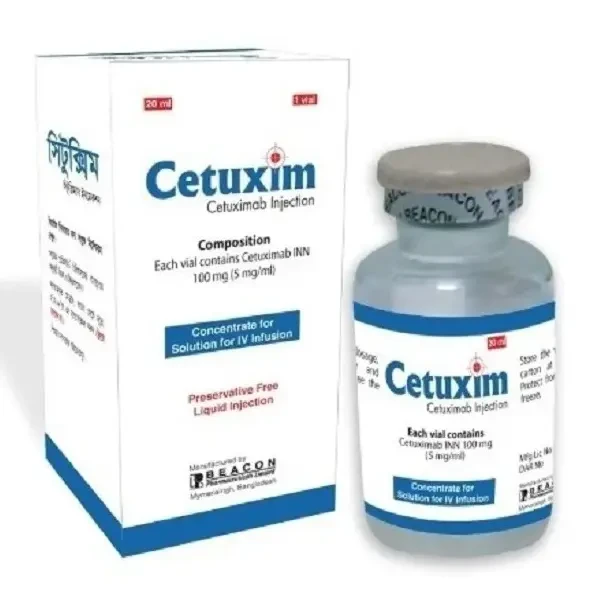
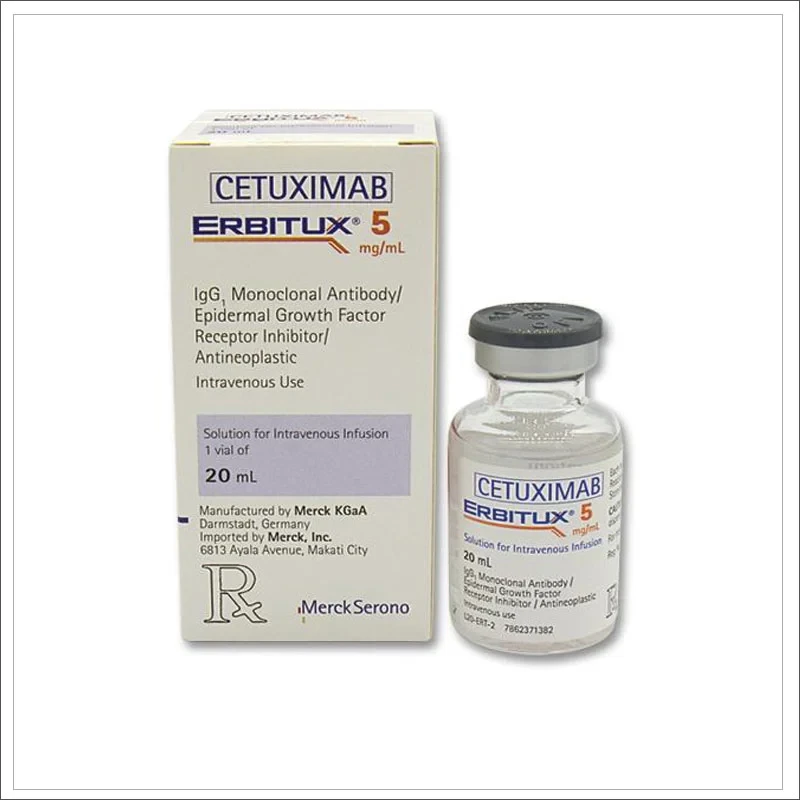
Cetuximab is a recombinant chimeric IgG1 monoclonal antibody that treats head and neck cancer and metastatic KRAS wild-type colorectal cancer by competitively binding to EGFR, blocking the binding of epidermal growth factor (EGF) to inhibit tumor progression. Administered as an intravenous infusion, it can be used alone or combined with radiation and standard chemotherapies like irinotecan or platinum-based agents.
Uses
Cetuximab is an endothelial growth factor receptor binding fragment used to treat colorectal cancer as well as squamous cell carcinoma of the head and neck.
Cetuximab indicated for the treatment of locally or regionally advanced squamous cell carcinoma of the head and neck in combination with radiation therapy. It is indicated for treating a recurrent locoregional disease or metastatic squamous cell carcinoma of the head and neck in combination with platinum-based therapy with fluorouracil. It is indicated for recurrent or metastatic squamous cell carcinoma of the head and neck progressing after platinum-based therapy.
Cetuximab is also indicated for K-Ras wild-type, EGFR-expressing, metastatic colorectal cancer as determined by an FDA-approved test in combination with FOLFIRI, a chemotherapy combination that includes leucovorin, fluorouracil, and irinotecan; in combination with irinotecan in patients who are refractory to irinotecan-based chemotherapy; or as monotherapy in patients who have failed oxaliplatin- and irinotecan-based chemotherapy or who are intolerant to irinotecan.
Cetuximab is not indicated for the treatment of Ras-mutant colorectal cancer or when the results of the Ras mutation tests are unknown.
Associated Conditions
Pharmacodynamics
Cetuximab is an anticancer agent that works by inhibiting the growth and survival of epidermal growth factor receptor (EGFR)-expressing tumour cells with high specificity and higher affinity than epidermal growth factor (EGF) and transforming growth factor-alpha (TGF-α), which are natural ligands of EGFR. Cetuximab works by inhibiting the growth and survival of EGFR-positive tumours. In vitro, it promotes antibody-dependent cellular cytotoxicity (ADCC) against certain human tumour types. On the contrary, cetuximab does not exert its anti-tumour effects on human tumour xenografts lacking EGFR expression.
Cetuximab potentiates the cytotoxic effects of chemotherapeutics and radiation therapy when used in combination. In human tumour xenograft models in mice, cetuximab and irinotecan synergistically inhibited the growth of orthotopic anaplastic thyroid carcinoma xenografts in vitro and in vivo. Cetuximab potentiated the in vitro anti-proliferative and pro-apoptotic effect of irinotecan and achieved 93% in vivo inhibition of tumour growth when combined with irinotecan, compared to 77% and 79% inhibition when cetuximab and irinotecan were used alone, respectively.
Mechanism of Action
The epidermal growth factor receptor (EGFR) is a transmembrane glycoprotein and a type I receptor tyrosine kinase expressed on both normal and malignant cells. It has been investigated as a therapeutic target for anticancer treatment, as it is often upregulated in cancer types, including head and neck, colon, and rectal cancers. When activated by its ligand, EGFR undergoes a conformational change and dimerization to form homodimers or heterodimers with another member of the ErbB family of receptors. Dimerization of EGFR activates the intracellular tyrosine kinase region of EGFR and promotes autophosphorylation, initiating a series of downstream signalling cascades, including cell differentiation, proliferation, migration, angiogenesis, and apoptosis. This EGFR signalling pathway is often dysregulated in cancer cells, leading to aberrant cell growth and enhanced cell survival.
Cetuximab is a monoclonal antibody that binds specifically to the EGFR on both normal and tumour cells to competitively inhibit the binding of epidermal growth factor (EGF) and other ligands that are produced by normal and tumour tissue epithelial cells. Upon binding to domain III of EGFR - which is the binding site for its growth factor ligands - cetuximab prevents the receptor from adopting an extended conformation and thereby inhibits EGFR activation, as well as phosphorylation and activation of receptor-associated kinases (MAPK, PI3K/Akt, Jak/Stat). Inhibition of the EGFR signalling pathway ultimately leads to inhibition of cell cycle progression, cell survival pathways, and tumour cell motility and invasion. Cetuximab also induces cell apoptosis and decreases matrix metalloproteinase and vascular endothelial growth factor (VEGF) production. In vitro, cetuximab was shown to inhibit tumour angiogenesis. Binding of cetuximab to EGFR also results in internalization of the antibody-receptor complex, leading to an overall downregulation of EGFR expression.
K-ras is a small G-protein downstream of EGFR that plays an important role in promoting the EGFR signalling cascade: in some malignant cells, K-ras can acquire activating mutations in exon 2 and thus be continuously active regardless of EGFR regulation. Since mutant Ras proteins can isolate the pathway from the effect of EGFR, K-Ras mutations can render EGFR inhibitors like cetuximab ineffective in exerting anti-tumour effects. Cetuximab is thus only limited in its use for K-Ras wild-type, EGFR-expressing cancers.
Absorption
After administration of a 400 mg/m2 initial dose followed by a 250 mg/m2 weekly dose, the steady-state levels of cetuximab was reached by the third weekly infusion with mean peak and trough concentrations across studies ranging from 168 µg/mL to 235 µg/mL and 41 µg/mL to 85 µg/mL, respectively. Tmax is about 3 hours.
Volume of Distribution
The volume of the distribution is about 2-3 L/m2 and is independent of dose.
Protein Binding
There is no information available.
Route of Elimination
There is limited information available.
Half Life
After administration of a 400 mg/m2 initial dose followed by a 250 mg/m2 weekly dose, the mean half-life for cetuximab was approximately 112 hours, with a range of 63 to 230 hours.
Clearance
In patients with recurrent and/or metastatic squamous cell carcinoma of the head and neck, the estimated clearance rate was 0.103 L/h. At doses ranging from 200 to 400 mg/m2
Toxicity
The intravenous LD50 is > 300 mg/kg in mice and > 200 mg/kg in rats. There is limited information on the overdose from cetuximab.
In clinical trials, cetuximab was associated with serious and fatal infusion reactions, cardiopulmonary arrest or sudden death, and serious dermatologic toxicities. Pulmonary toxicities, such as interstitial lung disease, interstitial pneumonitis with non-cardiogenic pulmonary edema, and exacerbation of pre-existing fibrotic lung disease have been reported.
Food Interactions
No interactions found.
Dosage
Squamous Cell Carcinoma Of The Head And Neck:
Cetuximab in combination with radiation therapy or in combination with platinum-based therapy with 5-FU:- The recommended initial dose is 400 mg/m2 administered one week prior to initiation of a course of radiation therapy or on the day of initiation of platinum-based therapy with 5-FU as a 120-minute intravenous infusion (maximum infusion rate 10 mg/min). Complete Cetuximab administration 1 hour prior to platinum-based therapy with 5-FU.
- The recommended subsequent weekly dose (all other infusions) is 250 mg/m2 infused over 60 minutes (maximum infusion rate 10 mg/min) for the duration of radiation therapy (6–7 weeks) or until disease progression or unacceptable toxicity when administered in combination with platinum-based therapy with 5-FU. Complete Cetuximab administration 1 hour prior to radiation therapy or platinumbased therapy with 5-FU.
- The recommended initial dose is 400 mg/m2 administered as a 120-minute intravenous infusion (maximum infusion rate 10 mg/min).
- The recommended subsequent weekly dose (all other infusions) is 250 mg/m2 infused over 60 minutes (maximum infusion rate 10 mg/min) until disease progression or unacceptable toxicity.
Colorectal Cancer:
- Determine EGFR-expression status using FDA-approved tests prior to initiating treatment. Also confirm the absence of a Ras mutation prior to initiation of treatment with Cetuximab.
- The recommended initial dose, either as monotherapy or in combination with irinotecan or FOLFIRI (irinotecan, 5-fluorouracil, leucovorin), is 400 mg/m2 administered as a 120-minute intravenous infusion (maximum infusion rate 10 mg/min). Complete Cetuximab administration 1 hour prior to FOLFIRI.
- The recommended subsequent weekly dose, either as monotherapy or in combination with irinotecan or FOLFIRI, is 250 mg/m2 infused over 60 minutes (maximum infusion rate 10 mg/min) until disease progression or unacceptable toxicity. Complete Cetuximab administration 1 hour prior to FOLFIRI.