Introduction
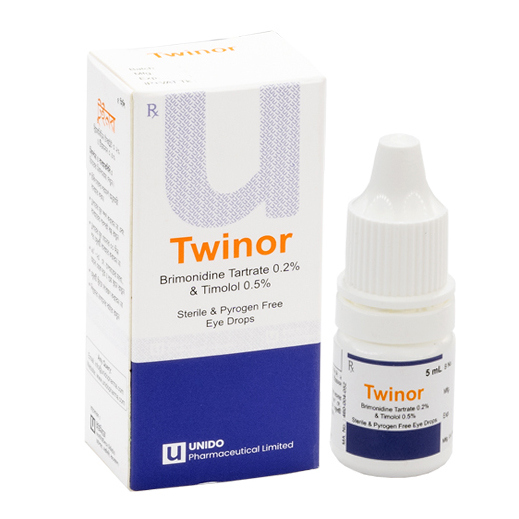
Brimonidine Tartrate + Timolol Maleate is a combination ophthalmic solution used to reduce intraocular pressure (IOP) in patients with open-angle glaucoma or ocular hypertension. This fixed-dose combination leverages the complementary mechanisms of action of brimonidine, an alpha-2 adrenergic agonist, and timolol, a non-selective beta-blocker, to achieve a greater reduction in IOP than either drug used alone.
Uses
This combination is primarily used to manage the following conditions:
- Open-angle glaucoma
- Ocular hypertension (high pressure inside the eye)
By reducing intraocular pressure, Brimonidine Tartrate + Timolol Maleate helps prevent further damage to the optic nerve, which can lead to vision loss or blindness if untreated.
Mechanism of Action
Brimonidine Tartrate: Brimonidine is an alpha-2 adrenergic agonist that reduces aqueous humor production and increases uveoscleral outflow, leading to decreased intraocular pressure.
Timolol Maleate: Timolol is a non-selective beta-adrenergic receptor blocker that reduces intraocular pressure by decreasing aqueous humor production in the ciliary body of the eye.
The combined action of both agents provides a more substantial reduction in IOP compared to monotherapy, as they target different mechanisms of aqueous humor dynamics.
How Long Does It Take to Work?
The onset of action for Brimonidine Tartrate + Timolol Maleate typically occurs within 1-2 hours after administration, with maximum intraocular pressure reduction achieved within 2-4 hours. The effects generally last for 12 hours or longer, depending on the individual response.
Absorption
After topical application to the eye, both brimonidine and timolol are absorbed into the aqueous humor. Systemic absorption can also occur, particularly with timolol, which may lead to systemic side effects, especially in sensitive populations such as those with respiratory or cardiovascular conditions.
Route of Elimination
Brimonidine is metabolized primarily in the liver, and its metabolites are excreted through the urine. Timolol is also metabolized by the liver and eliminated via both the kidneys and the feces.
Dosage
Instill 1 drop in the affected eye(s) twice daily.The recommended dosage for Brimonidine Tartrate + Timolol Maleate is one drop in the affected eye(s) twice daily, approximately 12 hours apart. Dosage adjustments may be required based on patient response and tolerance. The treatment should be administered regularly for optimal control of intraocular pressure.
Administration
This ophthalmic solution is administered topically. The patient should tilt their head back, pull down the lower eyelid, and instill one drop of the solution into the conjunctival sac of the affected eye(s). Care should be taken not to touch the dropper tip to the eye or surrounding surfaces to avoid contamination. After application, gentle pressure on the inner corner of the eye (nasolacrimal occlusion) for 1-2 minutes can help reduce systemic absorption.
Side Effects
Common side effects include:
- Eye discomfort or irritation
- Dry eyes
- Blurry vision
- Redness or stinging in the eyes
Serious side effects include:
- Bradycardia (slow heart rate)
- Hypotension (low blood pressure)
- Respiratory difficulties, such as bronchospasm in asthmatic patients
- Fatigue and drowsiness
Toxicity
Overdose of Brimonidine Tartrate + Timolol Maleate, particularly systemic absorption of timolol, may result in bradycardia, hypotension, respiratory distress, and heart failure. In cases of overdose, immediate medical attention is required, and treatment may include supportive care such as airway management, fluid replacement, and administration of atropine or beta-agonists for severe bradycardia or bronchospasm.
Precautions
Patients with a history of asthma, chronic obstructive pulmonary disease (COPD), severe heart block, bradycardia, or congestive heart failure should use this combination with caution due to the systemic effects of timolol. Brimonidine can cause drowsiness, which may impair the ability to drive or operate machinery. Caution should also be exercised in patients with a history of depression or orthostatic hypotension.
Interactions
The combination of brimonidine and timolol may interact with several other medications, including:
- Beta-blockers (oral or topical): Increased risk of systemic beta-blocker side effects.
- Antihypertensive drugs: Additive effects on lowering blood pressure.
- Central nervous system depressants: May increase sedation when used with brimonidine.
- MAO inhibitors: Caution is advised, as brimonidine may interact with these drugs.
Disease Interaction
Brimonidine Tartrate + Timolol Maleate should be used with caution in patients with:
- Asthma or COPD: Timolol may cause bronchospasm.
- Cardiac conditions: Timolol can exacerbate bradycardia, heart block, and heart failure.
- Depression: Brimonidine may exacerbate depressive symptoms.
- Orthostatic hypotension: Brimonidine may cause a drop in blood pressure upon standing.
Drug Interaction
Significant drug interactions may occur with the following:
- Oral beta-blockers (e.g., propranolol, atenolol): Increased risk of additive cardiovascular effects, such as bradycardia and hypotension.
- Antihypertensive medications: May result in an exaggerated reduction in blood pressure.
- MAO inhibitors and tricyclic antidepressants: Concurrent use may lead to altered effects of brimonidine.
- Other ophthalmic medications: Caution should be taken when using multiple eye drops, allowing several minutes between applications.
Food Interactions
There are no significant food interactions with Brimonidine Tartrate + Timolol Maleate. However, to prevent systemic absorption and potential side effects, patients should avoid consuming large amounts of caffeine or alcohol, which could exacerbate side effects such as bradycardia or hypotension.
Pregnancy Use
Brimonidine Tartrate + Timolol Maleate should be used during pregnancy only if the potential benefit justifies the potential risk to the fetus. Timolol has been associated with intrauterine growth retardation when administered systemically in animal studies. Patients should consult their healthcare provider before using this medication during pregnancy.
Lactation Use
Both brimonidine and timolol are excreted in human breast milk. Due to the potential for serious adverse reactions in nursing infants, a decision should be made whether to discontinue breastfeeding or discontinue the drug, taking into account the importance of the drug to the mother.
Acute Overdose
Acute overdose of Brimonidine Tartrate + Timolol Maleate may result in significant systemic effects, particularly related to timolol. Symptoms may include severe bradycardia, hypotension, bronchospasm, and respiratory failure. In the event of an overdose, emergency medical care should be sought immediately. Treatment may include beta-agonist therapy for respiratory symptoms or atropine for bradycardia.
Contraindication
This combination is contraindicated in patients with:
- A history of asthma or severe chronic obstructive pulmonary disease (COPD)
- Severe bradycardia or advanced atrioventricular block
- Overt cardiac failure or cardiogenic shock
- Known hypersensitivity to brimonidine, timolol, or any components of the formulation
Use Direction
The medication should be used exactly as prescribed by a healthcare provider. One drop should be instilled into the affected eye(s) twice daily, with approximately 12 hours between doses. Care should be taken to avoid contamination of the dropper, and any unused solution should be discarded after the expiration date or as directed by the physician.
Storage Conditions
Brimonidine Tartrate + Timolol Maleate should be stored at room temperature (15-25°C or 59-77°F) away from moisture and light. The bottle should be kept tightly closed when not in use. Do not freeze the solution, and keep it out of reach of children.
Volume of Distribution
Data on the volume of distribution for this combination are not well-documented. However, timolol is known to have a relatively large volume of distribution due to its systemic absorption, while brimonidine’s distribution is mainly confined to the eye after topical application.
Half Life
The half-life of timolol in plasma is approximately 4-5 hours. Brimonidine has a shorter half-life of around 2-3 hours after ocular administration. However, the intraocular pressure-lowering effects of both agents can persist for 12 hours or more.
Clearance
Timolol is cleared primarily by the liver and excreted by the kidneys, while brimonidine is metabolized in the liver and excreted in the urine. Impaired hepatic or renal function may necessitate dosage adjustments or increased monitoring.