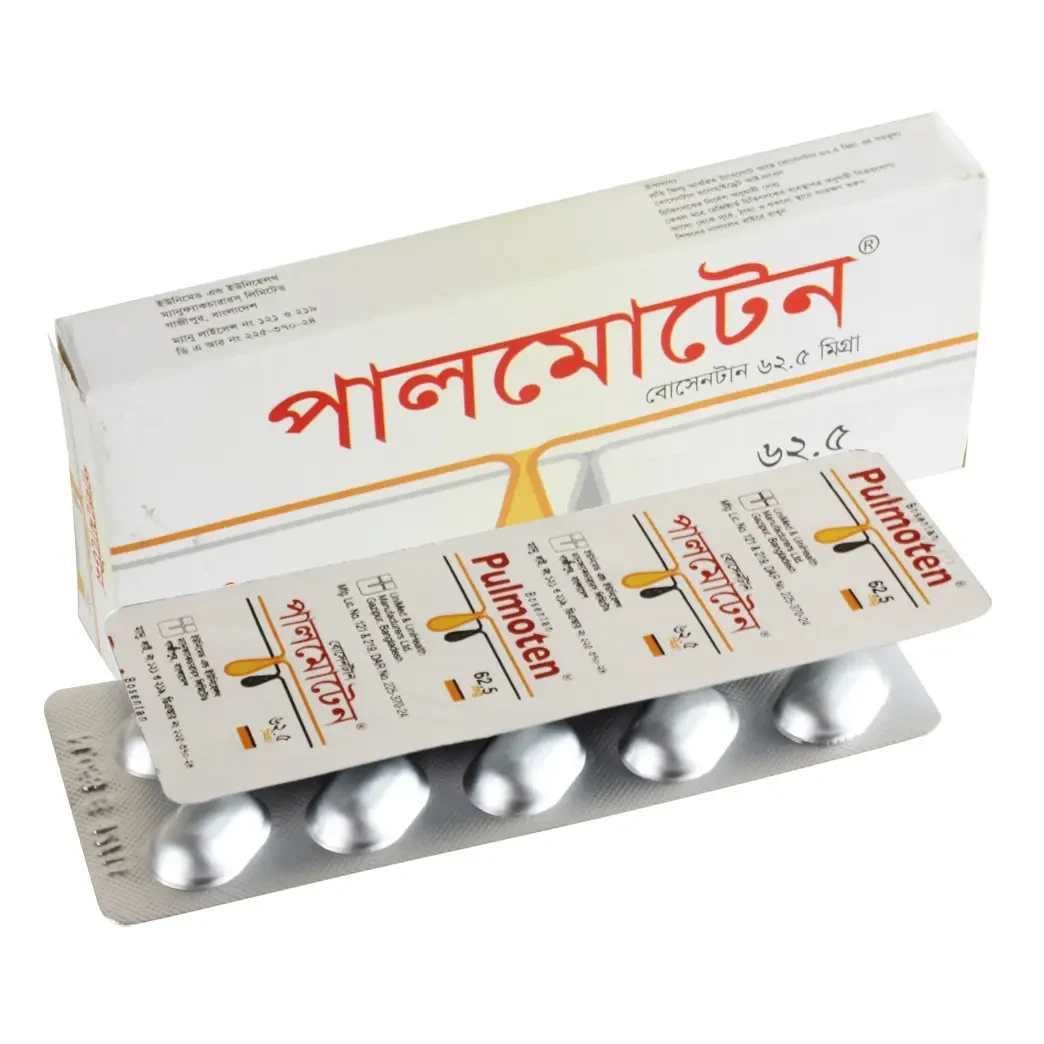
Introduction
Bosentan is a dual endothelin receptor antagonist. Bosentan is used to treat pulmonary hypertension by blocking the action of endothelin molecules that would otherwise promote narrowing of the blood vessels and lead to high blood pressure.
Uses
Bosentan is a dual endothelin receptor antagonist used to treat pulmonary arterial hypertension.
Used in the treatment of pulmonary arterial hypertension (PAH), to improve exercise ability and to decrease the rate of clinical worsening (in patients with WHO Class III or IV symptoms).
Associated Conditions
Pharmacodynamics
Bosentan belongs to a class of drugs known as endothelin receptor antagonists (ERAs). Patients with PAH have elevated levels of endothelin, a potent blood vessel constrictor, in their plasma and lung tissue. Bosentan blocks the binding of endothelin to its receptors, thereby negating endothelin's deleterious effects.
Mechanism of Action
Endothelin-1 (ET-1) is a neurohormone, the effects of which are mediated by binding to ETA and ETB receptors in the endothelium and vascular smooth muscle. It displays a slightly higher affinity towards ETA receptors than ETB receptors. ET-1 concentrations are elevated in plasma and lung tissue of patients with pulmonary arterial hypertension, suggesting a pathogenic role for ET-1 in this disease. Bosentan is a specific and competitive antagonist at endothelin receptor types ETA and ETB.
Absorption
Absolute bioavailability is approximately 50% and food does not affect absorption.
Volume of Distribution
- 18 L
Protein Binding
Greater than 98% to plasma proteins, mainly albumin.
Route of Elimination
Bosentan is eliminated by biliary excretion following metabolism in the liver.
Half Life
Terminal elimination half-life is about 5 hours in healthy adult subjects.
Clearance
- 4 L/h [patients with pulmonary arterial hypertension]
Toxicity
Bosentan has been given as a single dose of up to 2400 mg in normal volunteers, or up to 2000 mg/day for 2 months in patients, without any major clinical consequences. The most common side effect was headache of mild to moderate intensity. In the cyclosporine A interaction study, in which doses of 500 and 1000 mg b.i.d. of bosentan were given concomitantly with cyclosporine A, trough plasma concentrations of bosentan increased 30-fold, resulting in severe headache, nausea, and vomiting, but no serious adverse events. Mild decreases in blood pressure and increases in heart rate were observed. There is no specific experience of overdosage with bosentan beyond the doses described above. Massive overdosage may result in pronounced hypotension requiring active cardiovascular support.
Food Interactions
- Take with or without food. The absorption is unaffected by food.
Dosage
Pulmonary arterial hypertension: ln adult patients, Bosentan treatment should be initiated at a dose of 62.5 mg twice daily for 4 weeks and then increased to the maintenance dose of 125 mg twice daily.
For paediatric patients aged 2 years or older, the optimal maintenance dose has not been defined in well-controlled studies. However, paediatric pharmacokinetic data have shown that Bosentan plasma concentrations in children were on average lower than in adult patients and were not increased by increasing the dose of Bosentan above 2 mg/kg body weight twice daily.
Discontinuation of treatment: lf the decision to withdraw Bosentan is taken, it should be done gradually while an alternative therapy is introduced.