Introduction
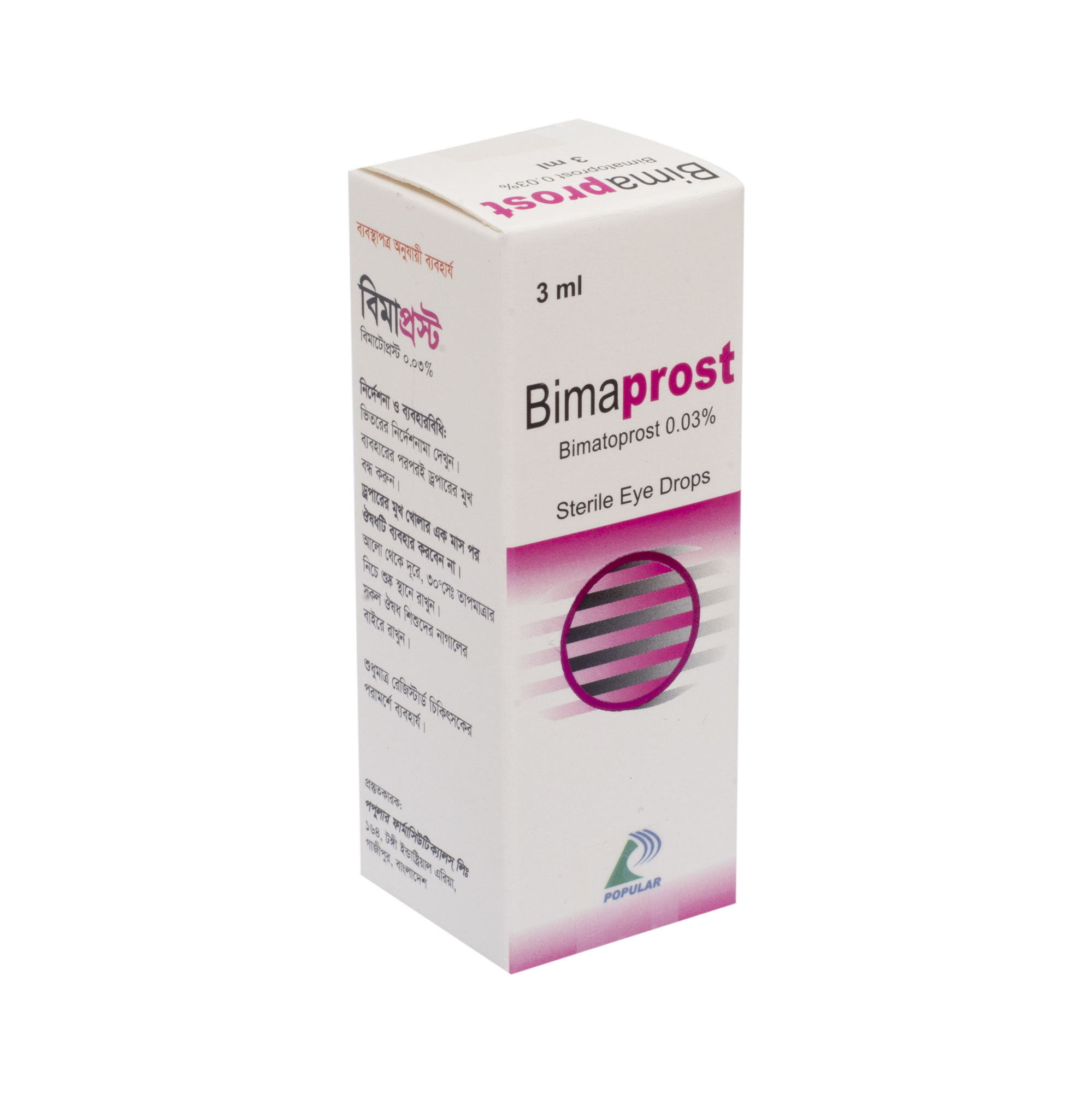
Bimatoprost is a synthetic prostamide and prostaglandin analogue used primarily to reduce elevated intraocular pressure in patients with ocular hypertension and open-angle glaucoma. It lowers intraocular pressure by increasing the outflow of aqueous humor from the eye. Bimatoprost is also used to treat eyelash hypotrichosis, promoting the growth of longer, thicker, and darker eyelashes. It is available as both ophthalmic solutions and intracameral implants.
Uses
Bimatoprost is a prostaglandin analog used to treat hypotrichosis of the eyelashes and intraocular pressure in open angle glaucoma or ocular hypertension.
Bimatoprost is used for the reduction of elevated intraocular pressure in patients with open-angle glaucoma or ocular hypertension. These patients must be intolerant to other intraocular pressure lowering medications or inadequately responsive to other treatments.
Bimatoprost is also indicated to treat eyelash hypotrichosis.
Associated Conditions
Pharmacodynamics
High intraocular pressure is a major risk factor for glaucoma-related visual field loss. A linear relationship exists between intraocular pressure and the risk of damaging the optic nerve, which can lead to considerable visual impairment. Therefore, conditions such as ocular hypertension and glaucoma can cause dangerous elevations of intraocular pressure. Bimatoprost rapidly decreases intraocular pressure and reduces the risk for visual field loss from ocular hypertension due to various causes.
Other effects of this drug may include gradual changes in eyelid pigmentation, changes in iris pigmentation, changes in eyelash pigmentation, growth and thickness. Patients should be informed of these possible effects, especially if this drug is only administered to one eye, which may noticeably change in appearance with bimatoprost treatment.
Mechanism of Action
Bimatoprost imitates the effects of prostamides, specifically prostaglandin F2α. Bimatoprost mildly stimulates aqueous humor outflow, relieving elevated intraocular pressure and decreasing the risk of optic nerve damage. It is thought that bimatoprost reduces intraocular pressure (IOP) in humans by causing an increase in outflow of the aqueous humor via the trabecular meshwork and uveoscleral pathways. It achieves the above effects by decreasing tonographic resistance to aqueous humor outflow. Bimatoprost does not affect aqueous humor production.
Absorption
This drug is absorbed systemically when administered to the eye. A study was performed on 15 healthy volunteers and bimatoprost ophthalmic solution 0.03% was administered once daily for 14 days. The mean Cmax was approximately 0.08 ng/mL and AUC0-24hr was approximately 0.09 on days 7 and 14 of the study. By 10 minutes, peak blood concentration was achieved. Bimatoprost was not detectable at 1.5 hours after administration in most subjects. The maximum blood concentration in a study of 6 healthy volunteers was determined to be 12.2 ng/mL. Steady state was reached in the first week of dosing.
One drug label mentions that onset of decreased intraocular pressure occurs approximately 4 hours after the first administration and the peak effect occurs in the range of 8-12 hours. Bimatoprost effects may last up to 24 hours.
Volume of Distribution
The volume of distribution at steady state is 0.67 L/kg.. It penetrates the human cornea and sclera.
Protein Binding
Bimatoprost is about 88%-90% bound to plasma proteins.
Route of Elimination
One pharmacokinetic study of bimatoprost in 6 healthy volunteers determined that 67% of the administered dose was found to be excreted in the urine while 25% of the dose was recovered in the feces.
Half Life
The elimination half-life of bimatoprost is approximately 45 minutes.
Clearance
The clearance was measured to be 1.5 L/hr/kg in healthy subjects receiving IV administration of bimatoprost dosed at 3.12 ug/kg.
Toxicity
No information is available at this time regarding bimatoprost overdose in humans. Provide supportive symptomatic treatment if an overdose occurs.
Food Interactions
No interactions found.