Introduction
High levels of LDL cholesterol (LDL-C) are a major risk factor for cardiovascular events. Caused by genetic mutations or lifestyle factors, hypercholesterolemia can significantly reduce quality of life and increase the risk of mortality from cardiovascular disease. About 1 in 4 patients, or 15 million Americans with elevated LDL-C, are insufficiently managed with maximally tolerated statin therapy alone, requiring additional treatment for hypercholesterolemia.
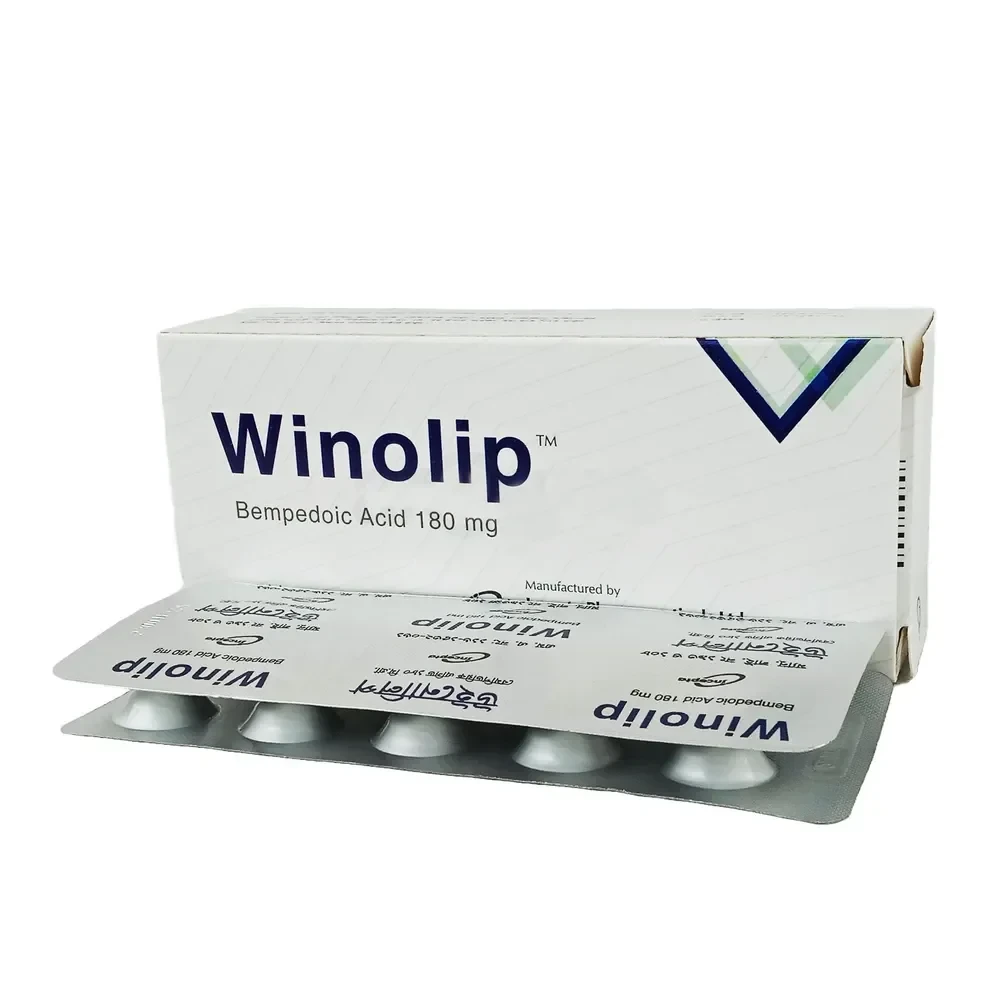
Bempedoic acid is first-in-class adenosine triphosphate-citrate lyase (ACL) inhibitor used once a day for reducing LDL cholesterol levels in statin-refractory patients.
Uses
Bempedoic acid is a drug used in conjunction with lifestyle modification and/or other agents for the treatment of refractory hypercholesterolemia.
Bempedoic acid is indicated as an adjunct to diet and maximally tolerated statin therapy for adults with heterozygous familial hypercholesterolemia or existing atherosclerotic cardiovascular disease that warrants additional lowering of LDL-C.
The combination of bempedoic and ezetimibe is also indicated with diet management and maximally tolerated statin therapy to treat elevated LDL-C levels in adults with heterozygous familial hypercholesterolemia or existing atherosclerotic cardiovascular disease who require further lowering of LDL-C.
Associated Conditions
Pharmacodynamics
Bempedoic acid inhibits the synthesis of cholesterol in the liver, reducing LDL-C levels. This reduces the development of atherosclerotic plaques that may increase the risk of cardiovascular events. Earlier clinical trials studying the effects of bempedoic acid showed a dose‐dependent reduction of LDL‐C levels in addition to decreased LDL particle number, and reduced levels of apolipoprotein B, non–HDL cholesterol, and high‐sensitivity C‐reactive protein.
Due to its unique mechanism of action, bempedoic acid is not associated with myositis, an adverse effect that frequently accompanies statin therapy.
More recent trials have supported that this drug significantly decreases LDL-C levels after 12 weeks of therapy and provides additional lowering of LDL-C when combined with ezetimibe and statin therapy. The effects of bempedoic acid on mortality are currently unknown.
Mechanism of Action
Normally, LDL cholesterol is produced in the liver and circulates in the blood. When the blood becomes saturated, excess LDL deposits in blood vessels including the coronary arteries, increasing the risk of cardiovascular events.
Bempedoic acid is a prodrug that requires activation in the liver. The very-long-chain acyl-CoA synthetase-1 (ACSVL1) enzyme is responsible for its activation to ETC-1002-CoA, the pharmacologically active metabolite. ATP lyase (also known as ATP synthase) plays an important part of cholesterol synthesis. BETC-1002-CoA directly inhibits this enzyme after the parent drug is activated in the liver by coenzyme A (CoA).
This inhibition leads to upregulation of the LDL cholesterol receptor, reducing serum LDL-C via increased uptake and LDL clearance in the liver. By the above mechanisms, bempedoic acid causes a total decrease of circulating LDL-C that normally damages blood vessels and leads to atherosclerosis. Lastly, ETC-1002 activates AMP-activated protein kinase (AMPK) in rodents, which inhibits the synthesis of cholesterol via the inhibition of HMG-CoA reductase. The relevance of this to humans is unknown.
Absorption
Bempedoic acid is rapidly absorbed in the small intestine. The Tmax of the 180mg tablet is estimated at 3.5 hours.
Volume of Distribution
The apparent volume of distribution of bempedoic acid is about 18L.
Protein Binding
The plasma protein binding of bempedoic acid and its metabolites is about 99%.
Route of Elimination
Bempedoic acid's conjugates are primarily eliminated via the urine (70%) and the feces (30%). A total of 5% of the unchanged drug is excreted in the urine and feces, combined.
Half Life
The half-life of bempedoic acid ranges between 15 and 24 hours. Prescribing information indicates a clearance of 21 hours +/- 11 hours.
Clearance
The clearance (CL/F) of bempedoic acid at steady state was estimated at 11.2 mL/min during clinical trials.
Toxicity
LD50 information for bempedoic acid is not readily available in the literature. In the case of an overdose with bempedoic acid, contact the local poison control center. To this date, there is no experience with bempedoic acid overdoses. Employ general supportive measures.
Food Interactions
- Take with or without food.