Introduction
Barium sulfate is an inorganic compound with the chemical formula BaSO4 .
Barium sulfate occurs in nature as the mineral barite. It is also used in various manufacturing applications and mixed into heavy concrete to serve as a radiation shield .
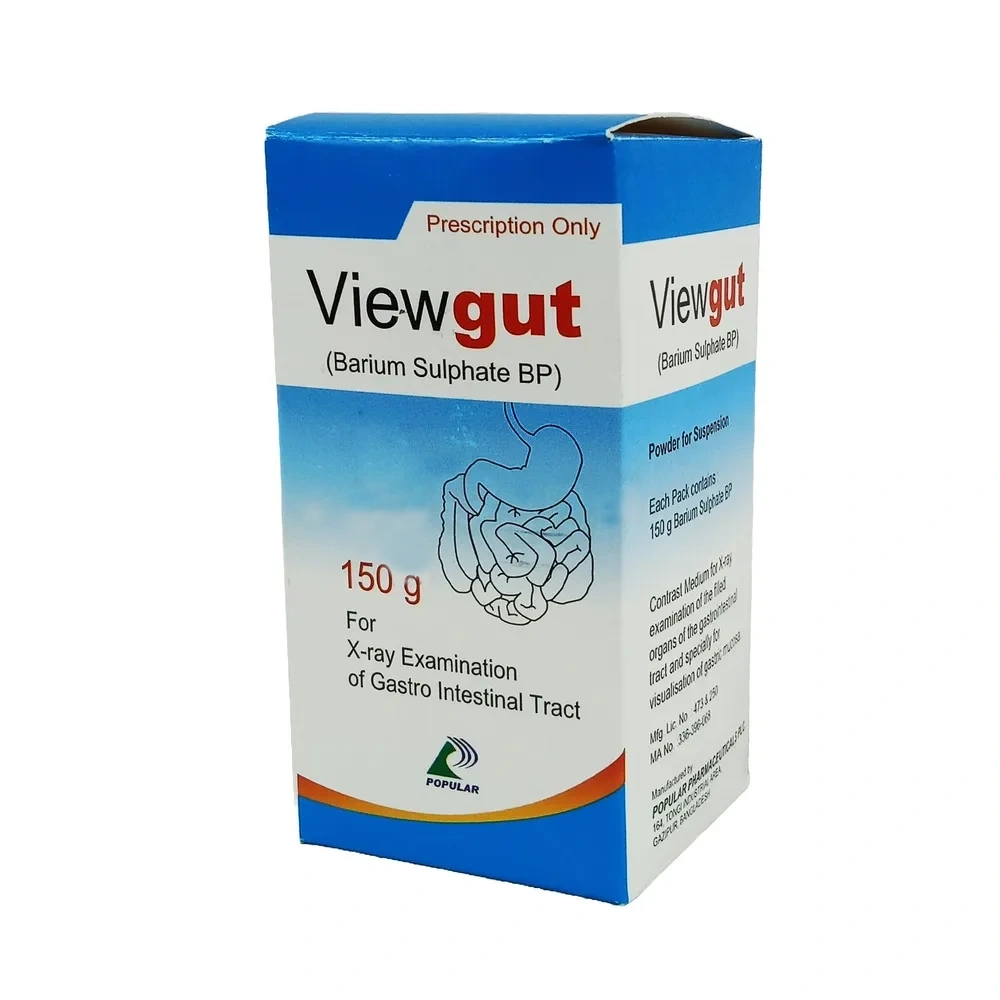
This drug is used as a contrast agent in diagnostic x-ray procedures. Therapeutic advantages of barium sulfate in diagnostic procedures include both its low water solubility and high level of clearance from the body .
Barium sulfate is ingested by mouth or administered rectally and combined with granules of effervescent bicarbonate to enhance distension of the GI tract, allowing for enhanced gastrointestinal tract visualization , .
Uses
Barium sulfate is a contrast agent used for CT scans of the gastrointestinal tract.
Barium sulfate is a radiographic contrast agent indicated for use in computed tomography (CT) of the abdomen to delineate the gastrointestinal (GI) tract in adult and pediatric patients .
Associated Conditions
Pharmacodynamics
Barium sulfate increases the absorption of x-rays as they are passed throughout the body, delineating body structures, in which barium sulfate is localized. This allows for the clear visualization of normal organs/defect in normal anatomy .
Mechanism of Action
Barium sulfate is a heavy metal with a high atomic number (Z=56) and a K shell binding energy (K-edge of 37.4 keV) very close to that of most diagnostic x-ray beams. Due to these characteristics, barium is an ideal medium for the absorption of x-rays .
Barium sulfate is essentially not absorbed from the GI tract nor metabolized in the body. Barium sulfate is used to fill the gastrointestinal tract lumen or to coat the mucosal surface and is administered orally, rectally, or instilled into an enterostomy tube or catheter , .
Barium sulfate enhances delineation of the GI tract. The barium suspension covers the mucosal surface of the GI tract, allowing its shape, distensibility, motion, integrity, continuity, location within the torso, relationship to other organs to be closely examined . Various abnormalities, such as benign or malignant tumors, ulcers, strictures, diverticula, inflammation or infection, altered motility, displacement and other pathology can thereby be identified , .
At lower concentrations (higher dilution), barium enhances the conspicuity of the GI tract to differentiate the GI tract from various abdominal organs in computed tomography examinations (CT scans) of the abdomen. Improved delineation of the gastrointestinal tract lumen and mucosa may be reached by contrast provided by gas (by the addition of bicarbonate or gas-filled balloons) in addition to the barium . This is known as a double-contrast procedure. Osmotically active agents (for example, sorbitol) are also used to induce fluid accumulation and distension of the GI system to enhance visualization .
Absorption
Barium sulfate is not absorbed following oral or rectal administration with a normal gastrointestinal tract. In patients with a normal GI tract, barium sulfate is normally excreted within 24 hr after oral ingestion. Post rectal administration of barium sulfate suspensions, the drug is generally excreted when the enema is released. Some barium may remain in the colon for several weeks, however, and eventually clears, especially in patients with impaired intestinal peristalsis . It is difficult to quantify the uptake of ingested barium because of a number of factors affect its absorption. The presence of sulfate in food can cause the precipitation of barium sulfate .
The following is the approximate time to peak opacification of organs by barium sulfate in a healthy GI tract:
Esophagus, stomach, and duodenum uptake of barium sulfate occurs almost immediately after oral administration .
Small intestine uptake is dependent on gastric emptying rate and viscosity of the preparation; it may be delayed 15-90 minutes post ingestion .
Small intestine (enteroclysis studies) uptake is immediate, following direct instillation .
Colon and distal small intestine uptake are dependent on patient positioning. Hydrostatic pressure also determines the rate and degree of opacification .
Route of Elimination
Barium sulfate is excreted unchanged in the feces .
Clearance
The rate of excretion of barium sulfate is dependent on the route of administration and the status of peristaltic activity and motility of the gastrointestinal tract .
Toxicity
Acute Exposure
Nausea, vomiting, diarrhea and abdominal cramping may occur . Acute exposure to barium sulfate may irritate the eyes and respiratory tract. Exposure to inhalation or other forms can affect the nervous system and lead to hypokalemia, which can contribute to cardiovascular rhythm abnormality . Hypersensitivity, gastrointestinal transit delay, obstruction, aspiration pneumonitis and systemic embolization of barium sulfate are more serious complications of administration . In addition, fatalities have occurred due to aspiration pneumonitis, barium sulfate impaction, intestinal perforation with subsequent peritonitis and granuloma formation, and vasovagal and syncopal episodes , .
*Chronic Exposure *
The lungs may be affected by repeated or prolonged exposure to dust particles, resulting in baritosis (a type of benign pneumoconiosis) . Inhalation of barium sulfate dust may lead to a benign pneumoconiosis ("baritosis") with conspicuous radiographic characteristics but no signs of impairment of pulmonary function .
Intra-abdominal leakage
Intra-abdominal leakage may occur during or after administration of barium sulfate . Caution is advised in patients with a history of food aspiration and in patients with diagnosed swallowing disorders .
** A note on GI perforation**
Perforation of the colon after rectal administration of barium sulfate suspension has been reported due to the increased hydrostatic pressure of the instilled suspension, trauma to the colon from an enema tip, or forceful or deep insertion of a non-flexible enema tip. Perforation of the bowel has been followed by peritonitis, adhesions, granulomas, and death . This is a rare occurrence. Injury to the rectal mucosa or anal canal due to the enema tip or retention balloon is likely the most common traumatic cause of perforation during treatment. Inflation of a balloon within a stricture, neoplasm, inflamed rectum, or stoma is hazardous, and caution should be exerted .
Carcinogenicity and mutagenicity
No animal studies have been performed to evaluate the carcinogenicity of barium sulfate or potential effects on reproduction . Elective contrast radiography of the abdomen is not routintely recommended during pregnancy because of the risks to the fetus from radiation exposure .
Food Interactions
No interactions found.