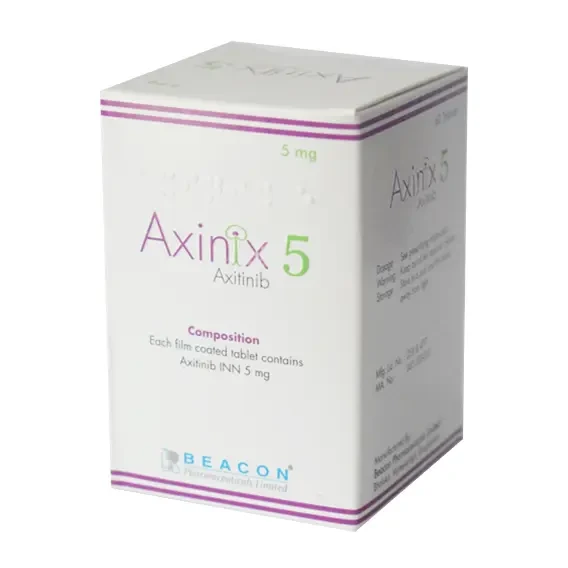
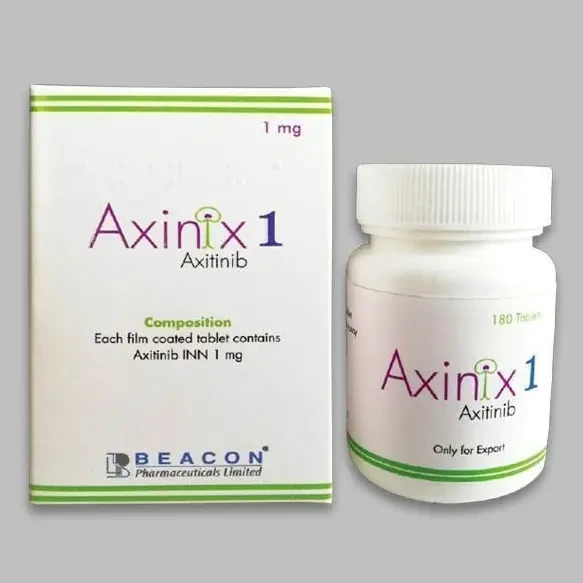
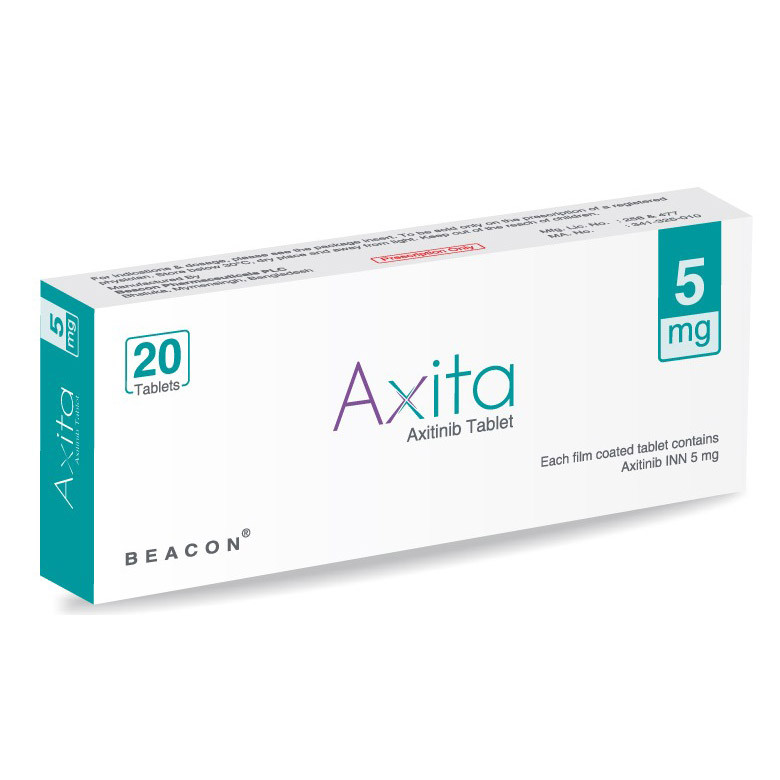
Introduction
Axitinib is a second generation tyrosine kinase inhibitor that works by selectively inhibiting vascular endothelial growth factor receptors (VEGFR-1, VEGFR-2, VEGFR-3). Through this mechanism of action, axitinib blocks angiogenesis, tumour growth and metastases. It is reported to exhibit potency that is 50-450 times higher than that of the first generation VEGFR inhibitors. Axitinib is an indazole derivative.
Uses
Axitinib is an oral VEGFR and kinase inhibitor used for the treatment of advanced renal cell carcinoma after failure of one prior systemic therapy.
Used in kidney cell cancer and investigated for use/treatment in pancreatic and thyroid cancer.
Associated Conditions
Pharmacodynamics
Axitinib prevents the progression of cancer by inhibiting angiogenesis and blocking tumor growth.
Mechanism of Action
Axitinib selectively blocks the tyrosine kinase receptors VEGFR-1 (vascular endothelial growth factor receptor), VEGFR-2, and VEGFR-3.
Absorption
After one 5 mg dose of axitinib, it takes about 2.5 to 4.1 hours to reach maximum plasma concentration.
Volume of Distribution
The volume of distribution is 160 L.
Protein Binding
Plasma protein binding for axitinib is high at over 99% with most protein binding to albumin followed by α1-acid glycoprotein.
Route of Elimination
Axitinib is mainly eliminated unchanged in the feces (41%) with 12% of the original dose as unchanged axitinib. There is also 23% eliminated in the urine, most of which are metabolites.
Half Life
Axitinib has a half life of 2.5 to 6.1 hours.
Clearance
The average clearance of axitinib is 38 L/h.
Toxicity
Some of the more serious toxic effects seen in patients taking axitinib include, but are not limited to, hypertension, thrombotic events, hemorrhage, and GI perforation.
Food Interactions
- Avoid grapefruit products. Grapefruit inhibits CYP3A4 metabolism, which may increase the serum concentration of axitinib.
- Avoid St. John's Wort. This herb induces CYP3A4 metabolism, which may reduce the serum concentration of axitinib.
- Take with a full glass of water.
- Take with or without food.
Dosage
If the patient vomits or misses a dose, an additional dose should not be taken. The next prescribed dose should be taken at the usual time.
Dose Modification Guidelines: Dose increase or reduction is recommended based on individual safety and tolerability.
Over the course of treatment, patients who tolerate Axitinib for at least two consecutive weeks with no adverse reactions > Grade 2 (according to the Common Toxicity Criteria for Adverse Events), are normotensive, and are not receiving anti-hypertension medication, may have their dose increased. When a dose increase from 5 mg twice daily is recommended, the Axitinib dose may be increased to 7 mg twice daily, and further to 10 mg twice daily using the same criteria.
Over the course of treatment, management of some adverse drug reactions may require temporary interruption or permanent discontinuation and/or dose reduction of Axitinib therapy. If dose reduction from 5 mg twice daily is required, the recommended dose is 3 mg twice daily. If additional dose reduction is required, the recommended dose is 2 mg twice daily.