Introduction
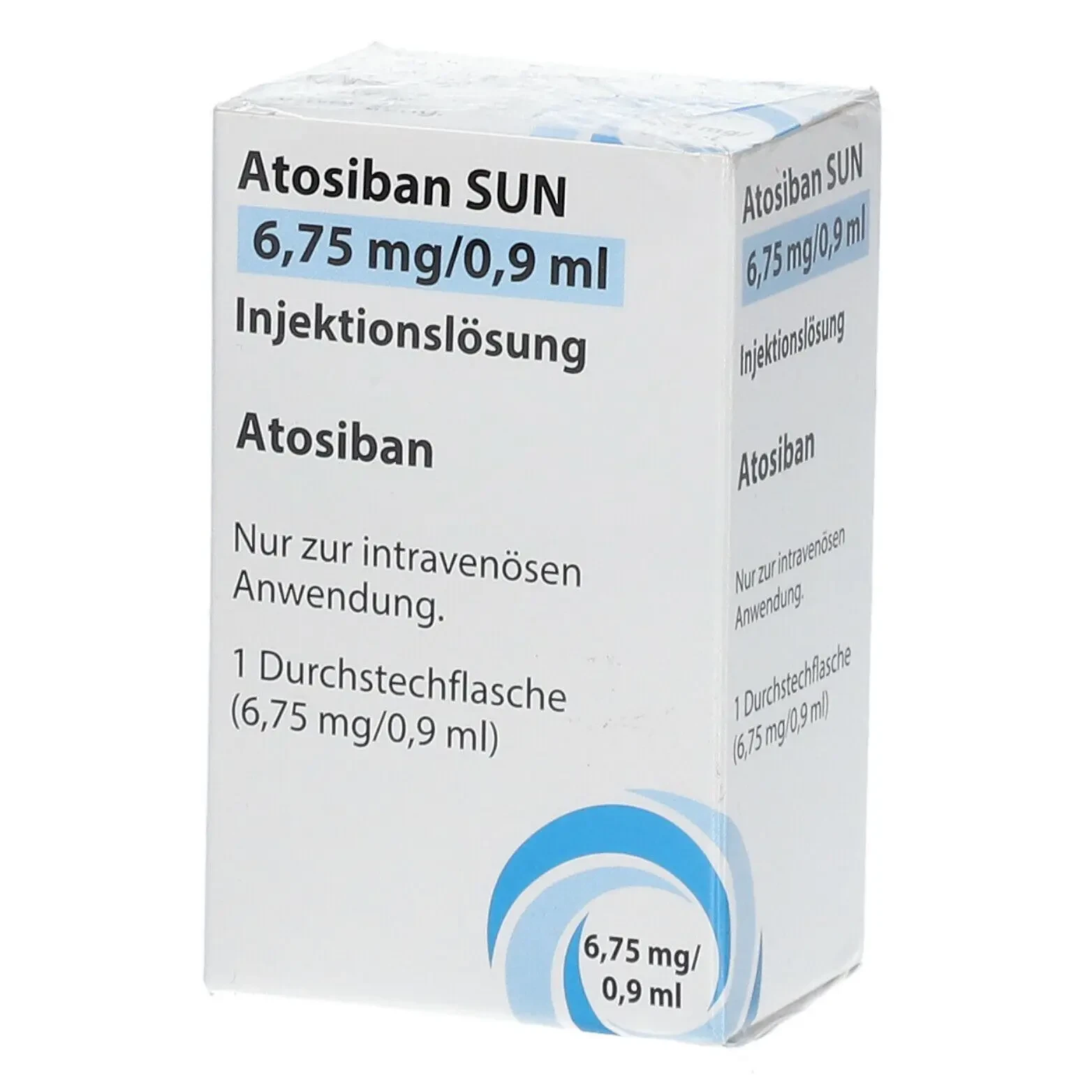
Atosiban is an inhibitor of the hormones oxytocin and vasopressin. It is used intravenously to halt premature labor. Although initial studies suggested it could be used as a nasal spray and hence would not require hospital admission, it is not used in that form. Atobisan was developed by the Swedish company Ferring Pharmaceuticals. It was first reported in the literature in 1985. Atosiban is licensed in proprietary and generic forms for the delay of imminent pre-term birth in pregnant adult women.
Uses
Atosiban is an inhibitor of oxytocin and vasopressin used to delay imminent preterm birth in pregnant adult women displaying specific clinical observations.
Atosiban is indicated for use in delaying imminent pre-term birth in pregnant adult women with:
- regular uterine contractions of at least 30 s duration at a rate of at least 4 per 30 min
- a cervical dilation of 1-3cm (0-3cm for nulliparas) and effacement of at least 50%
- a gestational age of 24-33 weeks
- a normal fetal heart rate
Associated Conditions
Pharmacodynamics
Atosiban reduces the frequency of uterine contractions to delay pre-term birth in adult females and induces uterine quiescence .
Mechanism of Action
Atosiban is a synthetic peptide oxytocin antagonist . It resembles oxytocin with has modifications at the 1, 2, 4, and 8 positions. The N-terminus of the cysteine residue is deaminated to form 3-mercaptopropanic acid at position 1, at position 2 L-tyrosine is modified to D-tyrosine with an ethoxy group replacing the phenol , threonine replaces glutamine at postion 4, and ornithine replaces leucine at position 8.
It binds to membrane bound oxytocin receptors on the myometrium and prevents oxytocin-stimulated increases in inositol triphosphate production . This ultimately prevents release of stored calcium from the sarcoplasmic reticulum and subsequent opening of voltage gated calcium channels. This shutdown of cytosolic calcium increase prevents contractions of the uterine muscle, reducing the frequency of contractions and inducing uterine quiescence.
Atosiban has more recently been found to act as a biased ligand at oxytocin receptors . It acts as an antagonist of Gq coupling, explaining the inhibition of the inositol triphosphate pathway thought to be responsible for the effect on uterine contraction, but acts as an agonist of Gi coupling. This agonism produces a pro-inflammatory effect in the human amnion, activating pro-inflammatory signal tranducer NF-κB . It is thought that this reduces atosiban's effectiveness compared to agents which do not produce inflammation as inflammatory mediators are known to play a role in the induction of labour.
Absorption
In women receiving 300 μg/min by infusion for 6-12 h, average steady state concentrations of 442 ng/mL were reached within 1 h . Steady state concentrations increase proportionally to dosage.
Volume of Distribution
Atosiban has a mean volume of distribution of 41.8 L. Atosiban crosses the placenta and, at a dose of 300 μg/min, was found to have a 0.12 maternal/fetal concentration ratio .
Protein Binding
Atosiban is 46-48% bound to plasma proteins in pregnant women. It is not known to partition into red blood cells. Differences in the free fraction of drug between maternal and fetal compartments are unknown .
Route of Elimination
Small amounts of atosiban are found in the urine with 50 times the amount appearing as the large fragment metabolite (des-(Orn⁸, Gly⁹-NH2)-[Mpa¹, D-Tyr(Et)², Thr⁴]-oxytocin . The amount of drug excreted in the feces is not known.
Half Life
Atosiban does not conform to either 1-compartment or 2-compartment kinetics. It has been determined to have an initial half life (tα) of 0.21 h and a terminal half life (tβ) of 1.7 h .
Clearance
Atosiban has a mean clearance rate of 41.8 L/h .
Toxicity
No systemic toxicities were found in rat and dog studies at dosages equivalent to 10 times normal human exposure . It is thought that the risk of toxicity is low due to the short duration of action and short half life of atosiban .
Food Interactions
No interactions found.