Introduction
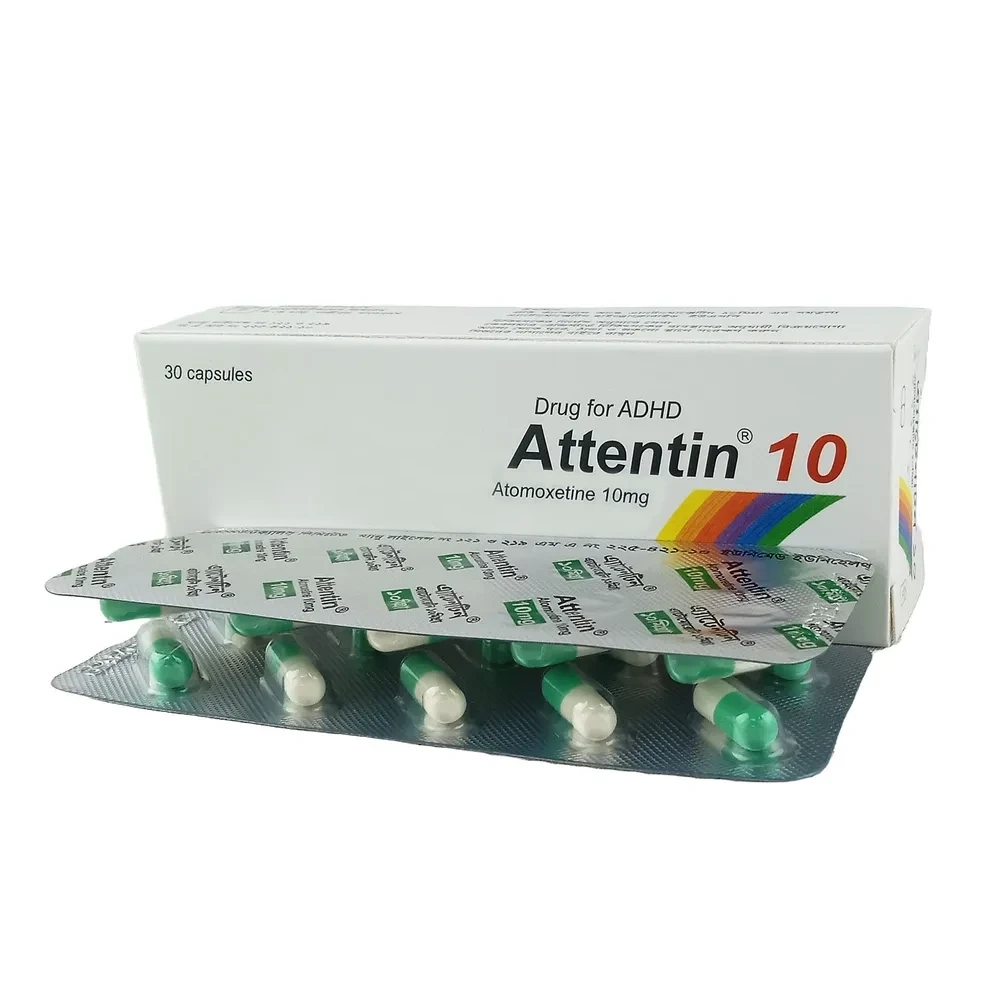
Atomoxetine is a selective norepinephrine reuptake inhibitor (NRI) used to treat attention deficit hyperactivity disorder (ADHD). It increases norepinephrine and dopamine levels primarily in the prefrontal cortex, improving attention, impulse control, and executive function without significantly affecting the brain's reward pathways associated with stimulant abuse. As a non-stimulant medication, atomoxetine has a lower potential for abuse and dependence than stimulant ADHD treatments, making it an important alternative for patients who cannot tolerate or should avoid stimulants. It is typically used alongside behavioral, psychological, and educational interventions to manage ADHD symptoms. Research also suggests that atomoxetine may interact with serotonin transporters and NMDA receptors, indicating additional mechanisms that may contribute to its therapeutic effects.
Uses
Atomoxetine is a selective norepinephrine reuptake inhibitor (SNRI) used in the management of Attention Deficit Hyperactivity Disorder (ADHD).
Atomoxetine is indicated for the treatment of attention deficit hyperactivity disorder (ADHD) in children and adults.
Associated Conditions
Pharmacodynamics
Atomoxetine is a selective norepinephrine (NE) reuptake inhibitor used for the treatment of attention deficit hyperactivity disorder (ADHD). Atomoxetine has been shown to specifically increase norepinephrine and dopamine within the prefrontal cortex, which results in improved ADHD symptoms.
Due to atomoxetine's noradrenergic activity, it also has effects on the cardiovascular system such as increased blood pressure and tachycardia. Sudden deaths, stroke, and myocardial infarction have been reported in patients taking atomoxetine at usual doses for ADHD. Atomoxetine should be used with caution in patients whose underlying medical conditions could be worsened by increases in blood pressure or heart rate such as certain patients with hypertension, tachycardia, or cardiovascular or cerebrovascular disease. It should not be used in patients with severe cardiac or vascular disorders whose condition would be expected to deteriorate if they experienced clinically important increases in blood pressure or heart rate. Although the role of atomoxetine in these cases is unknown, consideration should be given to not treating patients with clinically significant cardiac abnormalities. Patients who develop symptoms such as exertional chest pain, unexplained syncope, or other symptoms suggestive of cardiac disease during atomoxetine treatment should undergo a prompt cardiac evaluation.
In general, particular care should be taken in treating ADHD in patients with comorbid bipolar disorder because of concern for possible induction of a mixed/manic episode in patients at risk for bipolar disorder. Treatment emergent psychotic or manic symptoms, e.g., hallucinations, delusional thinking, or mania in children and adolescents without a prior history of psychotic illness or mania can be caused by atomoxetine at usual doses. If such symptoms occur, consideration should be given to a possible causal role of atomoxetine, and discontinuation of treatment should be considered.
Atomoxetine capsules increased the risk of suicidal ideation in short-term studies in children and adolescents with Attention-Deficit/Hyperactivity Disorder (ADHD). All pediatric patients being treated with atomoxetine should be monitored appropriately and observed closely for clinical worsening, suicidality, and unusual changes in behavior, especially during the initial few months of a course of drug therapy, or at times of dose changes, either increases or decreases.
Postmarketing reports indicate that atomoxetine can cause severe liver injury. Although no evidence of liver injury was detected in clinical trials of about 6000 patients, there have been rare cases of clinically significant liver injury that were considered probably or possibly related to atomoxetine use in postmarketing experience. Rare cases of liver failure have also been reported, including a case that resulted in a liver transplant. Atomoxetine should be discontinued in patients with jaundice or laboratory evidence of liver injury, and should not be restarted. Laboratory testing to determine liver enzyme levels should be done upon the first symptom or sign of liver dysfunction (e.g., pruritus, dark urine, jaundice, right upper quadrant tenderness, or unexplained “flu like” symptoms).
Mechanism of Action
Atomoxetine is known to be a potent and selective inhibitor of the norepinephrine transporter (NET), which prevents cellular reuptake of norepinephrine throughout the brain, which is thought to improve the symptoms of ADHD. More recently, positron emission tomography (PET) imaging studies in rhesus monkeys have shown that atomoxetine also binds to the serotonin transporter (SERT), and blocks the N-methyl-d-aspartate (NMDA) receptor, indicating a role for the glutamatergic system in the pathophysiology of ADHD.
Absorption
The pharmacokinetic profile of atomoxetine is highly dependent on cytochrome P450 2D6 genetic polymorphisms of the individual. A large fraction of the population (up to 10% of Caucasians and 2% of people of African descent and 1% of Asians) are poor metabolizers (PMs) of CYP2D6 metabolized drugs. These individuals have reduced activity in this pathway resulting in 10-fold higher AUCs, 5-fold higher peak plasma concentrations, and slower elimination (plasma half-life of 21.6 hours) of atomoxetine compared with people with normal CYP2D6 activity.
Atomoxetine is rapidly absorbed after oral administration, with absolute bioavailability of about 63% in extensive metabolizers (EMs) and 94% in poor metabolizers (PMs). Mean maximal plasma concentrations (Cmax) are reached approximately 1 to 2 hours after dosing with a maximal concentration of 350 ng/ml with an AUC of 2 mcg.h/ml.
Volume of Distribution
The reported volume of distribution of oral atomoxetine was 1.6-2.6 L/kg. The steady-state volume of distribution of intravenous atomoxetine was approximately 0.85 L/kg.
Protein Binding
At therapeutic concentrations, 98.7% of plasma atomoxetine is bound to protein, with 97.5% of that being bound to albumin, followed by alpha-1-acid glycoprotein and immunoglobulin G.
Route of Elimination
Atomoxetine is excreted primarily as 4-hydroxyatomoxetine-O-glucuronide, mainly in the urine (greater than 80% of the dose) and to a lesser extent in the feces (less than 17% of the dose). Only a small fraction (less than 3%) of the atomoxetine dose is excreted as unchanged atomoxetine, indicating extensive biotransformation.
Half Life
The reported half-life depends on the CYP2D6 genetic polymorphisms of the individual and can range from 3 to 5.6 hours.
Clearance
The clearance rate of atomoxetine depends the CYP2D6 genetic polymorphisms of the individual and can range of 0.27-0.67 L.h/kg.
Toxicity
There is limited clinical trial experience with atomoxetine overdose. During postmarketing, there have been fatalities reported involving a mixed ingestion overdose of atomoxetine capsules and at least one other drug. There have been no reports of death involving overdose of atomoxetine capsules alone, including intentional overdoses at amounts up to 1400 mg. In some cases of overdose involving atomoxetine, seizures have been reported. The most commonly reported symptoms accompanying acute and chronic overdoses of atomoxetine capsules were gastrointestinal symptoms, somnolence, dizziness, tremor, and abnormal behavior. Hyperactivity and agitation have also been reported. Signs and symptoms consistent with mild to moderate sympathetic nervous system activation (e.g., tachycardia, blood pressure increased, mydriasis, dry mouth) have also been observed. Most events were mild to moderate. Less commonly, there have been reports of QT prolongation and mental changes, including disorientation and hallucinations. If symptoms of overdose are suspected, a Certified Poison Control Center should be consulted for up to date guidance and advice. Because atomoxetine is highly protein-bound, dialysis is not likely to be useful in the treatment of overdose.
Food Interactions
- Take with or without food.
Dosage
Children and Adolescents up to 70 kg Body Weight: Atomoxetine should be initiated at a total daily dose of approximately 0.5mg/kg and increased after a minimum of three days to a target total daily dose of approximately 1.2mg/kg administered either as a single daily dose in the morning or as evenly divided doses in the morning and late afternoon/early evening. After an additional two to four weeks, the total daily dose may be increased to a maximum of 1.4mg/kg in patients who have not achieved an optimal response. The maximum recommended total daily dose in children and adolescents is 1.4mg/kg or 100mg, whichever is less.
Children and Adolescents over 70 kg Body Weight and Adults: Atomoxetine should be initiated at a total daily dose of 40mg and increased after a minimum of three days to a target total daily dose of approximately 80mg administered either as a single daily dose in the morning or as evenly divided doses in the morning and late afternoon/early evening. After an additional two to four weeks, the dose may be increased to a maximum of 100mg in patients who have not achieved an optimal response. The maximum recommended total daily dose in children and adolescents over 70 kg is 100mg.
Maintenance/Extended Treatment: There is no evidence available from controlled trials to indicate how long the patient with ADHD should be treated with Atomoxetine. It is generally agreed, however, that pharmacological treatment of ADHD may be needed for extended periods. Nevertheless, the physician who elects to use Atomoxetine for extended periods should periodically re-evaluate the long-term usefulness of the medicine for the individual patient.
Pediatric use: The pharmacokinetics of Atomoxetine have not been evaluated in children under 6 years of age.