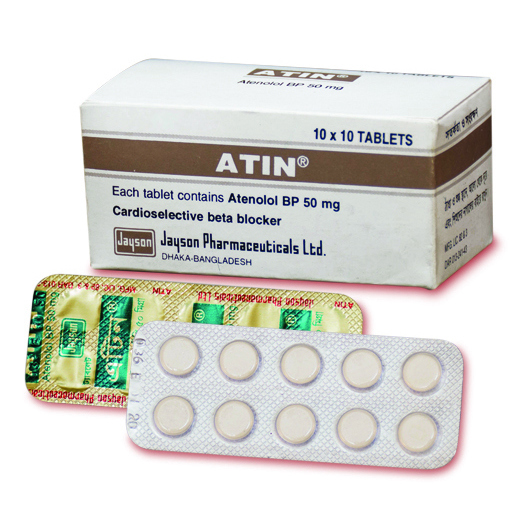
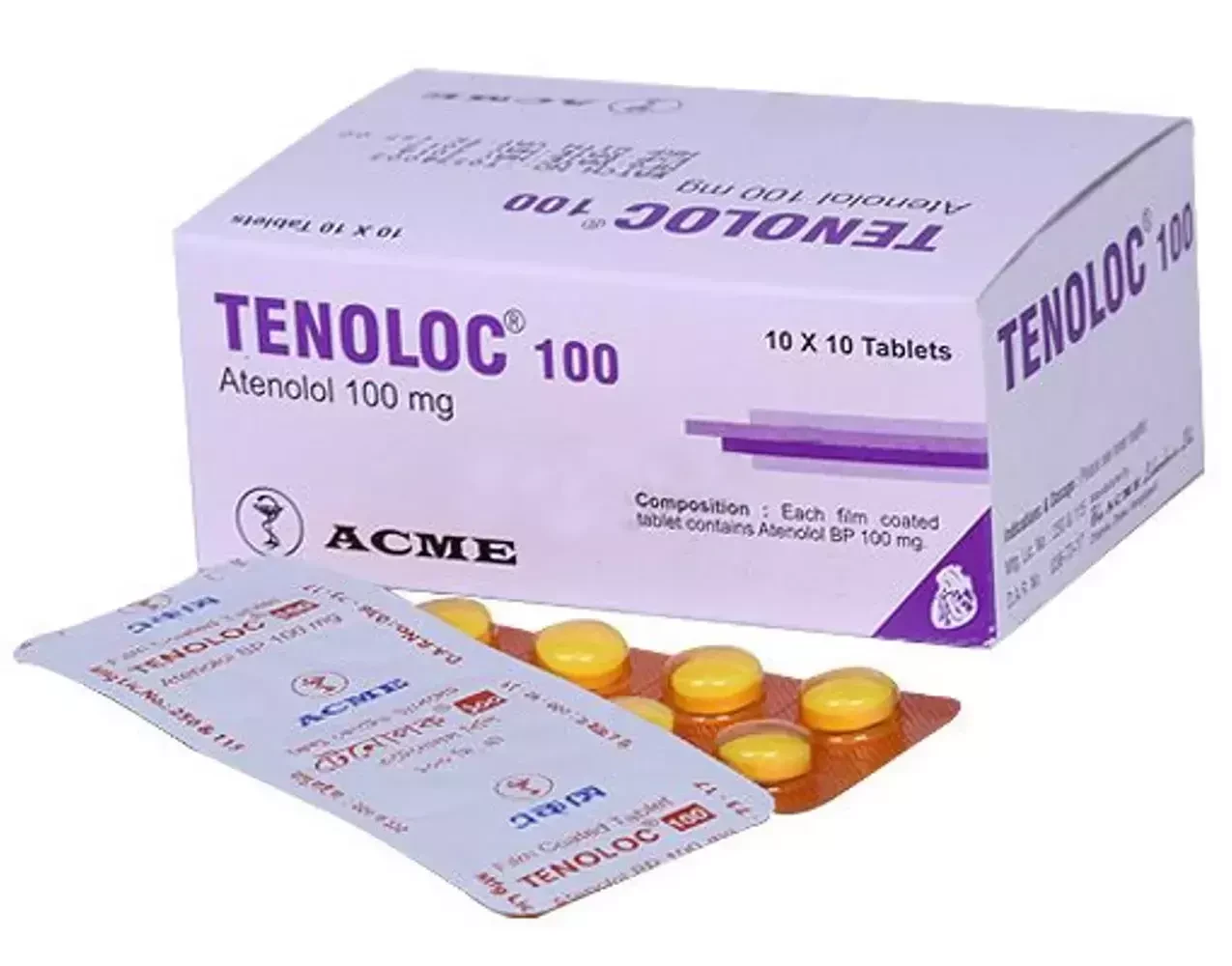
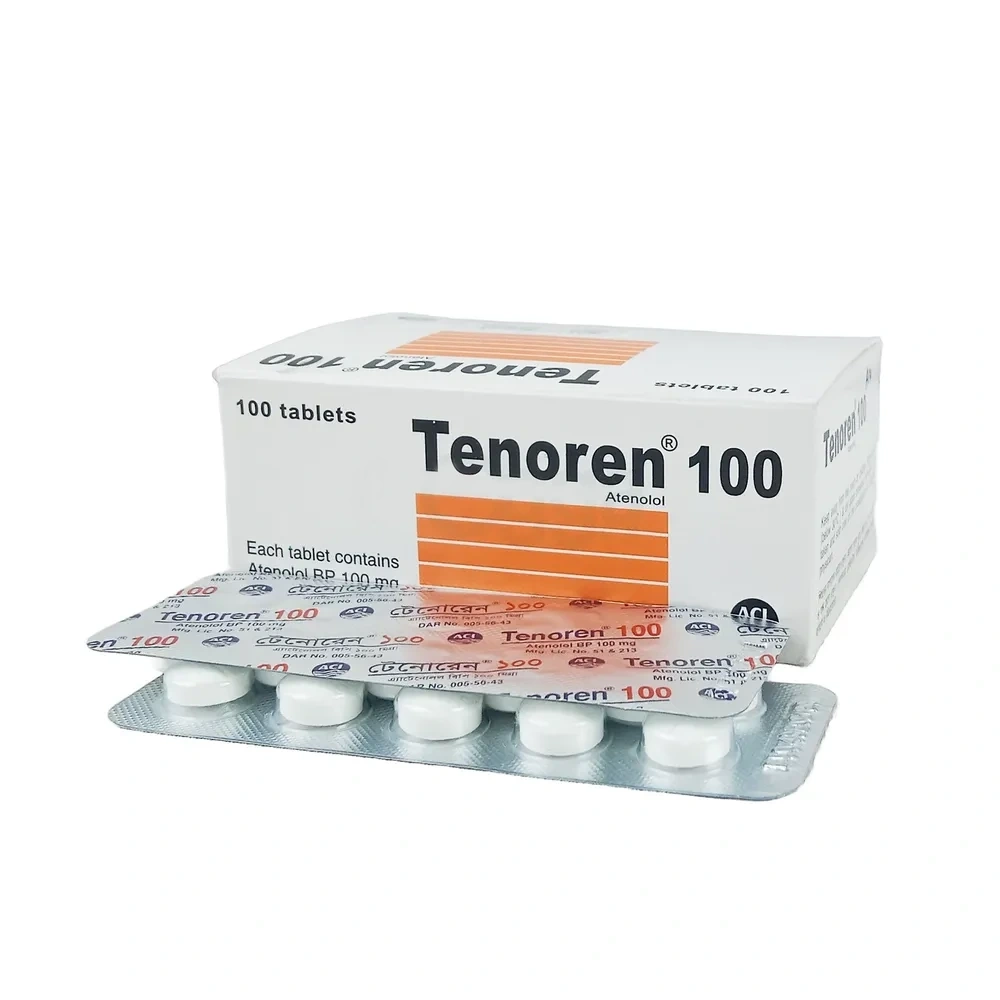
Introduction
Atenolol is a cardioselective beta1-adrenergic receptor blocker used in the management of hypertension, angina pectoris, cardiac arrhythmias, and after myocardial infarction. By reducing heart rate, myocardial contractility, and cardiac output, it lowers blood pressure and decreases the heart's oxygen demand.
Atenolol is effective in the treatment of various cardiovascular conditions and may help reduce the risk of complications in selected patients. Therapy should be individualized based on the patient's clinical condition and cardiovascular risk profile.
Uses
Atenolol is a synthetic beta-1 selective blocker used in the management of hypertension and chronic angina, and to reduce mortality in known or suspected myocardial infarction in hemodynamically stable patients.
Indicated for:
1) Management of hypertension alone and in combination with other antihypertensives.
2) Management of angina pectoris associated with coronary atherosclerosis.
3) Management of acute myocardial infarction in hemodynamically stable patients with a heart rate greater than 50 beats per minutes and a systolic blood pressure above 100 mmHg.
Off-label uses include:
1) Secondary prevention of myocardial infarction.
2) Management of heart failure.
3) Management of atrial fibrillation.
4) Management of supraventricular tachycardia.
5) Management of ventricular arrythmias such as congenital long-QT and arrhythmogenic right ventricular cardiomyopathy.
6) Management of symptomatic thyrotoxicosis in combination with methimazole.
7) Prophylaxis of migraine headaches.
8) Management of alcohol withdrawal.
Associated Conditions
Pharmacodynamics
Atenolol is a cardio-selective beta-blocker and as such exerts most of its effects on the heart. It acts as an antagonist to sympathetic innervation and prevents increases in heart rate, electrical conductivity, and contractility in the heart due to increased release of norepinephrine from the peripheral nervous system. Together the decreases in contractility and rate produce a reduction in cardiac output resulting in a compensatory increase in peripheral vascular resistance in the short-term. This response later declines to baseline with long-term use of atenolol. More importantly, this reduction in the work demanded of the myocardium also reduces oxygen demand which provides therapeutic benefit by reducing the mismatch of oxygen supply and demand in settings where coronary blood flow is limited, such as in coronary atherosclerosis. Reducing oxygen demand, particularly due to exercise, can reduce the frequency of angina pectoris symptoms and potentially improve survival of the remaining myocardium after myocardial infarction. The decrease in rate of sinoatrial node potentials, electrical conduction, slowing of potentials traveling through the atrioventricular node, and reduced frequency of ectopic potentials due to blockade of adrenergic beta receptors has led to benefit in arrhythmic conditions such as atrial fibrillation by controlling the rate of action potential generation and allowing for more effective coordinated contractions. Since a degree of sympathetic activity is necessary to maintain cardiac function, the reduced contractility induced by atenolol may precipitate or worsen heart failure, especially during volume overload.
The effects of atenolol on blood pressure have been established, although it is less effective than alternative beta-blockers, but the mechanism has not yet been characterized. As a β1 selective drug, it does not act via the vasodilation produced by non-selective agents. Despite this there is a sustained reduction in peripheral vascular resistance, and consequently blood pressure, alongside a decrease in cardiac output. It is thought that atenolol's antihypertensive activity may be related to action on the central nervous system (CNS) or it's inhibition of the renin-aldosterone-angiotensin system rather than direct effects on the vasculature.
Atenolol produces CNS effects similar to other beta-blockers, but does so to a lesser extent due to reduces ability to cross the blood-brain barrier. It has the potential to produce fatigue, depression, and sleep disturbances such as nightmares or insomnia. The exact mechanisms behind these have not been characterized but their occurrence must be considered as they represent clinically relevant adverse effects.
Atenolol exerts some effects on the respiratory system although to a much lesser extent than non-selective beta-blockers. Interaction with β2 receptors in the airways can produce bronchoconstriction by blocking the relaxation of bronchial smooth muscle mediated by the sympathetic nervous system. The same action can interfere with β-agonist therapies used in asthma and chronic obstructive pulmonary disease.
Unlike some other beta-blocker drugs, atenolol does not have intrinsic sympathomimetic or membrane stabilizing activity nor does it produce changes in glycemic control.
Mechanism of Action
Atenolol is a cardioselective beta-blocker, called such because it selectively binds to the β1-adrenergic receptor as an antagonist up to a reported 26 fold more than β2 receptors. Selective activity at the β1 receptor produces cardioselectivity due to the higher population of this receptor in cardiac tissue. Some binding to β2 and possibly β3 receptors can still occur at therapeutic dosages but the effects mediated by antagonizing these are significantly reduced from those of non-selective agents. β1 and β2 receptors are Gs coupled therefore antagonism of their activation reduces activity of adenylyl cyclase and its downstream signalling via cyclic adenosime monophosphate and protein kinase A (PKA).
In cardiomyocytes PKA is thought to mediate activation of L-type calcium channels and ryanodine receptors through their phosphorylation. L-type calcium channels can then provide an initial rise in intracellular calcium and trigger the ryanodine receptors to release calcium stored in the sarcoplasmic reticulum (SR) and increased contractility. PKA also plays a role in the cessation of contraction by phosphorylating phospholamban which in turn increases the affinity of SR Ca2+
Similar inihibitory events occur in the bronchial smooth muscle to mediate relaxation including phosphorylation of myosin light-chain kinase, reducing its affinity for calcium. PKA also inhibits the excitatory Gq coupled pathway by phosphorylating the inositol trisphosphate receptor and phospholipase C resulting in inhibition of intracellular calcium release. Antagonism of this activity by beta-blocker agents like atenolol can thus cause increased bronchoconstriction.
Absorption
Approximately 50% of an oral dose is absorbed from the gastrointestinal tract, with the remainder being excreted unchanged in the feces. Administering atenolol with food can decrease the AUC by about 20%. While atenolol can cross the blood-brain barrier, it does so slowly and to a small extent.
Volume of Distribution
Total Vd of 63.8-112.5 L. Atenolol distributes into a central volume of 12.8-17.5 L along with two peripheral compartments with a combined volume of 51-95 L. Distribution takes about 3 hrs for the central compartment, 4 hrs for the shallower peripheral compartment, and 5-6 hrs for the deeper peripheral compartment.
Protein Binding
6-16% bound in plasma. Atenolol binds to two sites on human serum albumin.
Route of Elimination
85% is eliminated by the kidneys following IV administration with 10% appearing in the feces.
Half Life
6-7 hrs.
Clearance
Total clearance is estimated at 97.3-176.3 mL/min with a renal clearance of 95-168 mL/min.
Toxicity
LD50 Values
Mouse: 2 g/kg (Oral), 57 mg/kg (IV), 134 mg/kg (IP), 400 mg/kg (SC)
Rat: 2 g/kg (Oral), 77 mg/kg (IV), 600 mg/kg (SC)
Rabbit: 50 mg/kg (IV)
Carcinogenicity & Mutagenicity
Studies in rats and mice at doses of 300 mg/kg/day, equivalent to 150 times maximum recommended human dose, for durations of 18 and 24 months showed no carcinogenicity. One study in rats at doses of 500-1500 mg/kg/day, 250-750 times maximum human dose, resulted in increases benign adrenal medullary tumors in both sexes and increase mammary fibroadenomas in females.
Atenolol showed no mutagenicity in the Ames test using S. typhinarium, dominant lethal test in mice, or in vivo cytogenetics test in chinese hamster ovary cells.
Reproductive Toxicity
No adverse effects on fertility were observed in either male or female mice after receiving doses of 200 mg/kg/day, equivalent to 200 times the maximum human dose. In humans, atenolol is known to cross the placenta and fetuses exposed to the drug have been reported to be smaller than expected considering gestational age. Embryo-fetal resorption has been observed in rats at doses of 50mg/kg/day, 50 times the max human dose, but not in rabbits at doses of 25mg/kg/day.
Lactation
Atenolol appears in breast milk at a ratio of 1.5-6.8 to plasma concentrations. It has been estimated that infant exposure occurs at 5.7-19.2% maternal weight-adjusted dosage. Effects in infants include bradycardia, hypothermia, and lethargy.
Food Interactions
No interactions found.
Dosage
Angina Pectoris: The initial dose of Atenolol is 50 mg given as one tablet a day. If an optimal response is not achieved within one week, the dosage should be increased to Atenolol 100 mg given as one tablet a day. Some patients may require a dosage of 200 mg once a day for optimal effect. Twenty-four hour control with once daily dosing is achieved by giving doses larger than necessary to achieve an immediate maximum effect. The maximum early effect on exercise tolerance occurs with doses of 50 to 100 mg, but at these doses the effect at 24 hours is attenuated, averaging about 50% to 75% of that observed with once a day oral doses of 200 mg.
Acute Myocardial Infarction: In patients with definite or suspected acute myocardial infarction, treatment with Atenolol I.V. Injection should be initiated as soon as possible after the patient's arrival in the hospital and after eligibility is established. Treatment should begin with the intravenous administration of 5 mg Atenolol over 5 minutes followed by another 5 mg intravenous injection 10 minutes later. In patients who tolerate the full intravenous dose (10 mg), Atenolol Tablets 50 mg should be initiated 10 minutes after the last intravenous dose followed by another 50 mg oral dose 12 hours later. Thereafter, Atenolol can be given orally either 100 mg once daily or 50 mg twice a day for a further 6-9 days or until discharge from the hospital. If bradycardia or hypotension requiring treatment or any other untoward effects occur, Atenolol should be discontinued.