Introduction
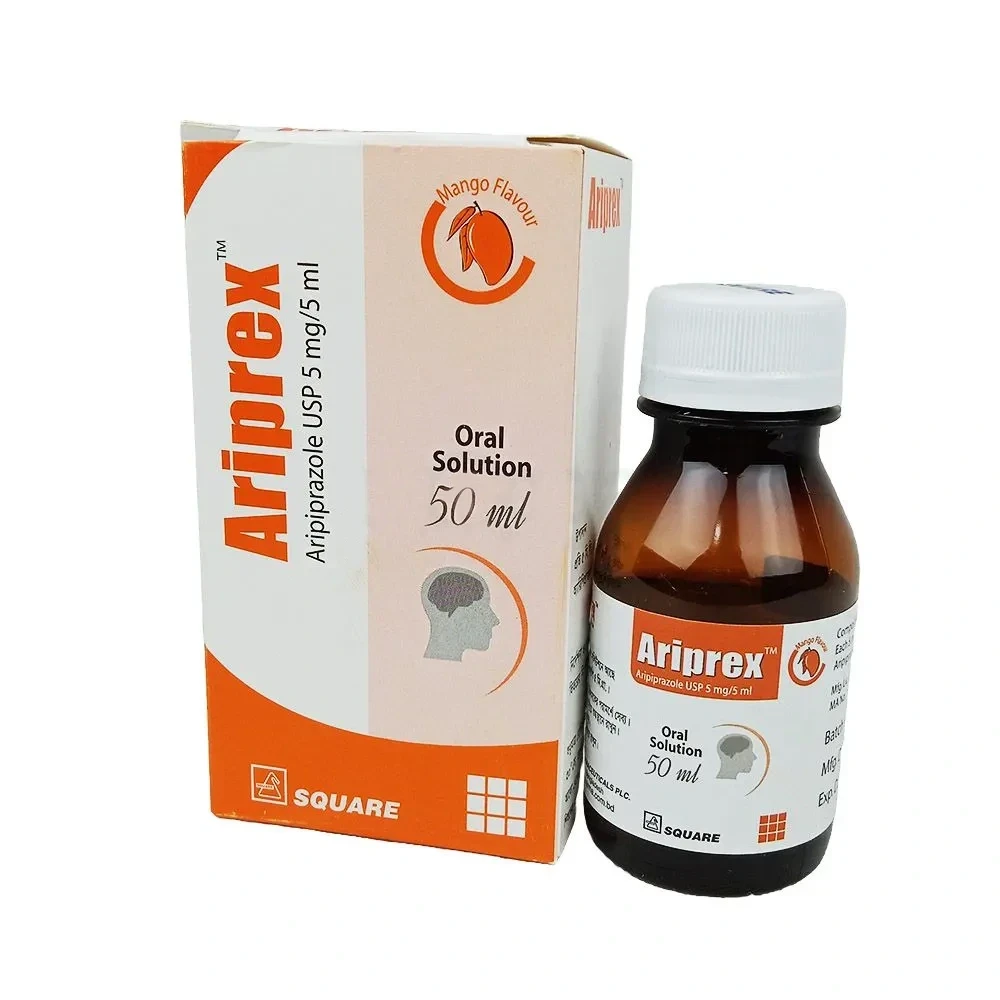
Aripiprazole is an atypical antipsychotic orally indicated for treatment of schizophrenia, bipolar I, major depressive disorder, irritability associated with autism, and Tourette's. It is also indicated as an injection for agitation associated with schizophrenia or bipolar mania. Aripiprazole exerts its effects through agonism of dopaminic and 5-HT1A receptors and antagonism of alpha adrenergic and 5-HT2A receptors.
Uses
Aripiprazole is an atypical antipsychotic used in the treatment of a wide variety of mood and psychotic disorders, such as schizophrenia, bipolar I, major depressive disorder, irritability associated with autism, and Tourette's syndrome.
Aripiprazole is indicated for manic and mixed episodes associated with bipolar I disorder, irritability associated with autism spectrum disorder, treatment of schizophrenia, treatment of Tourette's disorder, and as an adjunctive treatment of major depressive disorder. An injectable formulation of aripiprazole is indicated for agitation associated with schizophrenia or bipolar mania.
Associated Conditions
Pharmacodynamics
Aripiprazole has high affinity for serotonin type 2 (5HT2), dopamine type 2 (D2), alpha1 and 2 adrenergic, and H1 histaminergic receptors. It also acts on a number of other receptors with lower affinity. The exact method by which aripiprazole's action on these receptors translates to a clinically relevant effect is not yet known.
Mechanism of Action
The antipsychotic action of aripiprazole is likely due to the agonism of D2 and 5-HT1A receptors though the exact mechanism has not been defined. Some adverse effects may be due to action on other receptors. For example, orthostatic hypotension may be explained by antagonism of the adrenergic alpha1 receptors.
Absorption
Aripiprazole tablets are 87% bioavailable and reach peak plasma concentrations in 3 to 5 hours. These tablets can be taken with or without food, but a high fat meal can delay the time to max concentration by 3 hours and up to 12 hours for the active metabolite.
Volume of Distribution
404L or 4.9L/kg.
Protein Binding
>99%.
Route of Elimination
25% of a given dose will be eliminated in urine and 55% in the feces. Label,4.
Half Life
The half life of aripiprazole is 75 hours while the half life of the active metabolite is 94 hours. For populations that are poor CYP2D6 metabolizers, the half life of aripiprazole is 146 hours and these patients should be treated with half the normal dose. Other studies have reported a half life of 61.03±19.59 hours for aripiprazole and 279±299 hours for the active metabolite.
Clearance
0.8mL/min/kg. Other studies have reported a clearance rate of 3297±1042mL/hr.
Toxicity
Studies on the safety and effectiveness of aripiprazole in pregnancy have not been performed, though there is currently a national pregnancy registry for mothers currently taking aripiprazole in pregnancy. In other studies of antipsychotic medication in pregnancy, children are at risk of extrapyramidal or withdrawal symptoms. In animal studies of pregnancy, aripiprazole was associated with a number of malformations and fetal death at doses higher than the maximum recommended human dose. Aripiprazole should only be prescribed in pregnancy if the benefits outweigh the risks. Neonates with third trimester exposure to aripiprazole may show extrapyramidal or withdrawal symptoms of varying severity. These symptoms may resolve in hours or require extended hospital care. Aripiprazole's effect on labor and delivery has not been investigated. Aripiprazole is present in human breast milk and so patients should either stop breastfeeding or stop taking aripiprazole depending on the risk and benefit to mother and child. Pharmacokinetic properties in patients 10-17 years of age are similar to that of adults once body weight has been corrected for. No dosage adjustment is necessary in elderly patients however aripiprazole is not approved for Alzheimer's associated psychosis. Patients calssified as CYP2D6 poor metabolizers should be prescribed half the regular dose of aripiprazole. Hepatic and renal function as well as sex, race, and smoking status do not affect dosage requirements for aripiprazole.
Food Interactions
- Avoid alcohol. Alcohol may increase CNS effects.
- Drink plenty of fluids. Drink water to avoid dehydration while taking aripiprazole.
- Take with or without food. Food does not affect absorption.
Dosage
- Initial Dose: 10-15 mg/day
- Recommended Dose: 10-15 mg/day
- Maximum Dose: 30 mg/day
- Initial Dose: 2 mg/day
- Recommended Dose: 10 mg/day
- Maximum Dose: 30 mg/day
- Initial Dose: 15 mg/day
- Recommended Dose: 15 mg/day
- Maximum Dose: 30 mg/day
- Initial Dose: 10-15 mg/day
- Recommended Dose: 15 mg/day
- Maximum Dose: 30 mg/day
- Initial Dose: 2 mg/day
- Recommended Dose: 10 mg/day
- Maximum Dose: 30 mg/day
- Initial Dose: 2-5 mg/day
- Recommended Dose: 5-10 mg/day
- Maximum Dose: 15 mg/day
- Initial Dose: 2 mg/day
- Recommended Dose: 5-10 mg/day
- Maximum Dose: 15 mg/day