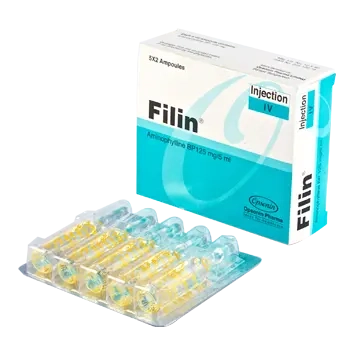
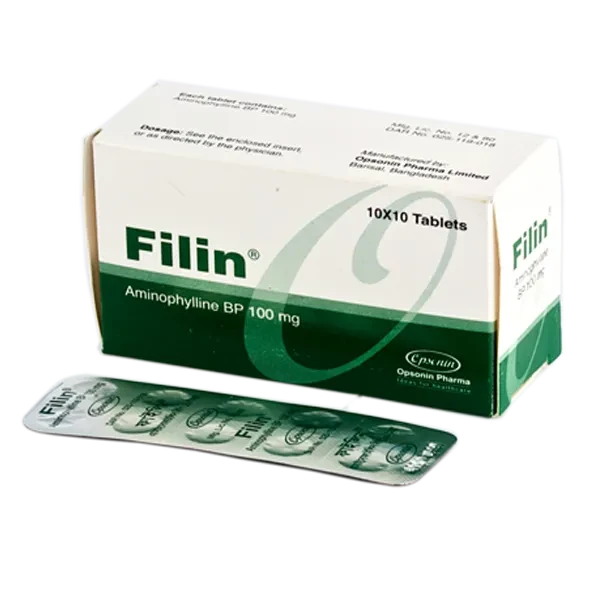
Introduction
Aminophylline is a drug combination that contains theophylline and ethylenediamine in a 2:1 ratio. Once in the body, theophylline is released and acts as a phosphodiesterase inhibitor, adenosine receptor blocker, and histone deacetylase activator. Similar to other theophyllines, aminophylline is indicated for the treatment of lung diseases such as asthma, chronic bronchitis, and COPD. The majority of aminophylline medications are discontinued and the remaining medications on the market are in short supply.
Uses
Aminophylline is a bronchodilator consisting of theophylline that is used for the treatment of bronchospasm due to asthma, emphysema and chronic bronchitis.
For the treatment of bronchospasm due to asthma, emphysema and chronic bronchitis.
Associated Conditions
Pharmacodynamics
Aminophylline is the ethylenediamine salt of theophylline. Theophylline stimulates the CNS, skeletal muscles, and cardiac muscle. It relaxes certain smooth muscles in the bronchi, produces diuresis, and causes an increase in gastric secretion.
Mechanism of Action
Aminophylline is the ethylenediamine salt of theophylline. After ingestion, theophylline is released from aminophylline, and theophylline relaxes the smooth muscle of the bronchial airways and pulmonary blood vessels and reduces airway responsiveness to histamine, methacholine, adenosine, and allergen. Theophylline competitively inhibits type III and type IV phosphodiesterase (PDE), the enzyme responsible for breaking down cyclic AMP in smooth muscle cells, possibly resulting in bronchodilation. Theophylline also binds to the adenosine A2B receptor and blocks adenosine mediated bronchoconstriction. In inflammatory states, theophylline activates histone deacetylase to prevent transcription of inflammatory genes that require the acetylation of histones for transcription to begin.
Volume of Distribution
- 0.3 to 0.7 L/kg
Protein Binding
60%
Half Life
7-9 hours
Clearance
- 0.29 mL/kg/min [postnatal age 3-15 days]
- 0.64 mL/kg/min [postnatal age 25-57 days]
- 1.7 mL/kg/min [ 1-4 years]
- 1.6 mL/kg/min [4-12 years]
- 0.9 mL/kg/min [13-15 years]
- 1.4 mL/kg/min [16-17 years]
- 0.65 mL/kg/min [Adults (16-60 years), non-smoking asthmatics]
- 0.41 mL/kg/min [Elderly (>60 years). liver, and renal function]
- 0.33 mL/kg/min [Acute pulmonary edema]
- 0.54 mL/kg/min [COPD->60 years, stable non-smoker >1 year]
- 0.48 mL/kg/min [COPD with cor pulmonale]
- 1.25 mL/kg/min [Cystic fibrosis (14-28 years)]
- 0.31 mL/kg/min [Liver disease -cholestasis]
- 0.35 mL/kg/min [cirrhosis]
- 0.65 mL/kg/min [acute hepatitis]
- 0.47 mL/kg/min [Sepsis with multi-organ failure]
- 0.38 mL/kg/min [hypothyroid]
- 0.8 mL/kg/min [hyperthyroid]
Food Interactions
- Administer vitamin supplements. Aminophylline may reduce Vitamin B6 levels as an adverse effect. Consider supplementation.
- Avoid excessive or chronic alcohol consumption. Ingesting a large amount of alcohol may reduce aminophylline clearance, therefore increasing its serum concentration.
- Exercise caution with grapefruit products. Grapefruit inhibits CYP3A4 metabolism, which may increase the serum concentration of aminophylline.
- Exercise caution with St. John's Wort. This herb induces the CYP3A4 metabolism of aminophylline. Therefore it may reduce the serum concentration and effectiveness of aminophylline.
- Limit caffeine intake. Excessive caffeine intake with aminophylline may exacerbate caffiene-like side effects such as nausea, nervousness, irritability, insomnia and tremors.
- Take with food. This may reduce gastric irritation. Aminophylline absorption is slower when taken with food.
Dosage
Chronic bronchospasm:
- Adult: As hydrate: Initially, 225-450 mg bid, increased if necessary.
- Child: >3 yr: As modified-release hydrate: 12 mg/kg daily increased to 24 mg/kg daily in 2 divided doses after 1 wk.
Acute severe bronchospasm:
- Adult: Loading dose: 5 mg/kg (ideal body weight) or 250-500 mg (25 mg/ml) by slow inj or infusion over 20-30 min. Maintenance infusion dose: 0.5 mg/kg/hr. Max rate: 25 mg/min.
- Child: Loading dose: same as adult dose. Maintenance dose: 6 mth-9 yr: 1 mg/kg/hr and 10-16 yr: 0.8 mg/kg/hr.
- Elderly: Dose reduction may be necessary.
- Hepatic impairment: Dose reduction may be necessary.