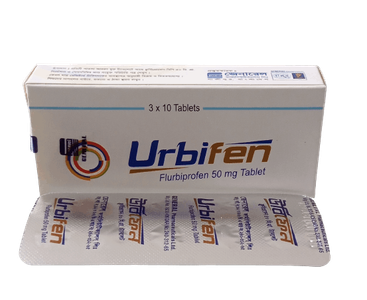
Introduction
Flurbiprofen, a propionic acid derivative, is a nonsteroidal anti-inflammatory agent (NSAIA) with antipyretic and analgesic activity. Oral formulations of flurbiprofen may be used for the symptomatic treatment of rheumatoid arthritis, osteoarthritis and anklylosing spondylitis. Flurbiprofen may also be used topically prior to ocular surgery to prevent or reduce intraoperative miosis. Flurbiprofen is structurally and pharmacologically related to fenoprofen, ibuprofen, and ketoprofen.
Uses
Flurbiprofen is an NSAID used to treat the signs and symptoms of osteoarthritis and rheumatoid arthritis.
Flurbiprofen tablets are indicated for the acute or long-term symptomatic treatment of rheumatoid arthritis, osteorarthritis and anklosing spondylitis. It may also be used to treat pain associated with dysmenorrhea and mild to moderate pain accompanied by inflammation (e.g. bursitis, tendonitis, soft tissue trauma). Topical ophthalmic formulations may be used pre-operatively to prevent intraoperative miosis.
Associated Conditions
Pharmacodynamics
Flurbiprofen, a nonsteroidal anti-inflammatory agent (NSAIA) of the propionic acid class, is structually and pharmacologically related to fenoprofen, ibuprofen, and ketoprofen, and has similar pharmacological actions to other prototypica NSAIAs. Flurbiprofen exhibits antiinflammatory, analgesic, and antipyretic activities. The commercially available flurbiprofen is a racemic mixture of (+)S- and (-) R-enantiomers. The S-enantiomer appears to possess most of the anti-inflammatory, while both enantiomers may possess analgesic activity.
Mechanism of Action
Similar to other NSAIAs, the anti-inflammatory effect of flurbiprofen occurs via reversible inhibition of cyclooxygenase (COX), the enzyme responsible for the conversion of arachidonic acid to prostaglandin G2 (PGG2) and PGG2 to prostaglandin H2 (PGH2) in the prostaglandin synthesis pathway. This effectively decreases the concentration of prostaglandins involved in inflammation, pain, swelling and fever. Flurbiprofen is a non-selective COX inhibitor and inhibits the activity of both COX-1 and -2. It is also one of the most potent NSAIAs in terms of prostaglandin inhibitory activity.
Absorption
Fluribiprofen is rapidly and almost completely absorbed following oral administration. Peak plasma concentrations are reached 0.5 - 4 hours after oral administration.
Volume of Distribution
- 14 L [Normal Healthy Adults]
- 12 L [Geriatric Arthritis Patients]
- 10 L [End Stage Renal Disease Patients]
- 14 L [Alcoholic Cirrhosis Patients]
- 0.12 L/kg
Protein Binding
> 99% bound, primarily to albumin. Binds to a different primary binding site on albumin than anticoagulants, sulfonamides and phenytoin.
Route of Elimination
Flurbiprofen is poorly excreted into human milk. Following dosing with flurbiprofen, less than 3% of flurbiprofen is excreted unchanged in the urine, with about 70% of the dose eliminated in the urine as parent drug and metabolites. Renal elimination is a significant pathway of elimination of flurbiprofen metabolites.
Half Life
R-flurbiprofen, 4.7 hours; S-flurbiprofen, 5.7 hours
Toxicity
LD50=10 mg/kg (orally in dogs).
Selective COX-2 inhibitors have been associated with increased risk of serious cardiovascular events (e.g. myocardial infarction, stroke) in some patients. Current data is insufficient to assess the cardiovascular risk of flurbiprofen. Flurbiprofen may increase blood pressure and/or cause fluid retention and edema. Use caution in patients with fluid retention or heart failure. Risk of GI toxicity including bleeding, ulceration and perforation. Risk of direct renal injury, including renal papillary necrosis. Anaphylactoid and serious skin reactions (e.g. exfoliative dermatitis, Stevens-Johnson syndrome, toxic epidermal necrolysis) may occur. Common adverse events include abdominal pain, constipation, diarrhea, dyspepsia, flatulence, GI bleeding, GI perforation, nausea, peptic ulcer, vomiting, renal function abnormalities, anemia, dizziness, edema, liver function test abnormalities, headache, prolonged bleeding time, pruritus, rash, tinnitus. Although rarely documented in the case of flurbiprofen, oral propionic acid derivatives have been associated with a relatively high frequency of allergic reactions.
Food Interactions
- Avoid alcohol.
- Take with food. Food reduces irritation.