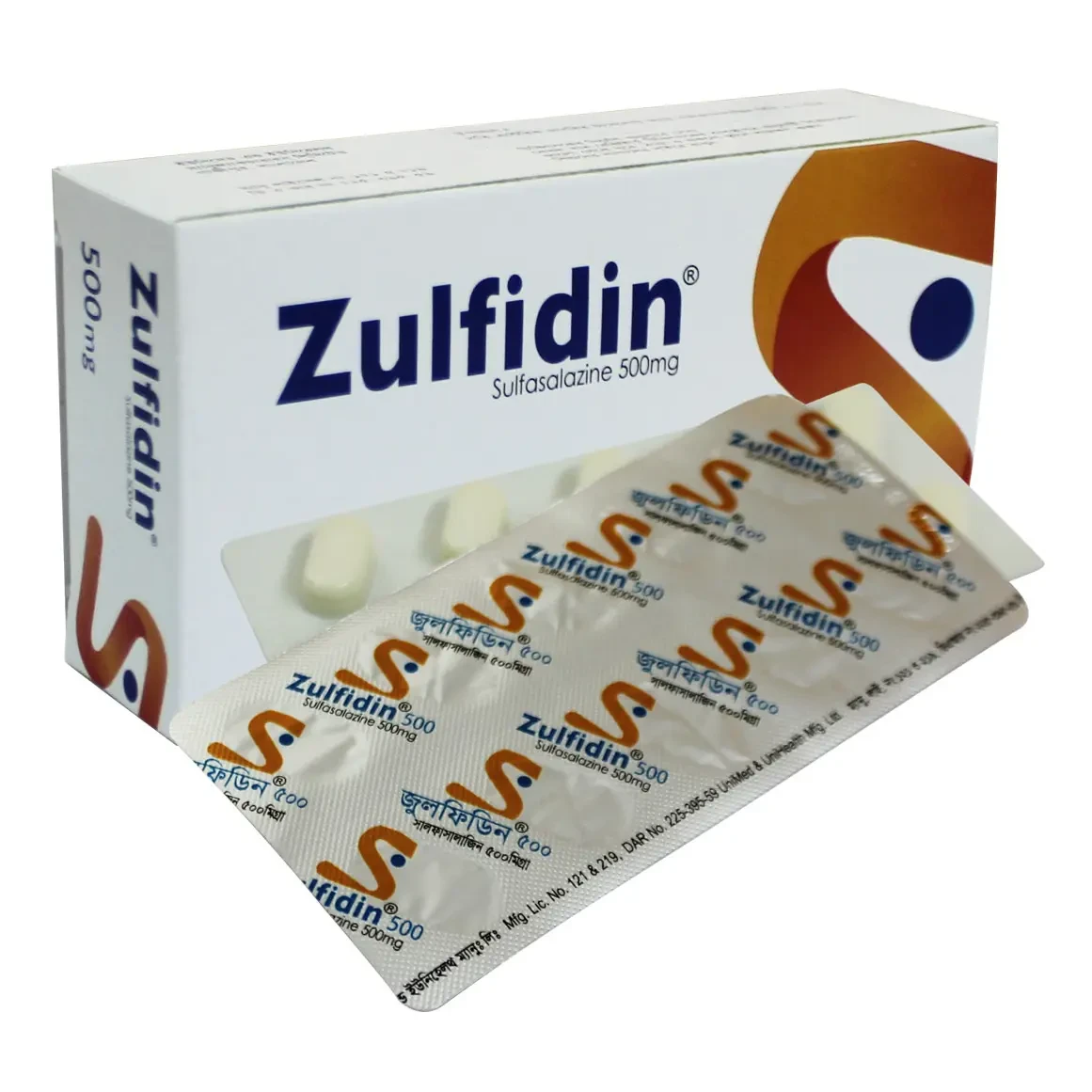
Zulfidin Tablet 500 mg (Azulfidine) is an anti-inflammatory drug used in the treatment of inflammatory conditions such as rheumatoid arthritis, ulcerative colitis, and Crohn’s disease. The drug is a combination of 5-aminosalicylic acid (an anti-inflammatory drug) and sulfapyridine (an antibacterial agent). Zulfidin Tablet 500 mg is available as an oral mediation taken twice a day with food.
Zulfidin Tablet 500 mg is used to treat rheumatoid arthritis, ulcerative colitis, and Crohn's Disease. It is also used to reduce swelling, stiffness, and joint pain caused by these diseases. Zulfidin Tablet 500 mg may also be used for other purposes not listed in this medication guide.
| Brand Name | Zulfidin |
|---|---|
| Type | Tablet |
| Weight | 500 mg |
| Generic | Sulfasalazine |
| Manufacturer | UniMed UniHealth |
| Available in | English বাংলা |
Zulfidin Tablet 500 mg is a salicylate derivative with anti-inflammatory, antipyretic, and analgesic properties. Its mechanism of action is not entirely understood, but it is thought to act mainly by inhibiting the activity of certain enzymes in the body, including cyclooxygenases and lipoxygenases, that are involved in the production of inflammatory substances. It also partially blocks the release of arachidonic acid from cell membranes.
Zulfidin Tablet 500 mg usually begins to improve symptoms within 4 to 12 weeks of starting medication. It is important to continue taking the medication even if you begin to feel better, unless your doctor tells you to stop. It can take up to 6 months for the full effects of the medication to be felt.
Zulfidin Tablet 500 mg is absorbed poorly when taken orally; only about 15-20% of the medication is absorbed from the intestine. The unabsorbed portion is metabolized by the bacteria in the intestine, and is then excreted in the feces.
Zulfidin Tablet 500 mg is primarily eliminated via the kidneys, and is excreted in the urine as both sulfapyridine and its metabolites. Some of the drug is also eliminated via the bile and is reabsorbed from the intestine, providing an enterohepatic circulation of the drug.
The usual recommended dose of Zulfidin Tablet 500 mg is 2 - 4 grams per day, divided into two or three smaller doses. The dose may vary depending on a person's age, weight, and the severity of the condition being treated. Your doctor may further adjust your dose as needed. The maximum daily dose is 8 grams per day.
Zulfidin Tablet 500 mg should be taken with food to help reduce side effects and ensure better absorption. This drug should be taken exactly as prescribed by your doctor. Do not take more or less than what is prescribed. It is important to take this medication regularly and with meals to get the most benefit from it.
The most common side effects of sulfasalazine are nausea, vomiting, loss of appetite, abdominal pain, headache, dizziness, and rash. Other rare but serious side effects include anemia, liver damage, and blood disorders. Allergic reactions may also occur. If you experience any of these side effects, contact your doctor immediately.
Zulfidin Tablet 500 mg is generally safe and well-tolerated when taken as prescribed; however, as with all medications, overdose is always a concern. If you have taken too much of this medication, contact your doctor or Poison Control immediately.
Zulfidin Tablet 500 mg should not be taken if you have an allergy or sensitivity to sulfonamides or salicylates. This drug should not be taken by people with kidney or liver disease, porphyria, or if you are pregnant or breastfeeding. You should also tell your doctor if you have low levels of folic acid or if you are taking any other medications that could interact with sulfasalazine.
Zulfidin Tablet 500 mg can interact with many other medications, including anticoagulants, methotrexate, digoxin, probenecid, and phenytoin. Certain antibiotics and sulfa drugs can also increase the risk of side effects. Tell your doctor of all medications you are taking before starting this medication.
Zulfidin Tablet 500 mg can interact with certain diseases, including blood disorders such as porphyria, kidney or liver disease, and anemia. Tell your doctor if you have any of these conditions before taking this medication.
Zulfidin Tablet 500 mg can interact with many other medications, including anticoagulants, methotrexate, digoxin, probenecid, and phenytoin. Certain antibiotics and sulfa drugs can also increase the risk of side effects. Tell your doctor of all medications you are taking before starting this medication.
Zulfidin Tablet 500 mg can interact with certain foods. It is important to follow a low-fiber diet while taking this medication, as fiber can bind with the drug in the intestines and decrease its absorption. It is also important to avoid alcohol while taking sulfasalazine as it can increase the risk of side effects.
Zulfidin Tablet 500 mg is classified as a pregnancy category B medication, which means it is generally safe to take during pregnancy. However, there is still a potential risk of birth defects, so it should be taken with caution. You should speak to your doctor before taking this medication if you are pregnant or planning to become pregnant.
Zulfidin Tablet 500 mg passes into breast milk and may cause adverse effects in a nursing infant. You should consult with your doctor before taking this medication, if you are breastfeeding.
An acute overdose of sulfasalazine can be serious and may cause nausea, vomiting, abdominal pain, dizziness, confusion, and seizures. If you think that you or someone else may have taken an overdose of this drug, contact your doctor or Poison Control immediately.
Zulfidin Tablet 500 mg should not be taken by people with an allergy or sensitivity to sulfonamides or salicylates. People with kidney or liver disease, porphyria, or those who are pregnant or breastfeeding should also not take this medication.
Zulfidin Tablet 500 mg should be taken as directed by your healthcare provider. Take the medication exactly as prescribed by your healthcare provider. Make sure to take the medication with meals and to take the medication regularly and consistently to get the most benefit from it.
Store sulfasalazine at room temperature away from moisture and light. Keep this medication out of the reach of children.
The volume of distribution of sulfasalazine is not known. It is thought to be mainly bound to plasma proteins, with only a small amount available for transfer into tissue.
The half-life of sulfasalazine is 0.5 - 1.5 hours. This means that the drug takes this amount of time for the body to break down and eliminate half of the dose of the drug.
The clearance of sulfasalazine is approximately 5 mL/min/kg. This means that the body can eliminate 5 mL of the drug from the body per minute per kilogram of body weight.
See in details version Zulfidin Tablet 500 mg also Zulfidin Tablet 500 mg in bangla
Brig. Gen. Prof. Dr. Md. Sayedur Rahman
Gastroenterology, Liver Diseases & Medicine Specialist