Introduction
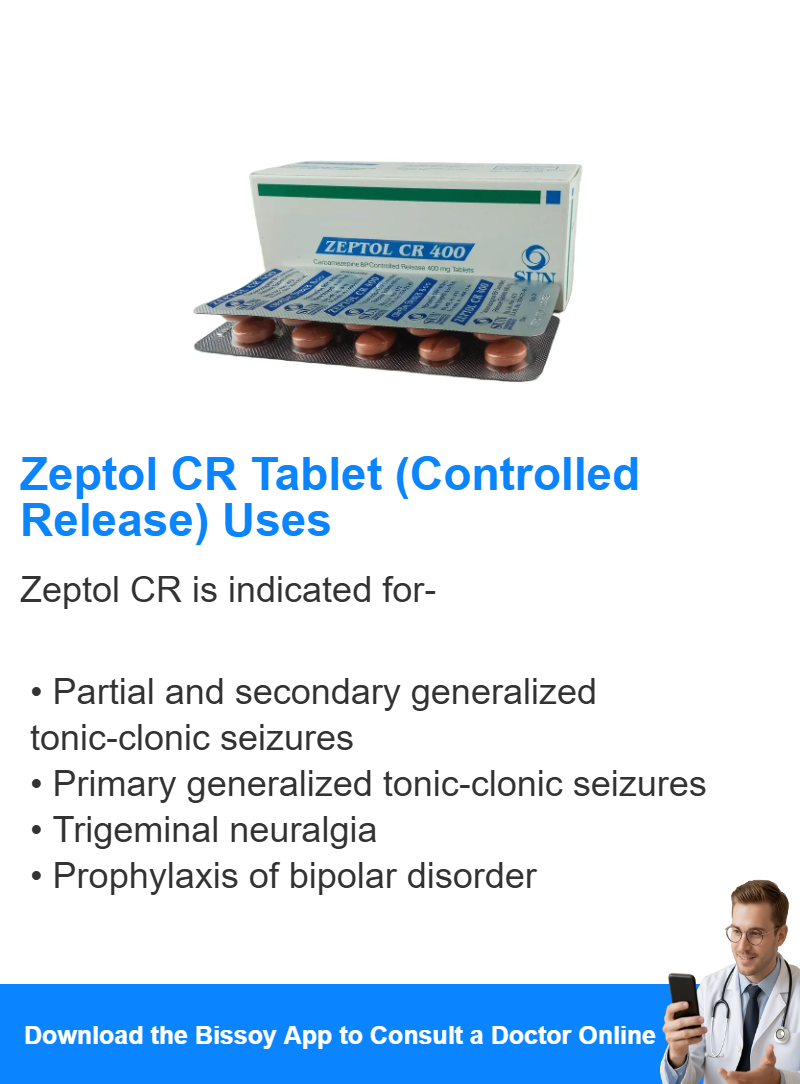
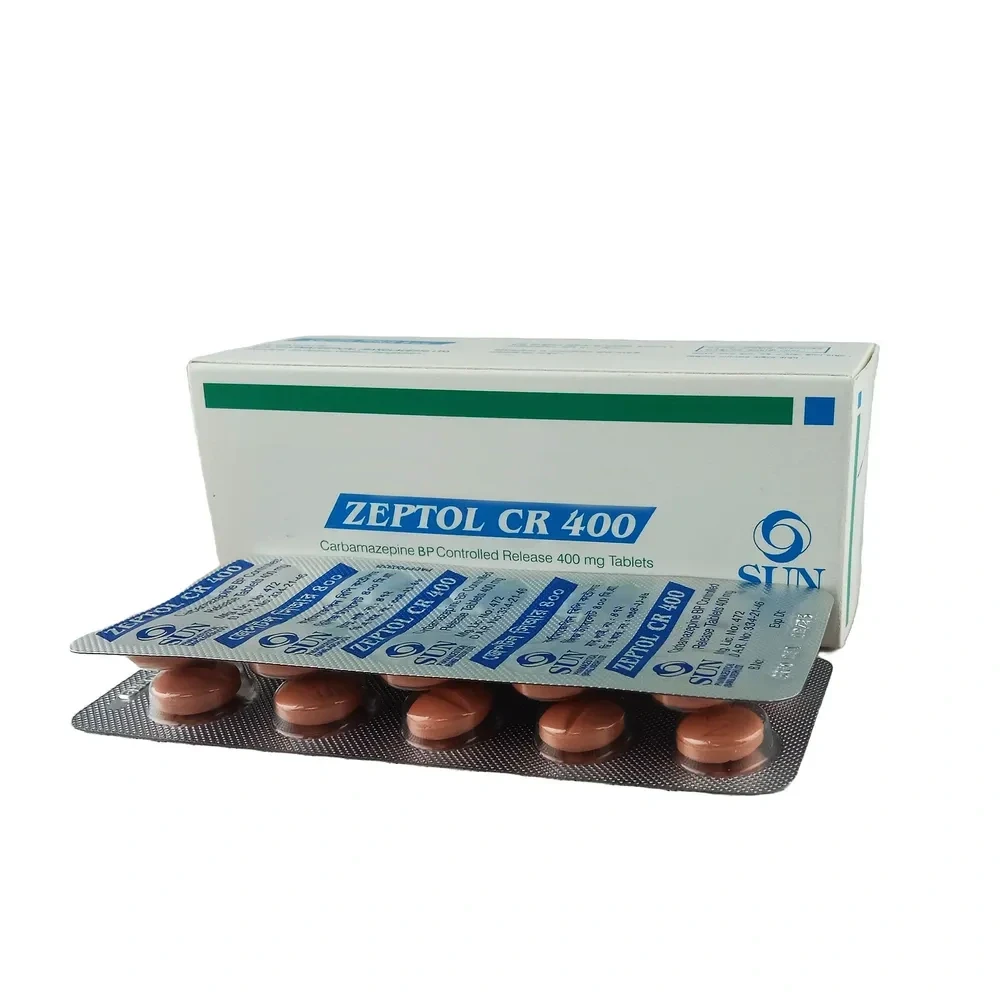
Zeptol CR Tablet (Controlled Release) 400 mg, also known as Tegretol, is an anticonvulsant drug and analgesic drug used to control seizures and to treat pain resulting from trigeminal neuralgia. Aside from the above uses, this drug is also given to control the symptoms of bipolar 1. Interestingly, carbamazepine was the first anticonvulsant used to treat individuals with bipolar disorder.
Uses
Zeptol CR Tablet (Controlled Release) 400 mg is an anticonvulsant used to treat various types of seizures and pain resulting from trigeminal neuralgia.
Zeptol CR Tablet (Controlled Release) 400 mg is indicated for the treatment of epilepsy and pain associated with true trigeminal neuralgia. In particular, carbamazepine has shown efficacy in treating mixed seizures, partial seizures with complex symptoms, and generalized tonic-clonic seizures. Zeptol CR Tablet (Controlled Release) 400 mg is also indicated for the treatment of manic episodes and mixed manic-depressive episodes caused by bipolar I disorder. Some off-label, unapproved uses of carbamazepine include the treatment of alcohol withdrawal syndrome and restless leg syndrome.
Associated Conditions
Pharmacodynamics
General effects
Zeptol CR Tablet (Controlled Release) 400 mg treats seizures and the symptoms of trigeminal neuralgia by inhibiting sodium channels. In bipolar 1 disorder, carbamazepine has been found to decrease mania symptoms in a clinically significant manner according to the Young Mania Rating Scale (YMRS). Zeptol CR Tablet (Controlled Release) 400 mg has a narrow therapeutic index.
A note on genetic variation and carbamazepine use
In studies of Han Chinese ancestry patients, a pronounced association between the HLA-B*1502 genotype and Steven Johnson syndrome and/or toxic epidermal necrolysis (SJS/TEN) resulting from carbamazepine use was observed.
Mechanism of Action
Zeptol CR Tablet (Controlled Release) 400 mg's mechanism of action is not fully elucidated and is widely debated. One major hypothesis is that carbamazepine inhibits sodium channel firing, treating seizure activity. Animal research studies have demonstrated that carbamazepine exerts its effects by lowering polysynaptic nerve response and inhibiting post-tetanic potentiation. In both cats and rats, carbamazepine was shown to decrease pain caused by infraorbital nerve stimulation. A decrease in the action potential in the nucleus ventralis of the thalamus in the brain and inhibition of the lingual mandibular reflex were observed in other studies after carbamazepine use. Zeptol CR Tablet (Controlled Release) 400 mg causes the above effects by binding to voltage-dependent sodium channels and preventing action potentials, which normally lead to stimulatory effects on nerves. In bipolar disorder, carbamazepine is thought to increase dopamine turnover and increase GABA transmission, treating manic and depressive symptoms.
A common issue that has arisen is resistance to this drug in up to 30% of epileptic patients, which may occur to altered metabolism in patients with variant genotypes. A potential therapeutic target to combat carbamazepine resistance has recently been identified as the EPHX1 gene promoter, potentially conferring resistance to carbamazepine through methylation.
Absorption
The bioavailability of carbamazepine is in the range of 75-85% of an ingested dose. After one 200 mg oral extended-release dose of carbamazepine in a pharmacokinetic study, the Cmax carbamazepine was measured to be 1.9 ± 0.3 mcg/mL. The Tmax was 19 ± 7 hours. After several doses of 800 mg every 12 hours, the peak concentrations of carbamazepine were measured to be 11.0 ± 2.5 mcg/mL. The Tmax was reduced to 5.9 ± 1.8 hours. Extended-release carbamazepine demonstrated linear pharmacokinetics over a range of 200–800 mg.
Effect of food on absorption
A meal containing high-fat content increased the rate of absorption of one 400 mg dose but not the AUC of carbamazepine. The elimination half-life remained unchanged between fed and fasting state. The pharmacokinetics of an extended-release carbamazepine dose was demonstrated to be similar when administered in the fasted state or with food. Based on these findings, food intake is unlikely to exert significant effects on carbamazepine absorption.
Volume of Distribution
The volume of distribution of carbamazepine was found to be 1.0 L/kg in one pharmacokinetic study. Another study indicates that the volume of distribution of carbamazepine ranges between 0.7 to 1.4 L/kg.. Zeptol CR Tablet (Controlled Release) 400 mg crosses the placenta, and higher concentrations of this drug are found in the liver and kidney as opposed to lung and brain tissue. Zeptol CR Tablet (Controlled Release) 400 mg crosses variably through the blood-brain barrier.
Protein Binding
Zeptol CR Tablet (Controlled Release) 400 mg is 75%-80% bound to plasma proteins. One pharmacokinetic study indicates that it is 72% bound to plasma proteins.
Route of Elimination
After an oral dose of radiolabeled carbamazepine, 72% of the administered radioactive dose was detected in the urine and the remainder of the ingested dose was found in the feces. Zeptol CR Tablet (Controlled Release) 400 mg is mainly excreted as hydroxylated and conjugated metabolites, and minimal amounts of unchanged drug.
Half Life
The mean elimination half-life of carbamazepine was 35 to 40 hours after one dose of carbamazepine extended-release formulations. The half-life ranged from 12-17 hours after several doses of carbamazepine. One pharmacokinetic study determined the elimination half-life of carbamazepine to range between 27 to 36.8 hours in healthy volunteers.
Clearance
In a pharmacokinetic study, the apparent oral clearance of carbamazepine was 25 ± 5 mL/min after one dose of carbamazepine and 80 ± 30 mL/min after several doses.
Toxicity
Toxicity information Oral LDLO (female): 1920 mg/kg/17W (intermittent); Oral LDLO (male): 54 mg/kg/9D (intermittent) Oral LD50 (rat): 1957 mg/kg
Overdose information
The initial signs of carbamazepine overdose occur 1-3 hours post ingestion. These signs and symptoms may vary in case of an overdose between carbamazepine and other drugs. Zeptol CR Tablet (Controlled Release) 400 mg may cause various cardiovascular, neurological, respiratory, urinary symptoms as well as laboratory abnormalities including leukocytosis, reduced leucocytes, acetonuria, and glycosuria.
Neuromuscular symptoms may occur initially, followed by mild cardiac symptoms such as tachycardia, hypertension, or hypotension. Higher doses of carbamazepine may cause more severed cardiovascular effects. Restlessness, muscular twitching, tremor, dilated pupils, nystagmus, psychomotor disturbances, and other neurological symptoms may occur. Hyperreflexia in the initial stages of overdose may be followed by hyporeflexia. Nausea, vomiting, urinary retention, dizziness or drowsiness may also occur. In cases of overdose, contact the local poison control center. Ensure to provide supportive and symptomatic treatment, which may include monitoring and careful supervision by a medical professional. The possibility of overdose with multiple drugs must be considered in the case of carbamazepine overdose. Maintain an adequate airway, oxygen, in addition to ventilation. Vital signs should be monitored.
Food Interactions
- Avoid alcohol. Ingesting alcohol may increase drowsiness and dizziness.
- Avoid grapefruit products.
- Exercise caution with St. John's Wort. This herb induces the CYP3A metabolism of carbamazepine and may reduce its serum concentration.
- Take with or without food.
Dosage
- Adults and children over 12 years of age- Initial: Either 200 mg b.i.d. for tablets and controlled release tablets, or 1 teaspoon q.i.d. for suspension (400 mg/day). Increase at weekly intervals by adding up to 200 mg/day using a b.i.d or a t.i.d. or q.i.d. regimen of the either formulations until the optimal response is obtained.
- Children 12-15 years of age- Dosage generally should not exceed 1000 mg daily, and 1200 mg daily in patients above 15 years of age. Doses up to 1600 mg daily have been used in adults in rare instances. Maintenance: usually 800-1200 mg daily.
- Children 6-12 years of age- Initial: Either 100 mg b.i.d. for tablets or controlled release tablets, or 1/2 teaspoon q.i.d. for suspension (200 mg/day). Increase at weekly intervals by adding up to 100 mg/day using a b.i.d. or a t.i.d.or q.i.d. regimen of the either formulations until the optimal response is obtained. Dosage generally should not exceed 1000 mg daily. Maintenance:usually 400-800 mg daily.
- Children under 6 years of age- Initial: 10-20 mg/kg/day b.i.d.or t.i.d. as tablets, or q.i.d. as suspension. Increase weekly to achieve optimal clinical response administered t.i.d. or q.i.d. Maintenance: Ordinarily, optimal clinical response is achieved at daily doses below 35 mg/kg. If satisfactory clinical response has not been achieved, plasma levels should be measured to determine whether or not they are in the therapeutic range. No recommendation regarding the safety of Zeptol CR Tablet (Controlled Release) 400 mg for use at doses above 35 mg/kg/24 hours can be made.
Trigeminal Neuralgia: Initial: On the first day,either 100 mg b.i.d. for tablets or controlled release tablets, or 1/2 teaspoon q.i.d. for suspension, for a total daily dose of 200 mg. This daily dose may be increased by up to 200 mg/day using increments of 100 mg every 12 hours for tablets or controlled release tablets, or 50 mg (1/2 teaspoon) q.i.d. for suspension, only as needed to achieve freedom from pain. A total dose of 1200 mg daily shouldn't be exceeded. Maintenance: Control of pain can be maintained in most patients with 400-800 mg daily. However, some patients may be maintained on as little as 200 mg daily, while others may require as much as 1200 mg daily. At least once every 3 months throughout the treatment period, attempts should be made to reduce the dose to the minimum effective level or even to discontinue the drug. The tablets or syrup can be taken without regards to meal.