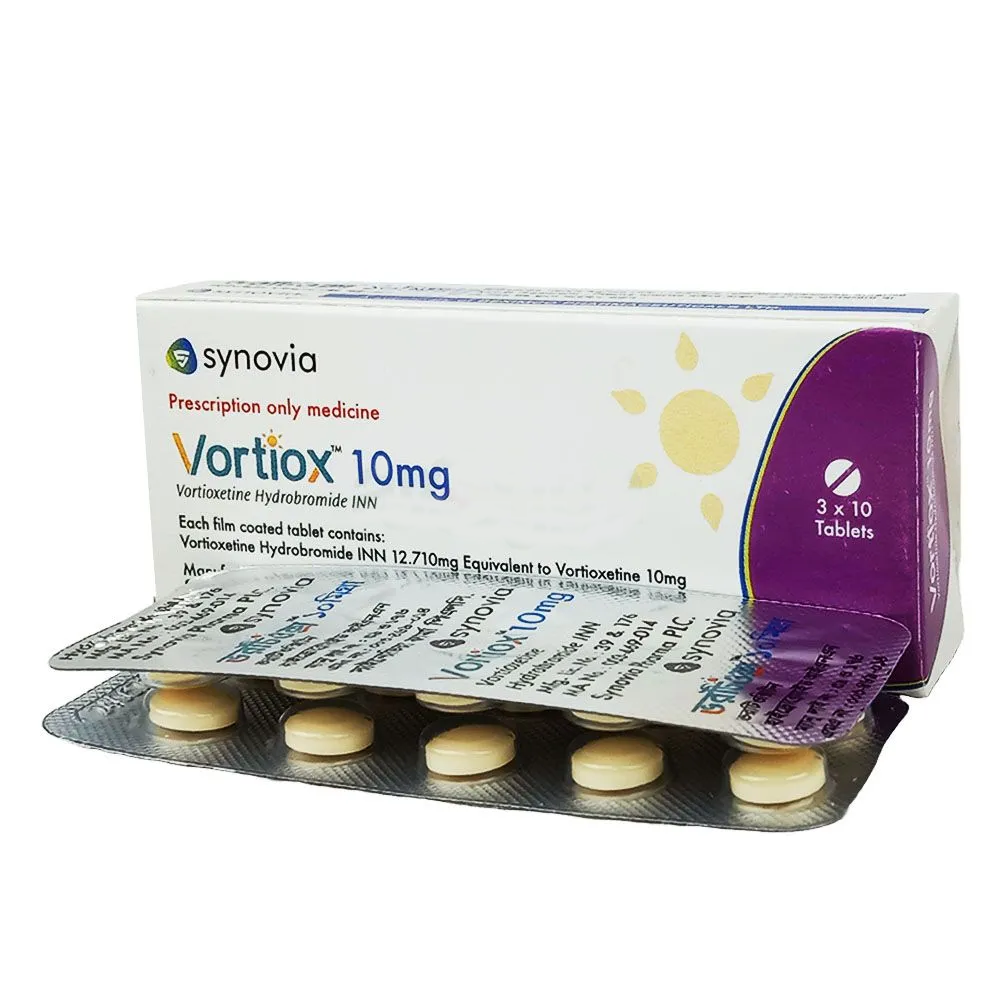
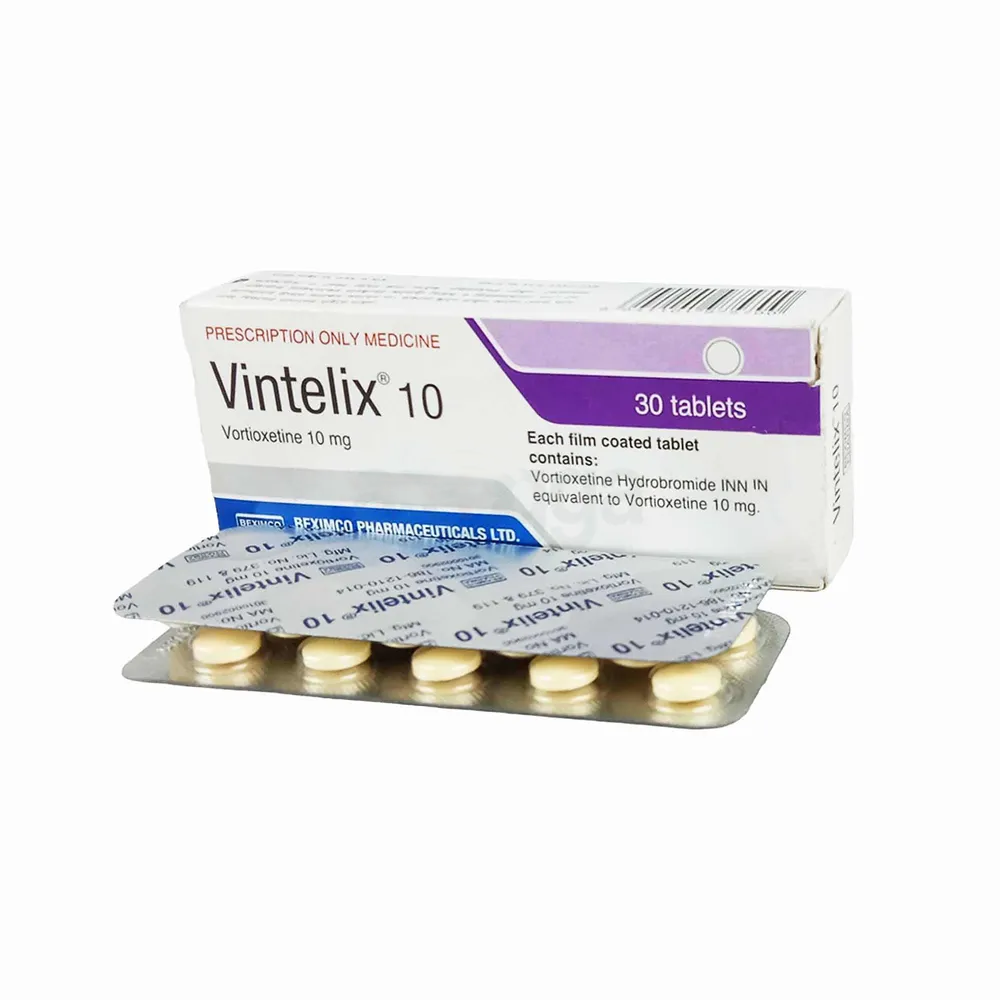
Introduction
Vortioxetine hydrobromide is a novel antidepressant used for the treatment of major depressive disorder (MDD). It is classified as a serotonin modulator and stimulator, designed to enhance mood and alleviate symptoms of depression through its effects on serotonin pathways in the brain.
Uses
Vortioxetine is primarily used to treat major depressive disorder in adults. It is effective in improving mood, sleep, appetite, and overall functional capacity in individuals with MDD.
| Brand Name | Vortixen |
|---|---|
| Type | Tablet |
| Weight | 10 mg |
| Generic | Vortioxetine Hydrobromide |
| Manufacturer | Everest Pharmaceuticals Ltd. |
| Available in | English বাংলা |
Mechanism of Action
Vortioxetine works by inhibiting the reuptake of serotonin in the brain, which increases serotonin levels. It also acts on various serotonin receptors as an agonist or antagonist, which may contribute to its antidepressant effects and its impact on cognitive function.
How Long Does It Take to Work?
It typically takes 2 to 4 weeks for patients to start experiencing noticeable improvements in depressive symptoms with vortioxetine. Full therapeutic benefits may be observed after 6 to 8 weeks of consistent use.
Absorption
Vortioxetine is well-absorbed from the gastrointestinal tract. Food does not significantly affect its absorption, so it can be taken with or without food.
Route of Elimination
Vortioxetine is primarily metabolized in the liver through the cytochrome P450 enzyme system and is excreted mainly in the feces, with a smaller amount eliminated through the urine.
Dosage
Recommended dose: The recommended starting dose is 10 mg administered orally once daily without regard to meals. The dosage should then be increased to 20 mg/day, as tolerated. The efficacy and safety of doses above 20 mg/day have not been evaluated in controlled clinical trials. A dose decrease down to 5 mg/day may be considered for patients who do not tolerate higher doses. The lowest effective dose of 5 mg/day should always be used as the starting dose for elderly patients (>65 years of age).Maintenance dose: For MDD, Vortioxetine can be administered for several months or longer. For a long period use patients should be re-evaluated to assess the usefulness of the drugs for individual patients.
Discontinuation treatment: Although Vortioxetine can be abruptly discontinued, in placebo-controlled trials patients experienced transient adverse reactions such as headache and muscle tension following abrupt discontinuation of Vortioxetine 15 mg/day or 20 mg/day. To avoid these adverse reactions, it is recommended that the dose should be decreased to 10 mg/day for one week before full discontinuation of Vortioxetine 15 mg/day or 20 mg/day.
Switching a patient to or from a Monoamine Oxidase Inhibitor (MAOI) intended to treat Psychiatric Disorders: At least 14 days must elapse between discontinuation of an MAOI intended to treat psychiatric disorders and initiation of therapy with Vortioxetine to avoid the risk of Serotonin Syndrome. Conversely, at least 21 days must elapse after stopping Vortioxetine before starting an MAOI intended to treat psychiatric disorders.
The recommended starting dose of vortioxetine is 10 mg once daily. Depending on the patient's response and tolerability, the dose may be adjusted to a maximum of 20 mg per day.
Administration
Vortioxetine should be taken orally, once daily. It can be administered with or without food. The dosage should be adjusted based on individual response and tolerability.
Side Effects
Common side effects include nausea, diarrhea, dry mouth, and constipation. Other potential side effects are dizziness, headache, and sexual dysfunction.
Toxicity
In case of overdose, symptoms may include severe drowsiness, agitation, and gastrointestinal disturbances. Immediate medical attention is required to manage potential toxicity and prevent serious complications.
Precautions
Vortioxetine should be used with caution in patients with a history of bipolar disorder, as it may precipitate mania. It should also be monitored in individuals with hepatic impairment.
Interaction
Vortioxetine may interact with other medications that affect serotonin levels or are metabolized by the cytochrome P450 system, such as other antidepressants or drugs that inhibit CYP2D6. These interactions may increase the risk of serotonin syndrome or alter drug effectiveness.
Disease Interaction
Patients with liver disease should be monitored closely, as vortioxetine is metabolized by the liver. It should be used with caution in individuals with a history of seizures or bleeding disorders.
Drug Interaction
Vortioxetine can interact with drugs that affect the cytochrome P450 enzyme system, particularly CYP2D6 inhibitors or inducers. Co-administration with other serotonergic agents may increase the risk of serotonin syndrome.
Food Interactions
Vortioxetine absorption is not significantly affected by food intake, so it can be taken with or without food.
Pregnancy Use
Vortioxetine should be used during pregnancy only if the potential benefits outweigh the risks. It is important to discuss the risks and benefits with a healthcare provider if you are pregnant or planning to become pregnant.
Lactation Use
Vortioxetine is excreted in breast milk. The decision to use vortioxetine while breastfeeding should consider the potential benefits to the mother and risks to the infant. Consultation with a healthcare provider is recommended.
Acute Overdose
Acute overdose may result in symptoms such as severe drowsiness, agitation, and gastrointestinal issues. Immediate medical treatment is required to manage overdose and prevent serious outcomes.
Contraindication
Vortioxetine is contraindicated in individuals with hypersensitivity to the drug. It should not be used in combination with monoamine oxidase inhibitors (MAOIs) due to the risk of serotonin syndrome.
Use Direction
Take vortioxetine exactly as prescribed by your healthcare provider. Adhere to the recommended dosage and administration instructions, and do not exceed the prescribed amount.
Storage Conditions
Store vortioxetine at room temperature, away from moisture and heat. Keep it out of reach of children and pets to prevent accidental ingestion.
Volume of Distribution
The volume of distribution for vortioxetine is approximately 5.4 L/kg, indicating its distribution throughout body tissues.
Half Life
The elimination half-life of vortioxetine is approximately 66 hours, supporting its once-daily dosing regimen.
Clearance
Vortioxetine is primarily cleared through hepatic metabolism, with a small percentage excreted unchanged in the urine. Clearance may be affected by liver function and other medications.
See in details version Vortixen Tablet 10 mg also Vortixen Tablet 10 mg in bangla