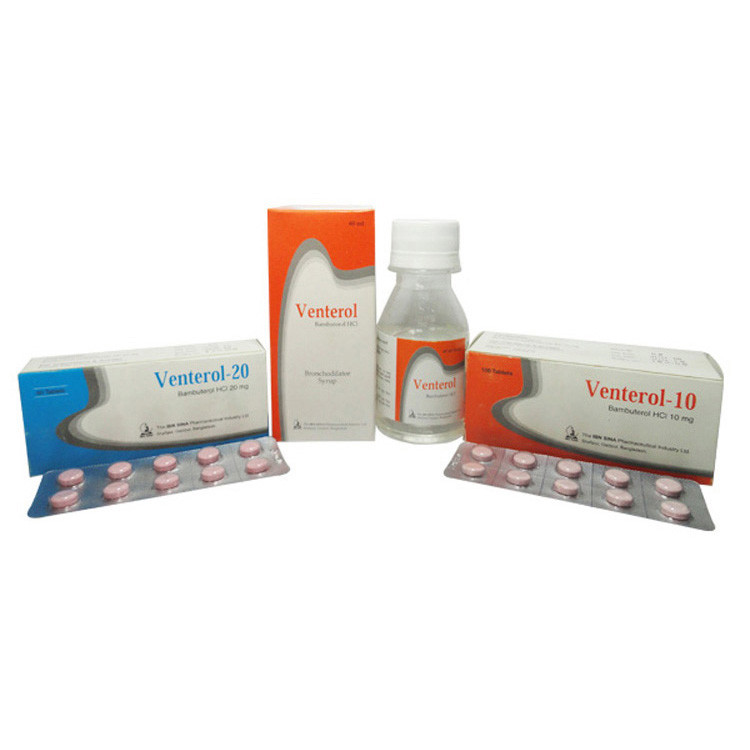
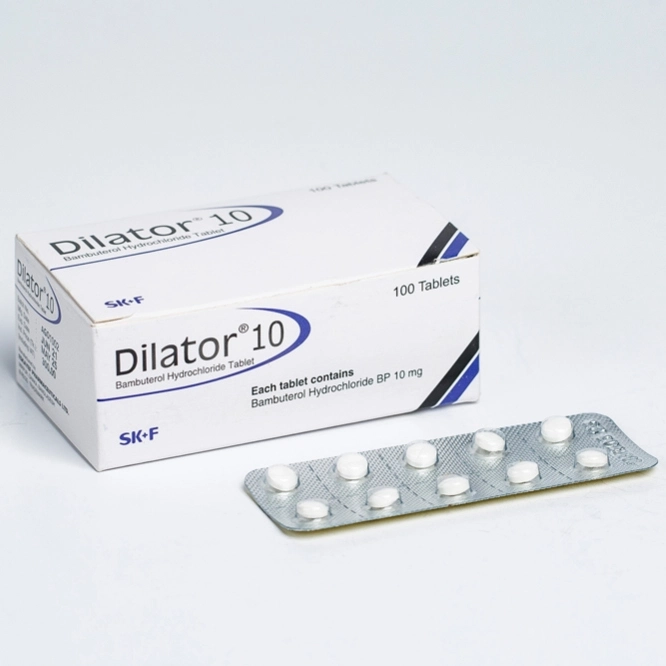
Bambuterol hydrochloride (as hydrochloride salt) is a β-adrenoceptor agonist prescribed in the management of asthma and chronic obstructive pulmonary diseases (COPD). It is a long-acting β2-adrenoceptor agonist (LABA) approved for the maintenance and management of bronchodilators in asthma and COPD.
Uses
Bambuterol hydrochloride is used for the long-term prevention of bronchoconstriction in patients with asthma or other obstructive airway conditions which require regular treatment with bronchodilators, such as chronic bronchitis and emphysema, and for prophylaxis of exercise induced bronchoconstriction.
Bambuterol hydrochloride functions as a selective β2-adrenoceptor agonist, which acts on the beta2-adrenergic receptors in the airway and acts by stimulating the production of cyclic AMP (cAMP), which causes bronchodilation.
How Long Does Venterol Tablet 10 mg Take to Work?
The onset of action of Bambuterol hydrochloride is typically within 15 minutes after administration. The maximum effect is achieved after 1-2 hours post-dose.
Absorption
The absolute bioavailability of bambuterol hydrochloride when taken by inhalation is approximately 14%. The bioavailability of bambuterol hydrochloride varies with available dosages.
Route of Elimination
Bambuterol hydrochloride is eliminated by metabolism in the liver, primarily by sulfation, and undergoes enterohepatic circulation.
Dosage
Children 2-5 years: The recommended normal dose 10 mg (10 ml syrup).
Children 6-12 years: The recommended normal dose 10 mg (10 ml syrup). The dose may be increased to 20 mg.
Adult: The recommended initial dose 10 mg. The dose may be increased to 20 mg after 1-2 weeks depending on the clinical effect.
Bambuterol hydrochloride is available in inhalation aerosol form for the maintenance of asthma, in dosage strengths of 10 mcg per actuation, 20 mcg per actuation, and 32.5 mcg per actuation. The recommended daily dose is from 2 to 4 actuations.
Administration
Bambuterol hydrochloride is administered using the metered-dose inhaler. The inhaler should be used in a proper position and position of the lips should be checked along with the flow rate of the inhaler before each use for optimal drug delivery.
Side Effects
The most common side effects associated with bambuterol hydrochloride include nausea, sweating, dizziness, headache, difficulty breathing, cough, pain in the jaw, throat irritation, runny nose, and tremor. Other serious side effects may include worsening of breathing difficulty, chest pain, weakening of the immune system, and allergic reactions.
Toxicity
Toxicity of bambuterol hydrochloride is rare and is generally mild. It includes palpitation, hypotension, tremor, and increased heart rate. Overdose may result in serious side effects such as hypokalemia, hyperventilation, and hypoglycemia.
Precaution
Patients should be advised to take bambuterol hydrochloride only when prescribed by a physician. Patients should be monitored for symptoms such as chest pain, shortness of breath, and worsening of breathing difficulty. Patients with a history of hypertension, diabetes, heart diseases, and kidney disease should take bambuterol with extra care.
Interaction
Bambuterol hydrochloride may interact with other medications, including β-adrenergic antagonists, MAO inhibitors, and diuretics. It should not be used in combination with adrenergic agonists, including bambuterol.
Drug Interactions
Drugs that may interact with bambuterol hydrochloride include phenytoin, warfarin, diuretics, insulin, β-blockers, cyclosporine, metformin, quinidine, and MAO inhibitors.
Food Interactions
Foods that may interact with bambuterol hydrochloride include caffeinated beverages, alcoholic beverages, citrus fruits, and certain herbs and spices.
Pregnancy Use
Bambuterol hydrochloride should be avoided in pregnant women due to the risk of adverse effects on the fetus.
Lactation Use
The use of bambuterol hydrochloride is not recommended for breastfeeding women as it may be transferred to the baby through breast milk.
Acute Overdose
The most common symptoms of bambuterol hydrochloride overdose include hypotension, arrhythmia, rapid heartbeat, tremors, and dizziness. Treatment includes supportive measures such as administration of intravenous fluids and close monitoring of vital signs.
Contraindication
Bambuterol hydrochloride should not be used in patients with known hypersensitivity to beta-blockers or sympathomimetic drugs. It should not be taken with MAO inhibitors or β-blockers.
Use Direction
Bambuterol hydrochloride should be used only when prescribed by a physician. Its usual dose is one to two inhalation actuations four times every day. Inhalation should be done at regular intervals during the day.
Storage Condition
Bambuterol hydrochloride should be stored at 20°–25°C (68°–77°F) away from moisture, heat, and direct sunlight.
Volume of Distribution
The apparent volume of distribution of bambuterol hydrochloride is approximately 14 L/kg.
Half Life
The elimination half-life is approximately 48 hours.
Clearance
The mean systemic clearance of bambuterol hydrochloride is approximately 300 mL/min/kg.