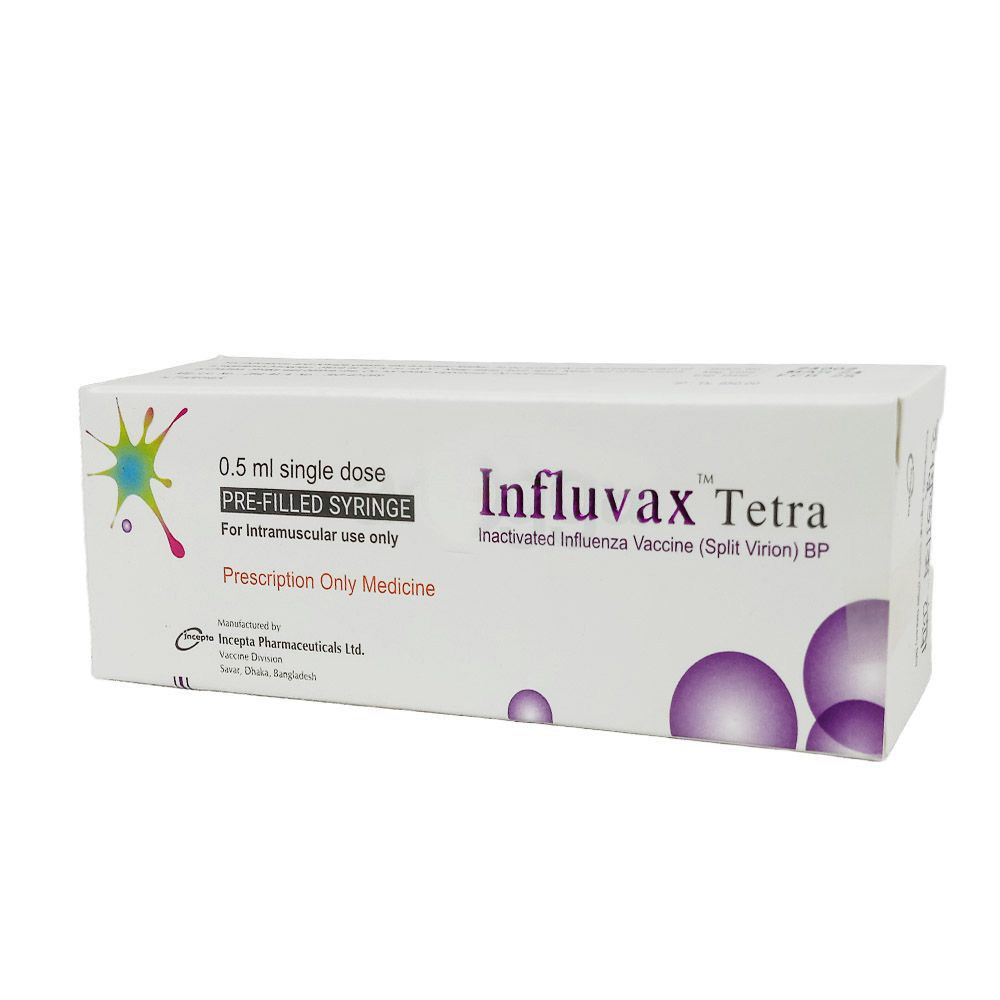
Introduction to Vaxigrip Tetra IM Injection 0.5 ml/pre-filled syringe
Inactivated influenza vaccine, also known as the flu shot, is an immunization given to people six months of age and older to protect them against infection from Influenza virus. It decreases the risk of developing serious complications caused by the virus, such as hospitalization, pneumonia, and even death. The vaccine is usually given once a year, during the fall season in the United States.
Uses for Vaxigrip Tetra IM Injection 0.5 ml/pre-filled syringe
Inactivated influenza vaccine is used to prevent infection caused by influenza virus. It is recommended to receive the vaccine at least 2 weeks before the start of the flu season and annually to maintain immunity.
Mechanism of Action
Inactivated influenza vaccine works by stimulating the body's immune system to make antibodies that recognize and defend against the virus. These antibodies then protect people from infection when they are exposed to the virus, by attacking and killing the virus before it has an opportunity to take hold.
How Long Does It Take To Work?
It generally takes about two weeks for the vaccine to develop protective immunity, meaning it may take two weeks for the body to develop protection from the virus after receiving the vaccine.
Absorption
The inactivated influenza vaccine is injected subcutaneously (under the skin) or intramuscularly (into a muscle). Once injected, the vaccine is absorbed into the bloodstream, where it stimulates the body's immune system to produce antibodies that protect against infection.
Route of Elimination
The vaccine is not metabolized in the body, and it is excreted through the urine and feces.
Dosage
Dosage:- Adults and children over 36 months of age: 0.5ml
- Children from 6 to 35 months of age: clinical data are limited. Doses of 0.25 ml or 0.5 ml have been used.
The amount of vaccine that should be given to one person is determined by age and other factors, such as existing health conditions. The vaccine is available in single dose or multiple dose vials. Generally, a single 0.5 mL dose is recommended for adults and children.
Administration
The inactivated influenza vaccine is typically administered via an intramuscular injection. It should be injected into the muscle in the upper arm. It can also be administered subcutaneously in the arm.
Side Effects
Common side effects of the inactivated influenza vaccine include soreness, redness, and swelling at the injection site, headache, body aches, and low-grade fever. These side effects typically resolve within a few days.
Toxicity
The inactivated influenza vaccine is considered to be safe and the chance of serious side effects and toxicity is very low.
Precautions
People who are allergic to eggs, the ingredients of the vaccine, or who have had a severe allergic reaction to a previous dose of influenza vaccine should not receive the vaccine. People who have a fever should wait until the fever has gone away before receiving the vaccine.
Interactions
The inactivated influenza vaccine does not interact with other medications, herbs, supplements, or foods.
Disease Interaction
The inactivated influenza vaccine does not interact with any known diseases.
Drug Interactions
The inactivated influenza vaccine does not interact with any known drugs.
Food Interactions
The inactivated influenza vaccine does not interact with any known foods.
Pregnancy Use
The safety of the inactivated influenza vaccine during pregnancy has not been established. However, it is generally recommended that pregnant women receive the vaccine to protect them from influenza, as the disease can be more severe in pregnant women.
Lactation Use
The safety of the inactivated influenza vaccine during lactation has not been established. However, it is generally recommended that lactating women receive the vaccine to protect them from influenza.
Acute Overdose
There is no known risk associated with receiving more than the recommended dose of the vaccine. However, it is recommended to speak to a healthcare provider if more than the recommended dose has been received.
Contraindication
The inactivated influenza vaccine should not be given to people who are allergic to eggs, the ingredients of the vaccine, or who have had a severe allergic reaction to a previous dose of the vaccine.
Use Directions
The vaccine should be injected into the muscle in the upper arm. It can also be injected subcutaneously in the arm. Be sure to follow the directions on the package and to use a new needle and syringe for each injection.
Storage Conditions
The inactivated influenza vaccine should be stored in a refrigerator at 2°C to 8°C. Do not freeze the vaccine. Opened vials should be used within seven days and unused vials should be discarded according to the manufacturer’s instructions.
Volume of Distribution
The volume of distribution for the inactivated influenza vaccine is not known.
Half Life
The half life of the inactivated influenza vaccine is not known.
Clearance
The clearance of the inactivated influenza vaccine is not known.