Introduction
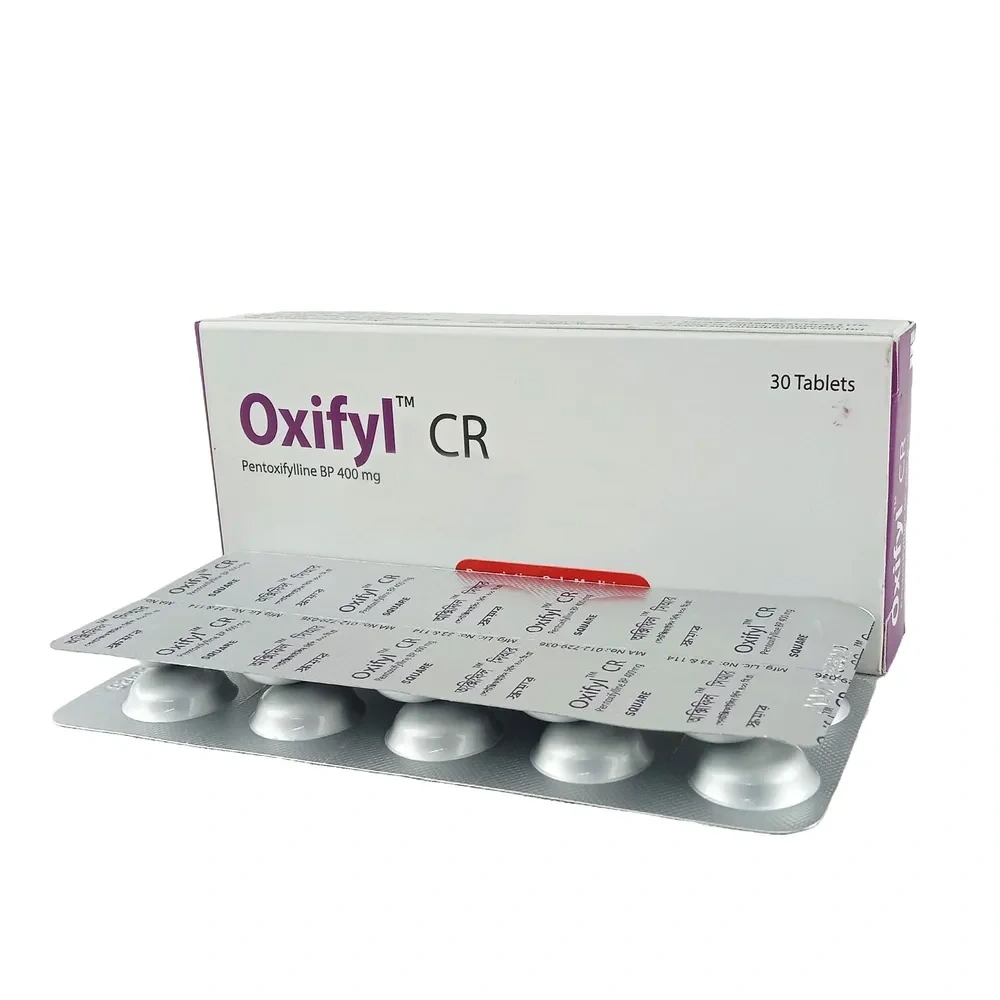
Vasolax Tablet (Controlled Release) 400 mg (PTX) is a synthetic dimethylxanthine derivative that modulates the rheological properties of blood and also has both anti-oxidant and anti-inflammatory properties. Although originally developed to treat intermittent claudication, a form of exertion-induced leg pain common in patients with peripheral arterial disease, PTX has been investigated for its possible use in diverse conditions, including osteoradionecrosis, diabetic kidney disease, and generally any condition associated with fibrosis. More recently, PTX has been suggested as a possible treatment for COVID-19-induced pulmonary complications due to its ability to regulate the production of inflammatory cytokines.
Uses
Vasolax Tablet (Controlled Release) 400 mg is a methylxanthine derivative used to treat intermittent claudication caused by chronic occlusive arterial disease of the limbs.
Vasolax Tablet (Controlled Release) 400 mg is indicated for the treatment of intermittent claudication in patients with chronic occlusive arterial disease. Vasolax Tablet (Controlled Release) 400 mg may improve limb function and reduce symptoms but cannot replace other therapies such as surgical bypass or removal of vascular obstructions.
Associated Conditions
Pharmacodynamics
Vasolax Tablet (Controlled Release) 400 mg, a synthetic dimethylxanthine derivative structurally related to theophylline and caffeine, exhibits hemorheological, anti-oxidative, and anti-inflammatory properties and is traditionally indicated in the treatment of peripheral arterial disease (PAD). In PAD patients with concurrent cerebrovascular and coronary artery diseases, pentoxifylline treatment has occasionally been associated with angina, arrhythmia, and hypotension. Concurrent use with warfarin should be associated with more frequent monitoring of prothrombin times. Also, patients with risk factors complicated by hemorrhages, such as retinal bleeding, peptic ulceration, and recent surgery, should be monitored periodically for bleeding signs.
Mechanism of Action
Patients with peripheral arterial disease (PAD) may suffer from intermittent claudication, exertional leg pain that resolves upon rest, which is underscored by a complex etiology including vascular dysfunction (reduced limb perfusion, angiogenesis, and microcirculatory flow), systemic inflammation, and skeletal muscle dysfunction. Vasolax Tablet (Controlled Release) 400 mg (PTX), (3,7-dimethyl-1-(5-oxohexyl)-3,7-dihydro-1H-purine-2,6-dione) or 1-(5-oxohexyl)-3,7-dimethylxanthine, is a methyl-xanthine derivative that acts to lower blood viscosity by increasing erythrocyte flexibility, reducing plasma fibrinogen, inhibiting neutrophil activation, and suppressing erythrocyte/platelet aggregation; it also has antioxidant and anti-inflammatory effects. Although the precise mechanism of action has yet to be elucidated, numerous studies have suggested several effects of PTX.
The classical interpretation of PTX's broad effects is due to its ability to act, in vitro, as a non-specific cyclic-3',5'-phosphodiesterase (PDE) inhibitor at millimolar concentrations; specifically, it has been proposed that inhibition of PDE type III and IV isozymes leads to elevated cyclic adenosine monophosphate (cAMP) levels, which mediate diverse downstream effects. This view has been challenged, specifically by observing those plasma concentrations of PTX in routine clinical use are typically only around 1μM, far lower than those used to inhibit PDEs in vitro. Instead, several studies have suggested that PTX can modulate adenosine receptor function, specifically the Gα-coupled A2A receptor (A2AR). Whether PTX acts directly as an A2AR agonist is unclear, although it can clearly increase the response of A2AR to adenosine. A2AR activation activates adenylyl cyclase, which increases intracellular cAMP levels; this observation may explain PTX's ability to increase intracellular cAMP in a PDE-independent fashion.
Elevated cAMP levels have numerous downstream effects. cAMP-mediated activation of protein kinase A (PKA) suppresses nuclear translocation of NF-κB, which suppresses transcription of pro-inflammatory cytokines such as tumour necrosis factor (TNF-α), interleukin-1 (IL-1), and IL-6 as well as TNF-induced molecules such as adhesion molecules (ICAM1 and VCAM1) and the C-reactive protein (CRP). PTX has also been shown to prevent the downstream phosphorylation of p38 MAPK and ERK, which are responsible for assembling the NADPH oxidase involved in the neutrophil oxidative burst. This effect is due to a PKA-independent decrease in Akt phosphorylation and a PKA-dependent decrease in phosphorylation of p38 MAPK and ERK. This transcriptional regulation at least partially explains the anti-inflammatory and anti-oxidative properties of PTX.
Also, activated PKA can activate the cAMP response element-binding protein (CREB), which itself blocks SMAD-driven gene transcription, effectively disrupting transforming growth factor (TGF-β1) signalling. This results in lower levels of fibrinogenic molecules such as collagens, fibronectin, connective tissue growth factor, and alpha-smooth muscle actin. Hence, disruption of TGF-β1 signalling may explain the anti-fibrotic effects of PTX, including at least some of the decrease in blood viscosity.
The picture is complicated by the observation that PTX metabolites M1, M4, and M5 have been shown to inhibit C5 Des Arg- and formyl-methionylleucylphenylalanine-induced superoxide production in neutrophils and M1 and M5 significantly contribute to PTX's observed hemorheological effects. Overall, PTX administration is associated with decreased pro-inflammatory molecules, an increase in anti-inflammatory molecules such as IL-10, and decreased production of fibrinogenic and cellular adhesion molecules.
Absorption
Oral pentoxifylline (PTX) is almost completely absorbed but has low bioavailability of 20-30% due to extensive first-pass metabolism; three of the seven known metabolites, M1, M4, and M5 are present in plasma and appear soon after dosing. Single oral doses of 100, 200, and 400 mg of pentoxifylline in healthy males produced a mean tmax of 0.29-0.41 h, a mean Cmax of 272-1607 ng/mL, and a mean AUC0-∞ of 193-1229 ng*h/mL; corresponding ranges for metabolites 1, 4, and 5 were 0.72-1.15, 114-2753, and 189-7057. Single administration of a 400 mg extended-release tablet resulted in a heightened tmax of 2.08 ± 1.16 h, lowered Cmax of 55.33 ± 22.04 ng/mL, and a comparable AUC0-t of 516 ± 165 ng*h/mL; all these parameters were increased in cirrhotic patients.
Smoking was associated with a decrease in the Cmax and AUCsteady-state of metabolite M1 but did not dramatically affect the pharmacokinetic parameters of pentoxifylline or other measured metabolites. Renal impairment increases the mean Cmax, AUC, and ratio to parent compound AUC of metabolites M4 and M5, but has no significant effect on PTX or M1 pharmacokinetics. Finally, similar to cirrhotic patients, the Cmax and tmax of PTX and its metabolites are increased in patients with varying degrees of chronic heart failure.
Overall, metabolites M1 and M5 exhibit plasma concentrations roughly five and eight times greater than PTX, respectively. PTX and M1 pharmacokinetics are approximately dose-dependent, while those of M5 are not. Food intake before PTX ingestion delays time to peak plasma concentrations but not overall absorption. Extended-release forms of PTX extend the tmax to between two and four hours but also serves to ameliorate peaks and troughs in plasma concentration over time.
Volume of Distribution
Vasolax Tablet (Controlled Release) 400 mg has a volume of distribution of 4.15 ± 0.85 following a single intravenous 100 mg dose in healthy subjects.
Protein Binding
Vasolax Tablet (Controlled Release) 400 mg is approximately 45% bound to erythrocyte membranes.
Route of Elimination
Vasolax Tablet (Controlled Release) 400 mg is eliminated almost entirely in the urine and predominantly as M5, which accounts for between 57 and 65 percent of the administered dose. Smaller amounts of M4 are recovered, while M1 and the parent compound account for less than 1% of the recovered dose. The fecal route accounts for less than 4% of the administered dose.
Half Life
Overall, pentoxifylline has an elimination half-life of between 0.39 and 0.84 hours, while its primary metabolites have elimination half-lives of between 0.96 and 1.61 hours.
Clearance
Vasolax Tablet (Controlled Release) 400 mg given as a single 100 mg intravenous infusion has a clearance of 3.62 ± 0.75 L/h/kg in healthy subjects, which decreased to 1.44 ± 0.46 L/h/kg in cirrhotic patients. In another study, the apparent clearance of either 300 or 600 mg of pentoxifylline given intravenously (median and range) was 4.2 (2.8-6.3) and 4.1 (2.3-4.6) L/min, respectively. It is important to note that, due to the reversible extra-hepatic metabolism of the parent compound and metabolite 1, the true clearance of pentoxifylline may be even higher than the measured values.
Toxicity
Overdoses of pentoxifylline have been reported with symptoms including agitation, fever, flushing, hypotension, convulsions, somnolence, and loss of consciousness beginning 4-5 hours following ingestion and lasting up to 12 hours. Symptomatic treatment is recommended, specifically pertaining to maintaining proper respiration, blood pressure, and controlling convulsions. Activated charcoal may prove useful in absorbing excess pentoxifylline in overdose cases. Patients have recovered from overdose even at doses as high as 80 mg/kg.
Food Interactions
- Limit caffeine intake.
- Take with food. Administration with food may reduce irritation. Co-administration with food modestly increases the mean pentoxifylline AUC and maximum plasma concentrations (1.1- and 1.3-fold, respectively) achieved with an extended-release tablet.