Introduction
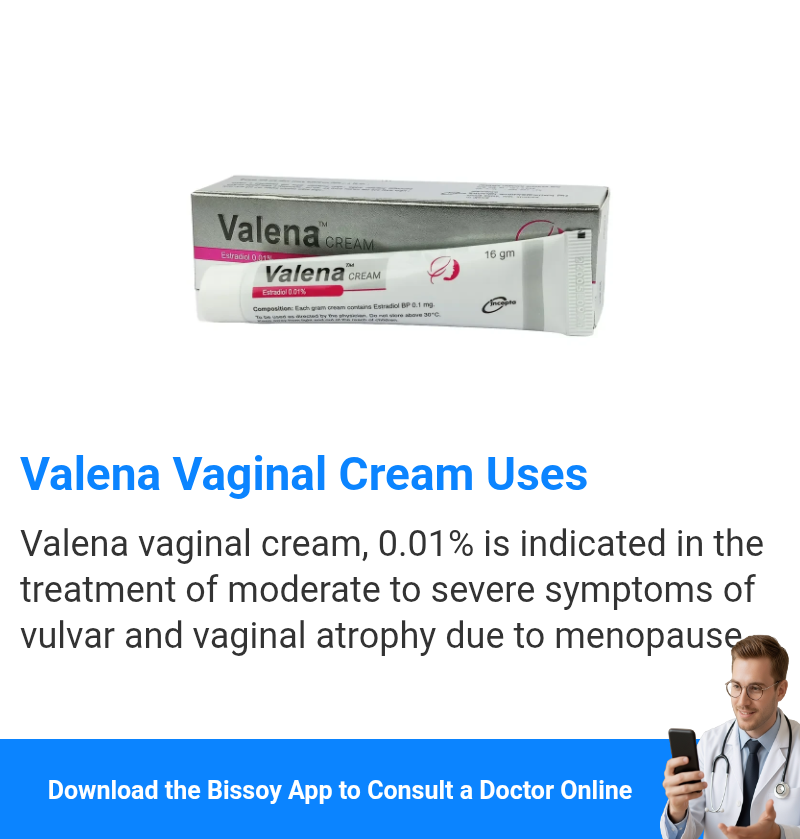
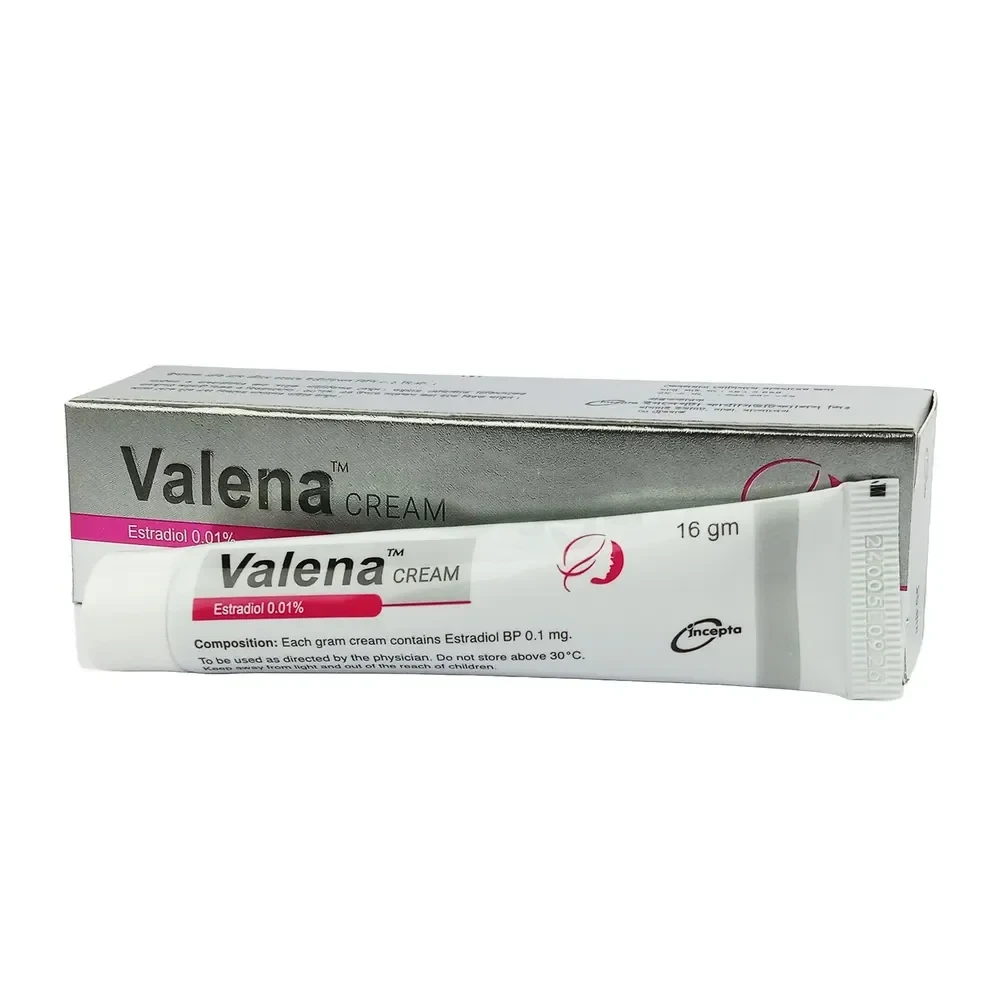
Valena Vaginal Cream 0.01% is a naturally occurring hormone circulating endogenously in females. It is commercially available in several hormone therapy products for managing conditions associated with reduced estrogen, such as vulvovaginal atrophy and hot flashes. Some available forms of estradiol include oral tablets, injections, vaginal rings, transdermal patches, sprays, gels, and creams.
When used for oral or IM administration, estradiol is commonly synthesized as a pro-drug ester (such as Valena Vaginal Cream 0.01% acetate, Valena Vaginal Cream 0.01% benzoate, Valena Vaginal Cream 0.01% cypionate, Valena Vaginal Cream 0.01% dienanthate, and Valena Vaginal Cream 0.01% valerate). Because it has a low oral bioavailability on its own, estradiol is commonly formulated with an ester side-chain. Ethinylestradiol (EE) is a synthetic form of estradiol commonly used as the estrogenic component of most combination oral contraceptive pills (OCPs). Ethinyl estradiol is different from estradiol due to its higher biovailability and increased resistance to metabolism, rendering it more suitable for oral administration.
Uses
Valena Vaginal Cream 0.01% is an estrogenic steroid used to treat vasomotor symptoms of vulvar and vaginal atrophy in menopause, hypoestrogenism, prevention of postmenopausal osteoporosis, treatment of breast cancer, and advanced androgen-dependent carcinoma of the prostate.
Valena Vaginal Cream 0.01% is indicated in various preparations for the treatment of moderate to severe vasomotor symptoms and vulvar and vaginal atrophy due to menopause, for the treatment of hypoestrogenism due to hypogonadism, castration, or primary ovarian failure, and for the prevention of postmenopausal osteoporosis. It is also used for the treatment of breast cancer (only for palliation therapy) in certain men or women with metastatic disease, and for the treatment of androgen-dependent prostate cancer (only for palliation therapy). It is also used in combination with other hormones as a component of oral contraceptive pills for preventing pregnancy (most commonly as Ethinylestradiol, a synthetic form of estradiol).
A note on duration of treatment
Recommendations for treatment of menopausal symptoms changed drastically following the release of results and early termination of the Women's Health Initiative (WHI) studies in 2002 as concerns were raised regarding estrogen use. Specifically, the combined estrogen–progestin group was discontinued after about 5 years of follow up due to a statistically significant increase in invasive breast cancer and in cardiovascular events.
Following extensive critique of the WHI results, Hormone Replacement Therapy (HRT) is now recommended to be used only for a short period (for 3-5 years postmenopause) in low doses, and in women without a history of breast cancer or increased risk of cardiovascular or thromboembolic disease. Estrogen for postmenopausal symptoms should always be given with a progestin component due to estrogen's stimulatory effects on the endometrium; in women with an intact uterus, unopposed estrogen has been shown to promote the growth of the endometrium which can lead to endometrial hyperplasia and possibly cancer over the long-term.
Associated Conditions
Pharmacodynamics
Valena Vaginal Cream 0.01% acts on the on the estrogen receptors to relieve vasomotor systems (such as hot flashes) and urogenital symptoms (such as vaginal dryness and dyspareunia).
Valena Vaginal Cream 0.01% has also been shown to exert favorable effects on bone density by inhibiting bone resorption. Estrogen appears to inhibit bone resorption and may have beneficial effects on the plasma lipid profile. Estrogens cause an increase in hepatic synthesis of various proteins, which include sex hormone binding globulin (SHBG), and thyroid-binding globulin (TBG). Estrogens are known to suppress the formation of follicle-stimulating hormone (FSH) in the anterior pituitary gland.
A note on hyper-coagulable state, cardiovascular health, and blood pressure
Valena Vaginal Cream 0.01% may cause an increased risk of cardiovascular disease, DVT, and stroke, and its use should be avoided in patients at high risk of these conditions. Estrogen induces a hyper-coagulable state, which is also associated with both estrogen-containing oral contraceptive (OC) use and pregnancy. Although estrogen causes an increase in levels of plasma renin and angiotensin. Estrogen-induced increases in angiotensin, causing sodium retention, which is likely to be the mechanism causing hypertension after oral contraceptive treatment.
Mechanism of Action
Estrogen is found in the the breast, uterine, ovarian, skin, prostate, bone, fat, and brain tissues. The main source of estrogen in adult women during the reproductive period of life is the ovarian follicle, which secretes 70 to 500 mcg of estradiol each day. After menopause, however, the majority of endogenous estrogen is produced by transformation of androstenedione (which is secreted by the adrenal cortex) to estrone in the peripheral tissues. Both estrone and its sulphate conjugated form, estrone sulphate, represent the most abundant estrogens found in postmenopausal women.
Valena Vaginal Cream 0.01%, however, is considerably more potent than estrone and estriol at the estrogen receptor (ER). As a result, the higher estrone concentration in postmenopausal population, can cause various undesirable effects. These effects may include hot flashes, chills, vaginal dryness, mood swings, irregular menstruation, and chills, in addition to sleep problems.
Valena Vaginal Cream 0.01% workings by binding to subtypes of the estrogen receptor: estrogen receptor alpha (ERα) and estrogen receptor beta (ERβ). It also exerts potent agonism of G Protein-coupled estrogen receptor (GPER), which is recognized an important regulator of this drug's rapid effects. Once the estrogen receptor has bound to its ligand, it enters the nucleus of the target cell, regulating gene transcription and formation of of messenger RNA. This mRNA makes contact with ribosomes producing specific proteins that express the effect of estradiol upon the target cell. Agonism of estrogen receptors increases pro-estrogenic effects, leading to the relief of vasomotor and urogenital symptoms of a postmenopausal or low estradiol state.
Absorption
The absorption of several formulations of estradiol is described below:
Oral tablets and injections
First-pass metabolism in the gastrointestinal tract rapidly breaks down estradiol tablets before entering the systemic circulation. The bioavailability of oral estrogens is said to be 2-10% due to significant first-pass effects. The esterification of estradiol improves the administration (such as with estradiol valerate) or to sustain release from intramuscular depot injections (including estradiol cypionate) via higher lipophilicity. After absorption, the esters are cleaved, which leads to the release of endogenous estradiol, or 17β-estradiol.
Transdermal preparations
The transdermal preparations slowly release estradiol through intact skin, which sustains circulating levels of estradiol during a 1 week period of time. Notably, the bioavailability of estradiol after transdermal administration is about 20 times higher than after oral administration. Transdermal estradiol avoids first pass metabolism effects that reduce bioavailability. Administration via the buttock leads to a Cmax of about 174 pg/mL compared to 147 pg/mL via the abdomen.
Spray preparations
After daily administration, the spray formulations of estradiol reach steady state within 7-8 days. After 3 sprays daily, Cmax is about 54 pg/mL with a Tmax of 20 hours. AUC is about 471 pg•hr/mL.
Vaginal ring and cream preparations
Valena Vaginal Cream 0.01% is efficiently absorbed through the mucous membranes of the vagina. The vaginal administration of estrogens evades first-pass metabolism. Tmax after vaginal ring delivery ranges from 0.5 to 1 hour. Cmax is about 63 pg/mL. The vaginal cream preparation has a Cmax of estradiol (a component of Premarin vaginal estrogen conjugate cream) was a Cmax of 12.8 ± 16.6 pg/mL, Tmax of 8.5 ± 6.2 hours, with an AUC of 231 ± 285 pg•hr/mL.
Volume of Distribution
Estrogens administered exogenously distribute in a similar fashion to endogenous estrogens. They can be found throughout the body, especially in the sex hormone target organs, such as the breast, ovaries and uterus.
Protein Binding
More than 95% of estrogens are found to circulate in the blood bound to sex hormone binding globulin (SHBG) and albumin.
Route of Elimination
Valena Vaginal Cream 0.01% is excreted in the urine with both glucuronide and sulfate conjugates.
Half Life
The terminal half-lives for various estrogen products post oral or intravenous administration has been reported to range from 1-12 hours. One pharmacokinetic study of oral estradiol valerate administration in postmenopausal women revealed a terminal elimination half-life of 16.9 ± 6.0 h. A pharmacokinetic study of intravenous estradiol administration in postmenopausal women showed an elimination half-life of 27.45 ± 5.65 minutes. The half-life of estradiol appears to vary by route of administration.
Clearance
In one pharmacokinetic study, the clearance of orally administered micronized estradiol in postmenopausal women was 29.9±15.5 mL/min/kg. Another study revealed a clearance of intravenously administered estradiol was 1.3 mL/min/kg.
Toxicity
The NOAEL (no-observed-adverse-effect-level) oral toxicity of estradiol after 90 day in rats was 0.003 mg/kg/day for blood, female reproductive, and male reproductive, endocrine, and liver toxicity. Oral TDLO of ethinyl estradiol is 21 mg/kg/21D intermittent, woman) with an oral LD50 of 960 mg/kg in the rat.
There is limited information in the literature regarding estrogen overdose. Valena Vaginal Cream 0.01% overdose likely leads to the occurrence of estrogen-associated adverse effects, including nausea, vomiting, abdominal pain, breast tenderness, venous thrombosis, and vaginal bleeding. It is generally recommend to discontinue estradiol treatment and offer supportive care in the case of an overdose.
Food Interactions
No interactions found.
Dosage
Treatment may be started at any time provided that pregnancy has been excluded. High-dosed and long-term use of unopposed oestrogens during the climacteric may increase the incidence of endometrial carcinoma. Endometrial hyperplasia should be avoided in unopposed oestrogen treatment. It is therefore mandatory to add a progestogen for the last 10-14 days of each month of therapy. As a general rule, Valena Vaginal Cream 0.01% treatment should be discontinued every 6 months in order to verify the persistence of complaints requiring treatment. It is essential to adhere to the dosage scheme prescribed by the doctor and to keep the appointments made for gynaecological check-ups.