Introduction
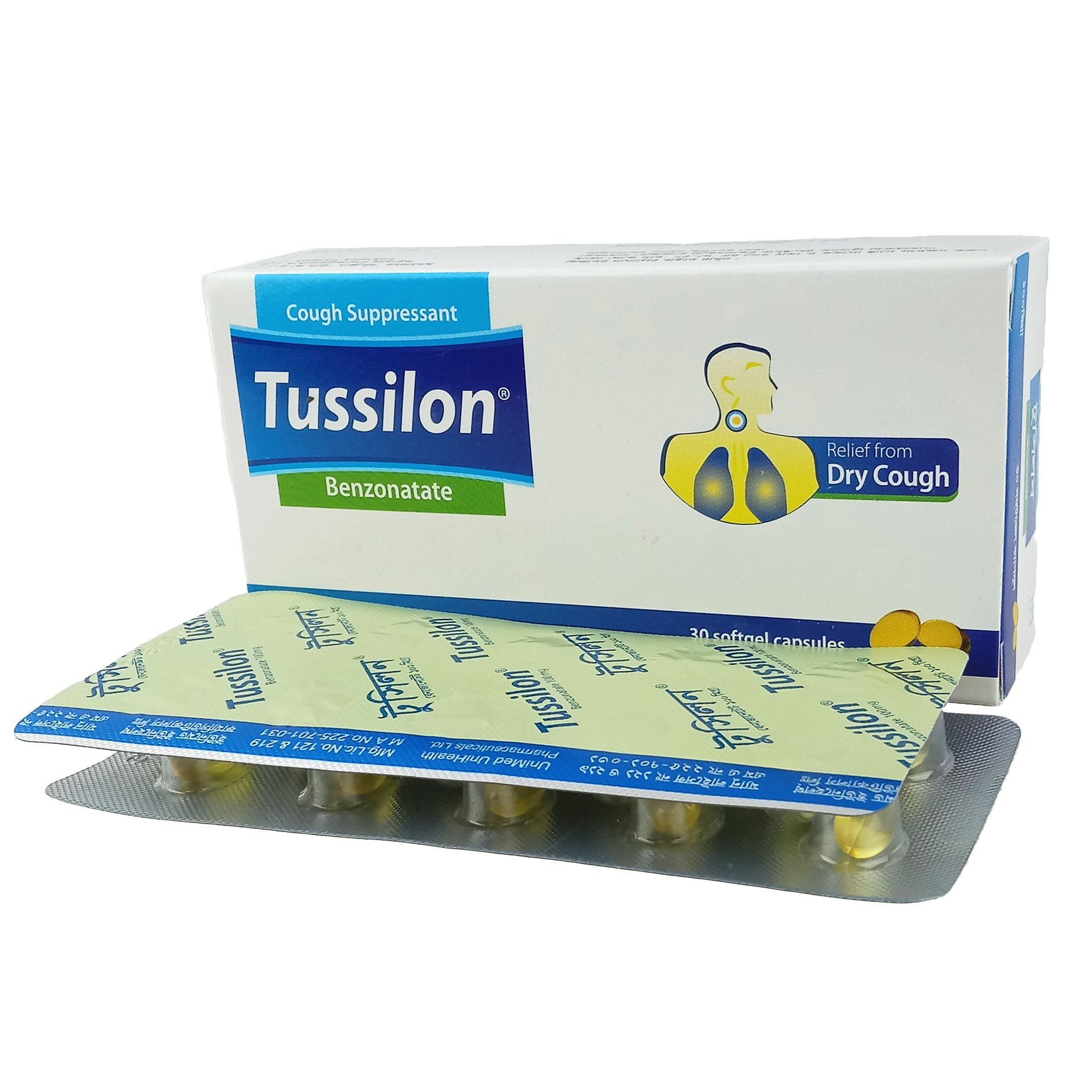
Tussilon Capsule 100 mg is a non-narcotic oral antitussive (cough suppressant) used to treat cough caused by respiratory conditions such as the common cold, bronchitis, or pneumonia. It works by numbing the throat and lungs, reducing the reflex to cough. Tussilon Capsule 100 mg is available in capsule form and is prescribed for short-term relief of cough.
Uses
Tussilon Capsule 100 mg is primarily used for:
- Relief of cough in conditions such as the common cold, bronchitis, and other respiratory infections.
- Suppression of cough in patients with chronic lung conditions like COPD or asthma (under medical supervision).
| Brand Name | Tussilon |
|---|---|
| Type | Capsule |
| Weight | 100 mg |
| Generic | Benzonatate |
| Manufacturer | UniMed UniHealth Pharmaceuticals Ltd. |
| Available in | English বাংলা |
Mechanism of Action
Tussilon Capsule 100 mg works by anesthetizing the stretch receptors in the lungs and pleura (the lining of the lungs), which reduces the cough reflex at the source. It decreases the sensitivity of the vagal afferent nerves that trigger the cough reflex. By numbing these receptors, benzonatate suppresses cough without affecting the respiratory center in the brain, as opioid-based cough suppressants do.
How Long Does It Take to Work?
Tussilon Capsule 100 mg typically begins to work within 15 to 20 minutes of oral administration, providing relief from coughing. The effects last for about 3 to 8 hours, depending on the individual and the severity of the condition.
Absorption
Tussilon Capsule 100 mg is rapidly absorbed from the gastrointestinal tract following oral administration. It undergoes metabolism primarily in the liver, and its effects begin relatively quickly after ingestion.
Route of Elimination
Tussilon Capsule 100 mg and its metabolites are excreted primarily via the kidneys in the urine. Only small amounts are eliminated in the feces.
Dosage
Adults and Children (10 years and older): Benzonatate 100 mg capsule three times a day. If necessary to control cough, up to 600 mg daily in three divided doses may be given. Benzonatate should be swallowed whole. Benzonatate should not to be broken, chewed, dissolved, cut or crushed.For Cough Suppression in Adults:
- 100 mg to 200 mg orally, three times daily as needed for cough relief.
- Do not exceed a total daily dose of 600 mg.
Administration
Tussilon Capsule 100 mg is administered orally, typically in soft gelatin capsules. The capsules should be swallowed whole, without chewing, as breaking the capsule can lead to local anesthesia in the mouth and throat, which may result in choking or severe allergic reactions. It is best to take benzonatate with water, and patients should avoid eating or drinking immediately after taking it.
Side Effects
Common side effects include:
- Drowsiness
- Dizziness
- Nausea
- Headache
- Constipation
- Nasal congestion
Serious side effects may include mental confusion, hallucinations, or severe allergic reactions. In rare cases, overdose can lead to life-threatening symptoms such as seizures, arrhythmias, or respiratory depression.
Toxicity
Tussilon Capsule 100 mg toxicity can occur in cases of overdose or when capsules are chewed or broken. Symptoms of toxicity include numbness of the mouth, throat, and tongue, confusion, restlessness, tremors, seizures, and in severe cases, coma or death. Treatment involves supportive care, airway management, and seizure control.
Precautions
Tussilon Capsule 100 mg should be used with caution in patients with a history of allergic reactions to anesthetic agents such as procaine or tetracaine, as cross-sensitivity may occur. It should also be used cautiously in individuals with a history of mental health conditions, such as anxiety or depression, as it can exacerbate certain symptoms.
Interaction
Drug Interactions
Tussilon Capsule 100 mg has minimal interactions with other medications, but caution should be exercised when used alongside other central nervous system (CNS) depressants such as:
- Opioids: May increase the risk of respiratory depression.
- Antihistamines: May enhance drowsiness and dizziness.
- Alcohol: Can enhance the sedative effects of benzonatate, increasing the risk of drowsiness and impaired coordination.
Food Interactions
There are no significant food interactions with benzonatate. However, patients are advised to avoid alcohol while taking the medication, as it can increase the risk of side effects such as drowsiness or dizziness.
Disease Interactions
Tussilon Capsule 100 mg should be used with caution in individuals with a history of:
- Seizures: May lower the seizure threshold and increase the risk of convulsions.
- Respiratory conditions like COPD or asthma: May cause hypersensitivity reactions leading to bronchospasm in susceptible individuals.
Pregnancy Use
Tussilon Capsule 100 mg is classified as pregnancy category C, meaning there are no well-controlled studies in pregnant women, but animal studies have shown potential harm to the fetus. Tussilon Capsule 100 mg should be used during pregnancy only if the potential benefit justifies the potential risk to the fetus.
Lactation Use
It is not known whether benzonatate passes into breast milk. Due to the lack of sufficient data, caution is advised when administering benzonatate to breastfeeding women. It should only be used if clearly needed, and the risks and benefits should be carefully weighed.
Acute Overdose
An acute overdose of benzonatate can result in severe toxicity, leading to symptoms such as CNS depression, seizures, arrhythmias, and even death. Overdose may occur from ingestion of as little as 1-2 capsules in children. Emergency treatment includes activated charcoal to reduce absorption, airway protection, and seizure management.
Contraindication
Tussilon Capsule 100 mg is contraindicated in patients with known hypersensitivity to benzonatate or related drugs. It should not be given to children younger than 10 years of age due to the risk of severe and potentially fatal side effects.
Use Direction
Tussilon Capsule 100 mg should be taken exactly as prescribed by a healthcare provider. Patients should not chew, crush, or dissolve the capsules, as doing so may result in severe throat numbness and potentially life-threatening reactions. It is important to keep the medication out of reach of children, as accidental ingestion can be fatal.
Storage Conditions
Tussilon Capsule 100 mg should be stored at room temperature (20°C to 25°C), away from moisture, heat, and light. The medication should be kept in a tightly closed container and out of reach of children to prevent accidental ingestion.
Volume of Distribution
The volume of distribution of benzonatate is not well-documented, as it is a locally acting agent with minimal systemic distribution. However, it primarily affects the peripheral nervous system in the lungs and airways.
Half-Life
The elimination half-life of benzonatate is approximately 3 to 8 hours. Its duration of action corresponds with this, providing cough suppression for several hours after a single dose.
Clearance
Tussilon Capsule 100 mg is metabolized in the liver, and its metabolites are excreted via the kidneys in the urine. Due to the minimal systemic absorption of the drug, clearance rates are not clinically significant in typical use.
See in details version Tussilon Capsule 100 mg also Tussilon Capsule 100 mg in bangla
Social card

Some Frequently Asked Questions About Tussilon Capsule 100 mg