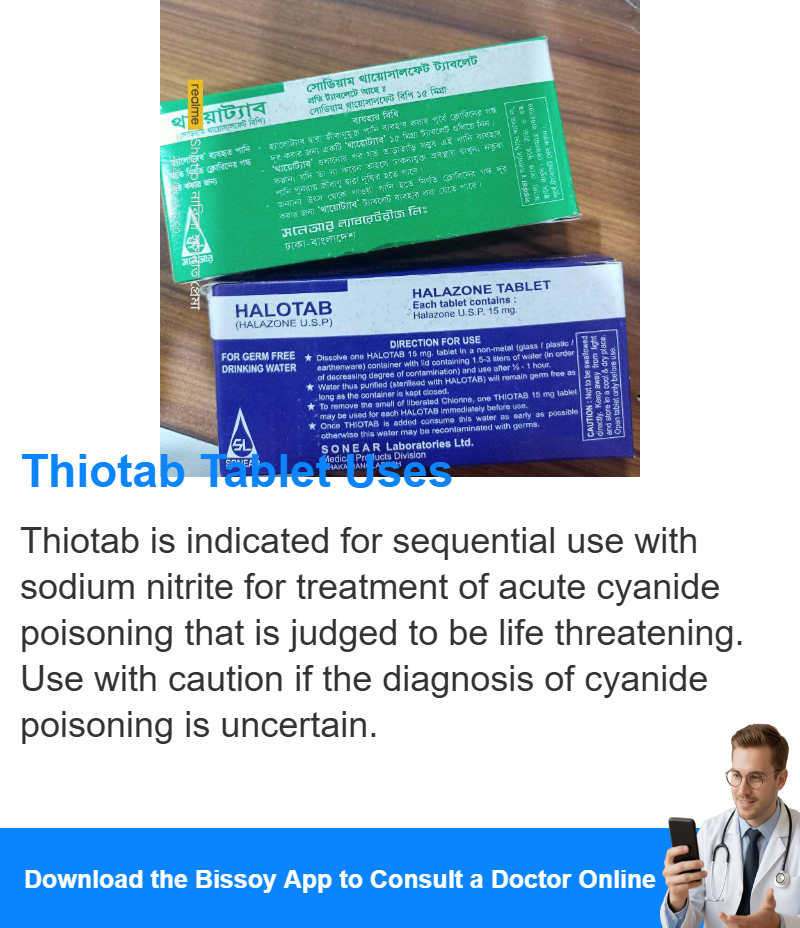
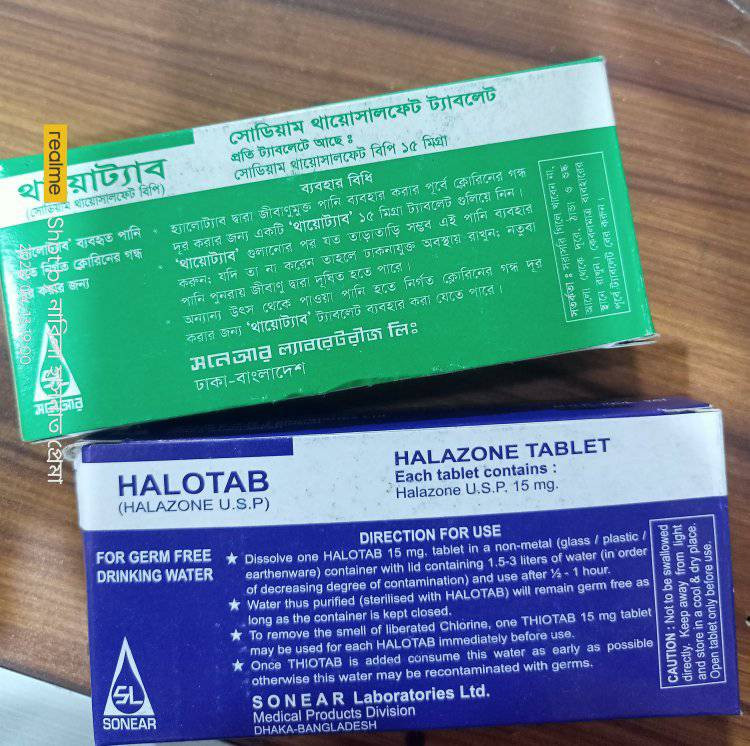
Thiotab Tablet 15 mg (STS)
Sodium thiosulfate (STS) is an inorganic compound used in a wide variety of applications, including water treatment, industrial wastewater, food processing, and human health treatments. STS is composed of sodium, sulfur, and oxygen atoms, and can be found in crystalline, powder, or solution form. It is most commonly sold as solid pellets, and can often be found in areas with hard water.
Uses of Thiotab Tablet 15 mg
The most common uses for Thiotab Tablet 15 mg are in water treatment, industrial wastewater treatment, food processing, and human health treatments. It can be used to reduce potentially harmful concentrations of chlorine, lead, iron, and other soluble metals in water; to reduce acrylamide in processed potatoes; and to treat cyanide poisoning in humans. Other uses include acting as a photographic fixer, washing away alkali in the process of dying fabrics, and preventing sulfuric acid from corroding copper.
Mechanism of Action
Thiotab Tablet 15 mg works primarily through its ability to act as a reducing agent. By chemically reducing other metals, it prevents them from building up and ultimately keeps water from becoming contaminated with harmful metals.
How Long Does It Take To Work?
The time it takes for Thiotab Tablet 15 mg to work depends on the application and concentration used. For most water treatment, industrial wastewater treatment, and food processing applications, STS works quickest at concentrations between 5-30 ppm. It generally takes between 3-5 minutes of contact time for STS to fully interact with the target substance.
Absorption
Thiotab Tablet 15 mg is not very absorbable in water; it has a tendency to crystalize and form a precipitate instead. However, when ingested, it is estimated to be 30-50% absorbable, depending on the dose.
Route of Elimination
Thiotab Tablet 15 mg is rapidly eliminated from the body in the urine, with less than 0.2% being excreted in the feces. The half-life of STS varies, but has been estimated at approximately 4-6 hours.
Dosage
Adult: To be given after 300 mg of sodium nitrite has been admin over 5-20 min: 12.5 g of sodium thiosulfate (50 ml of a 25% solution or 25 ml of a 50% solution) given over 10 min. Methaemoglobin concentration should not exceed 30-40%. If symptoms of cyanide toxicity recur, the doses of nitrite and thiosulfate may be repeated after 30 min at half the initial doses.Child: To be given after 4-10 mg/kg of sodium nitrite (max: 300 mg) has been admin: 400 mg/kg of sodium thiosulfate, as a 25 or 50% solution (max: 12.5 g). Methaemoglobin concentration should not exceed 30-40%. If symptoms of cyanide toxicity recur, the doses of nitrite and thiosulfate may be repeated after 30 min at half the initial doses.
The dosage of Thiotab Tablet 15 mg varies depending on the use, with adult doses ranging from 12.5 g to 30g. In general, it is important to use the correct dose for the particular application, as too much can be dangerous or ineffective, and too little will not have any effect.
Administration
Thiotab Tablet 15 mg can be administered orally, intravenously, or intramuscularly. Intravenous administration is the most common, and generally results in the greatest absorption. However, it can also be administered orally, although it must be dissolved in a drinkable form before consumption.
Side Effects
The most commonly reported side effects of Thiotab Tablet 15 mg are nausea, dizziness, and stomach cramping. It may also cause skin irritation when used as topical ointment. Additionally, STS may cause an allergic reaction in some individuals, which may manifest as a rash or itching.
Toxicity
Thiotab Tablet 15 mg has a low potential for toxicity. The clinical effects of overdoses are usually limited to the gastrointestinal tract, such as nausea, vomiting, and diarrhea. The lethal dose for STS in humans is estimated to be greater than 30 grams.
Precaution
Anyone considering the use of Thiotab Tablet 15 mg should carefully consider the potential health benefits versus risks. Precaution is especially important if using intravenously or intramuscularly, as leakage of the STS solution into surrounding tissues can cause irritation. As well, STS is not to be used if there is a known allergy to it.
Interaction
Drug interactions may occur with Thiotab Tablet 15 mg, as it can affect the absorption and elimination of certain drugs. It is important to tell your doctor about all of the drugs and supplements you are taking prior to using STS. Additionally, some drugs can reduce the effects of STS and should not be taken simultaneously.
Disease Interaction
Thiotab Tablet 15 mg may worsen certain diseases such as kidney or liver problems, so it is important to discuss its use with a doctor if you have any of these conditions. Additionally, people with G6PD deficiency should not use STS.
Drug Interaction
Thiotab Tablet 15 mg may interact with certain drugs, such as those used to treat diabetes, thyroid problems, respiratory problems, cardiovascular issues, and certain antibiotics. It is important to consult a doctor before taking STS if you are taking any of these medications.
Food Interactions
It is recommended to avoid acidic or highly alkaline foods, such as citrus fruits, dairy products, and processed meats, when taking STS. Additionally, nutritionists suggest eating high-fiber foods such as whole grains, legumes, and fresh fruits and vegetables to reduce discomfort due to Welchol, a medication that may interact with STS.
Pregnancy Use
The use of Thiotab Tablet 15 mg during pregnancy has not been studied enough to draw any firm conclusions. However, the American College of Obstetricians and Gynecologists (ACOG) states that use of STS is considered low-risk and is not associated with any major risks. As with any medication, however, it is important to consult a doctor before using it during pregnancy.
Lactation Use
The use of Thiotab Tablet 15 mg during lactation has not been studied enough to draw any firm conclusions. However, the American College of Obstetricians and Gynecologists (ACOG) states that use of STS is considered low-risk and is not associated with any major risks. As with any medication, however, it is important to consult a doctor before using it during lactation.
Acute Overdose
Acute overdoses of Thiotab Tablet 15 mg are rare. Ingestion of large doses may cause gastrointestinal problems, such as diarrhea, nausea, vomiting, and abdominal cramps. In severe cases, an electrolyte imbalance may occur and require treatment with an electrolyte solution.
Contraindication
Thiotab Tablet 15 mg should not be used in people with a known allergy, G6PD deficiency, or certain medical conditions that could worsen with STS. Additionally, STS should not be used in people who are pregnant or breastfeeding without consulting a doctor. Lastly, use of STS with certain drugs or medications should be avoided, as it can cause interactions.
Use Direction
Thiotab Tablet 15 mg should only be used according to the instructions given by your healthcare provider. If using intravenously or intramuscularly, it should be administrated slowly to reduce the risk of leakage. If taken orally, it should be dissolved in a drinkable form before consumption.
Storage Condition
Thiotab Tablet 15 mg should be kept in a cool, dry, and dark place and away from direct sunlight. It should also be properly sealed after each use, and any unused product should be stored away from children and pets.
Volume of Distribution
The volume of distribution of Thiotab Tablet 15 mg is approximately 126.9 liters, which is approximately equal to the extracellular fluid volume of an average adult.
Half Life
The half life of Thiotab Tablet 15 mg is estimated to range from 4-6 hours in humans. In healthy individuals, it can take 1-2 days for 90% of the STS to be eliminated from the body. However, in those with certain medical conditions, the elimination rate may be slower.
Clearance
The clearance of Thiotab Tablet 15 mg is estimated to be approximately 84 mL/min. Clearance is the process by which drugs are removed from the body, and is affected by factors such as age, body weight, genetics, and other medical conditions.